Month: August 2017

Bandwidth (signal processing)

Bandwidth (signal processing)

Bandwidth (signal processing)

08/20/17

“How can we classify a set of frequencies?”


In signal processing, we will often receive signals of varying frequencies. So how can we organize all of these frequencies? Well, why don’t we just take the difference between the upper and lower limit of these frequencies? This is known as bandwidth, is measured in Hertz and is used everywhere in signal processing.

Electric power systems

Electric power systems

Electric power systems

08/19/17

“What is the framework that powers our infrastructure?”


A great proportion of our modern infrastructure is contingent upon electricity for operation. However, what exactly is the fundamental framework behind all of it? Well, let’s take a close look. We know that we can simplify the course of electricity into 3 components: generation of power (through means such as solar panels and wind turbines), transmission of power (with means like HVDC), and distribution of power(using machines like transformers and grid tied inverters). If any framework has these three components, then it can be classified as an electric power system. The most famous example of an electric power system is the grid, which permeates nearly every aspect of our daily lives.

Closed-loop Summing Points

Closed-loop Summing Points

Closed-loop Summing Points

08/19/17

“What are the points on a control diagram for comparing the output and the setpoint?”


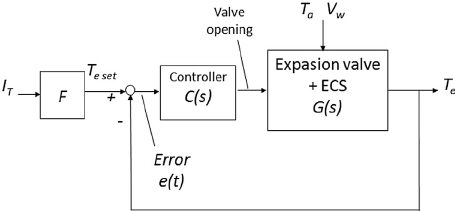
What makes a closed-loop control system truly closed loop is the comparison of the output and setpoint for making the error value. However, how is this represented on a control diagram? Well, Control Engineers like to use something called a Closed-loop Summing Point. Closed-loop Summing Points are small circular elements on a diagram that takes in an input on one quadrant, the setpoint on another and then produce the error term. Depending on the signs of the quadrant, the input value might be positive (for a + sign) or negative (for a – sign)

Closed-loop Control Systems

Closed-loop Control Systems

Closed-loop Control Systems

08/18/17

“How can we have a self-correcting control system?”


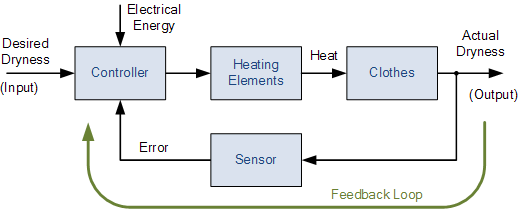
Open loop control systems may be affordable, but the lack of control over them (pun intended) makes them useful for only select applications. So how can we fix this problem? Well, what if every time our system was to produce an output, we compare it to our setpoint, and then modify the process to achieve our desired result accordingly? This is the fundamental idea behind a closed-loop control system and is used in a vast array of controls applications from electric vehicle battery life monitoring to drones and even laundry machine monitoring.

Controls gain

Controls gain

Controls gain

08/18/17

“What is the amplification of a controls system?”


When a signal passes through a transfer function, its output will be modified in an according way depending on its frequency. So what do we call the change of magnitude of the signal? Well, after much debate, controls researchers have settled on the idea of gain to describe this. Gain is defined as the ratio of the new magnitude to the old magnitude, such that a system that is twice as large will have a magnitude of 2 and half the size would be 1/2

Final Value Theorem

Final Value Theorem

Final Value Theorem

08/17/17

“How can we convert from the s to time domain without using a Laplace transform?”


Taking an inverse Laplace transform of a function from the s to time domain is very useful but quite difficult, so is there a way that we can get around it for specific case? Well, after years of hard work, mathematicians have discovered that if you multiply the frequency function by s and take its limit as it approaches zero (lim s–>0 s*f(s)) then it would actually be equal to the value of the time domain function at infinity! The proof is shown in the picture above

Dead Reckoning

Dead Reckoning

Dead Reckoning

08/17/17

“How can we make a location history using past velocities?”


Making a location history can be very difficult. Having to make active GPS measurements for a cycle of intervals is very taxing on resources. However, is there a way that we could circumvent this and make a new less resource intense system? Well, let’s start off by thinking back to basic physics. We know that velocity multiplied by time equals a change in distance. So what if were to start off with an initial GPS location and then build an array of all of the measured velocities after that? Well, this is the fundamental ideas behind a technique known as Dead Reckoning and is commonly implemented in control systems and machines that are equipped to go into no-GPS locations.