Category: Chemistry

Packed Beds

Packed Beds

Packed Beds

05/01/26

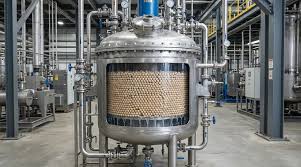
“Why do hollow tubes filled with packed materials have special properties?”

People often want to mix two phases of chemicals together for a chemical reaction. So how can we maximize surface contact between these distinct phases? Well, what if we were to take a hollow tube, and then pack reactive solids inside, and then flush a fluid through the hollow tube? These Packed Beds are a mainstay of chemical engineering and power some of the most important processes today, whether it’s sand filters for drinking water or activated carbon for wastewater.

Image credit: https://encrypted-tbn0.gstatic.com/

Filter Bed Expansion

Filter Bed Expansion

Filter Bed Expansion

04/29/26

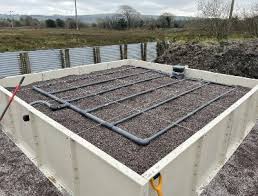
“Why do filter beds expand when they’re cleaned?”

Filter beds are wonderful contraptions for cleaning water and wastewater. However, over time, particles will build up and clog the filter, decreasing performance. People may clean it using backwashing. However, this backwashing will lead to Filter Bed Expansion as the filter media is pushed away from its compacted form.

Image credit: https://encrypted-tbn0.gstatic.com/

Recrystallization (Materials Science)

Recrystallization (Materials Science)

Recrystallization (Materials Science)

04/27/26

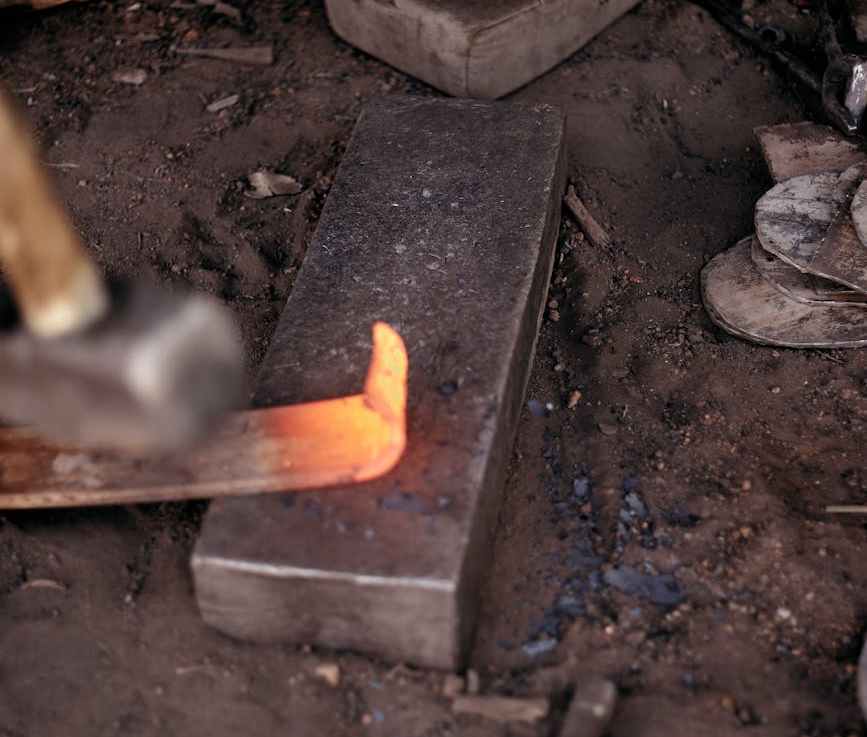
“How can we reset a metal’s crystalline structure by working it while hot?”

A metal’s crystalline structure contains more defects when it undergoes cold working. However, if we work on a metal while it’s heated, the metal will soften, and new strain-free grains will arise and envelop the entire structure. This Recrystallization process ends with the metal becoming more ductile but less strong and harder.

Langmuir Isotherms

Langmuir Isotherms

Langmuir Isotherms

04/24/26

“How can we model how adsorption potential changes as adsorption potential fills up?”

Substances will stick to the surface of another through adsorption. The more sites that are filled up, the less adsorption potential there will be until it’s completely maxed out. This is how Langmuir Isotherms work.

Sorption Isotherms

Sorption Isotherms

Sorption Isotherms

04/23/26

“How can we graphically represent the relationship between a substance’s concentration and an adsorbent’s ability to adsorb the substance?”

Adsorbents of different materials interact with different chemical differently. Sometimes their adsorption strength decreases with increasing concentration, sometimes it grows, and sometimes it stays the same. We can plot the relationship between substance concentration and adsorption strength on a Sorption Isotherms.

ALARA/ALARP Principles

ALARA/ALARP Principles

ALARA/ALARP Principles

04/22/26

“How can we take a practical, secure approach to environmental safety in organizational operations?”

Environmental safety in organizational operations can vary drastically, ranging from simple catch-basin cleanup to nuclear remediation. While we can’t completely remove risk, we can heavily reduce to as low as reasonably achievable (ALARA, reduce it as much as you can achieve, such as going beyond basic care in heavy radiation settings) or as low as reasonably practicable (ALARP, reduce risk to as low as whatever fits guidelines/standards and is cost-benefit optimal). These ALARA/ALARP Principles are fundamental to creating a safe place for everyone.

The Jar Test

The Jar Test

The Jar Test

04/19/26

“How can we figure out the optimal conditions for coagulation and flocculation?”

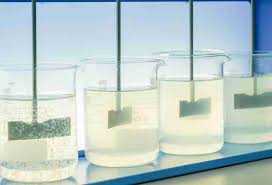
Knowing the optimal conditions for coagulation and flocculation is critical for designing wastewater treatment processes. Specifically, we want to find out the best coagulant type, dosage, pH, and proper mixing intensity/time. So how can we use our scientific mindset to accomplish this? Well, what if we take 4 – 6 jars, fill them with raw water from the same source, and then add different coagulant doses to each one. Afterwards, rapidly mix for a short time, then gently mix for a short time, and then let it settle out. Whichever has the best settling results will be the conditions you set. This Jar Test is a widely used methodology to choose operating conditions for coagulation-flocculation.

Image credit: https://encrypted-tbn0.gstatic.com/

Activation Energy

Activation Energy

Activation Energy

04/15/26

“What’s the minimum amount of energy for chemical reactions to occur?”

Chemical reactions cannot happen on their own. The molecules need to have a certain amount of collisions, or energy, to react. The minimum amount of energy for chemical reactions to occur is known as the Activation Energy. Activation energy is often provided in the form of heat.  

Galvanic Series

Galvanic Series

Galvanic Series

04/13/26

“Is there a list that sorts how likely a metal is to corrode?”

Two metals with significant enough anodic index differences will corrode. But is there a list that sorts metals based on their anodic index differences? Well, this comes in the form of the Galvanic Series. The lower on the list, the more protected against corrosion a specific metal is, and the higher the more vulnerable to corrosion.