Author: Isaac Gendler

Hydrogen fuel cells

Hydrogen fuel cells

Hydrogen fuel cells

01/20/17

“Is it possible to extract the energy from fuels without an internal combustion engine?”


Fuels are tremendously useful substances for portable energy storage. However, extracting said energy from them is typically a highly pollutive process. But instead of disposing of this technology altogether, could it be possible that we could use our engineering mindsets to create a pollutive free fuel extractive technology? Well, let’s think about it. We know that fuels are typically rich in hydrogen [H2] gas, and we know that the surrounding atmosphere (at least on earth) is filled with a copious amount of oxygen [O2] gas. Furthermore, hydrogen in its ionized state has a positive charge and oxygen has a negative one, and that a current can be created if positive and negative charged states were connected together in a circuit. So what if we were to create a contraption that would separate the hydrogen gas into hydrogen ions and the oxygen gas into oxygen ions, funnel the extra electrons from the hydrogen side into the negative oxygen side, and finally combine then dispose of the surplus hydrogen and oxygen by combining them into water and flushing them out? This is the exact operating principle behind hydrogen fuel cell technology. Hydrogen fuel cells are typically implemented in automobiles and their demand growing at an exponential rate, with a 65% increases in sales from 2014-2015! 

However, one must be cautious when using this technology. Because all fuels will be composed of more than hydrogen gas, those chemicals will be released as well, inducing pollution. In addition, these impurities can cause short circuiting. Since we all aspire to be scientific thinkers, we must be remember to be cautious of any new breakthroughs.

Grid Parity

Grid Parity

Grid Parity

01/19/17

“What happens when renewable energy becomes cheaper than it’s more corrosive counterparts?”
One of the major slanders against renewable energy is that it is too expensive to compete with traditional sources such as coal and petroleum. However thanks to the efforts of generations of scientists and engineers, the upfront cost for cleaner systems has dropped exponentially in the past few years, so much so that countries and states such as California and Germany have reached something called grid parity, or when renewable prices actually become cheaper than their corrosive counterparts with no subsidies! In fact, solar energy prices are falling so fast against rising electric utilities that according to a recent report by Deutsche Bank, 80% of the world market will have achieved grid parity by 2017!

Floating solar arrays

Floating solar arrays

Floating solar arrays

01/18/17

“How can we achieve greater efficiency of solar arrays using water?”


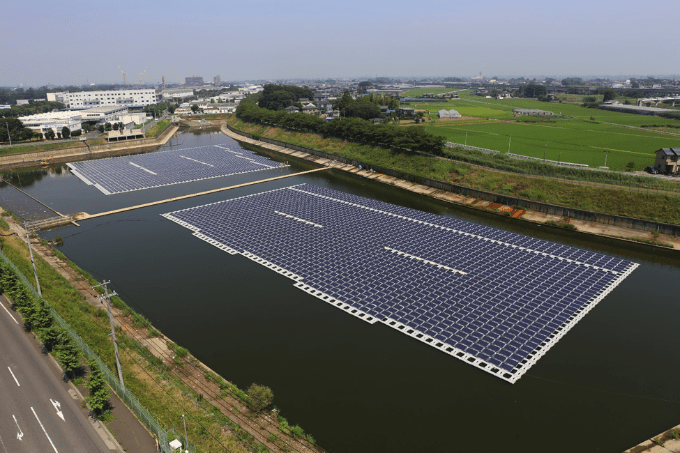
Solar panel arrays are some of the most benevolent technologies in existence. However, they can often require large parcels of land, which could be expensive and take away from the possibility of being used for other activities. So how can we use our engineering mindset to circumvent this issue? Well, if our main quandary is that solar panels take up a large amount of land, why not take them off land? Specifically, what if we were to create solar panels designed to float on water? This is the operating principle behind floating photovoltaics (also known as “floatovoltaics”), which use a specialized form of solar panels placed in water reservoirs to generate clean electricity for the local area. Floating solar arrays are more efficient than traditional models and can be hidden from the public view, but designers of such systems must take into consideration the effects of increased wind speeds over water and the local habitat. Companies around the world are already suiting to take up the challenge of implementing these systems, with Kyocera of Japan, Sonomoa clean power of California, and Infratech industries of Australia investing money to build these models.

Pumps

Pumps

Pumps

01/17/17

“How can we move fluids within a machine using mechanical power?”


Modern mechanical machines such as automobiles and solar heaters work using an internal transfer of fluids. However, since fluids can be difficult to control, specialized machinery must be used to ensure a smooth transfer of material. So how can we make such an apparatus? Well, we know that fluids are respondent to mechanical actions such as suction or pressure, what if we were to make a solid device that accomplishes this? This is the fundamental idea behind an engineering tool known as a pump, and it has become one of the most widely used devices in the current technological paradigm of humanity.

Net metering

Net metering

Net metering

01/16/17

“How can renewable energy sources give back to the grid?”


Grid connected renewable energy systems can easily receive energy from local power generation units when there is a deficit. However, would it also be possible to send over energy to the grid when there is a surplus? Well, let’s think about it. If electricity can be received from a power generation station (such as a coal plant) one way, then wouldn’t it be logical to send electricity generated (such as from a solar panel) the other way? Furthermore, since individuals are billed for every time they receive electricity from the grid, couldn’t individuals bill the electric company for this activity? This is the fundamental idea behind net metering, which uses a bi-directional meter to measure the net energy received/given off by a housing unit to determine the compensation. Net metering has already spread it’s away across the United States, and hopefully one day the entire world!

Why wind turbines are placed at higher altitudes

Why wind turbines are placed at higher altitudes

Why wind turbines placed at higher altitudes

01/15/17

“Why are wind turbines placed at higher altitudes?”


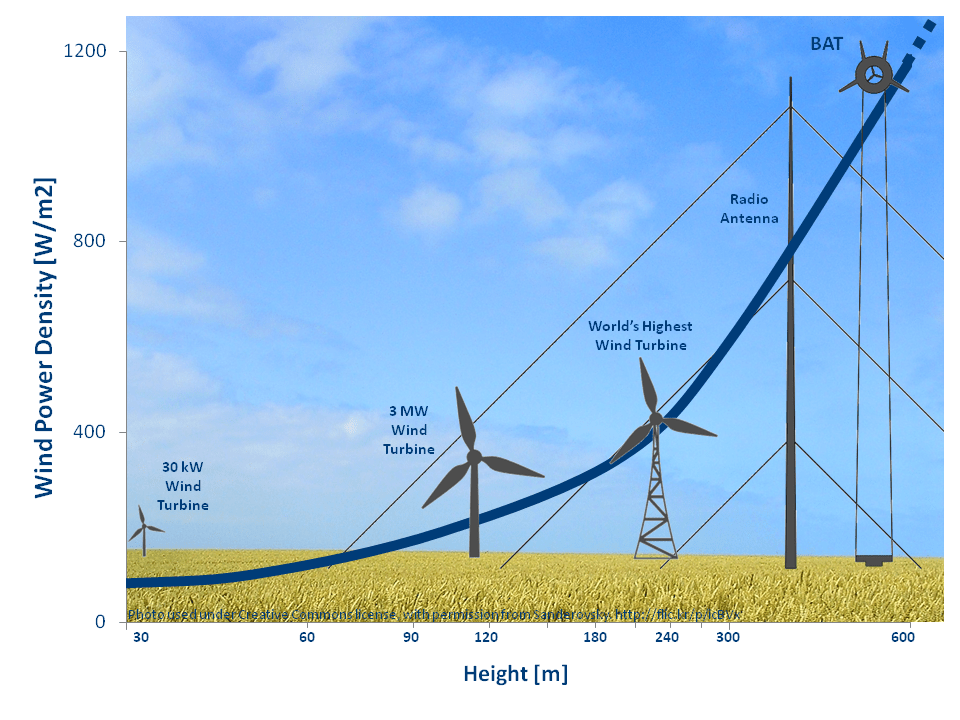
Wind turbines are a very common sight nowadays. However, if you look closely, you can notice a recurring pattern: such edifices seem to be disproportionately placed at higher altitudes. Why is this so? Well, we simply have to analyze the physics and engineering surrounding the decision. When the planet’s wind collides with solid objects, turbulence will generated, disrupting wind flow and inducing a lower speed. The closer the wind is to the ground, the closer it will be to solid objects, causing more turbulence, and since the amount of energy that a wind turbine produces is contingent to the surrounding wind velocity, it would be only logical to place them at higher altitudes.

Why do wind turbines have only three blades?

Why do wind turbines have only three blades?

Why do wind turbines have only three blades?

01/14/17

“Why is it that wind turbines always seem to have three blades?”
Wind turbines can be seen everywhere nowadays, from the coasts of Brazil to the mountains of Scotland. Throughout these installations, they all seem to have one peculiar feature in common: only three blades are attached to the turbine. Why is it like this? Well, let’s use our engineering mindsets to figure this out. The more blades that a wind turbine has, the more torque, generating more electricity. However, each blade will come with its own particular weight and cost, so simply adding more would prove ineffective. If one were to create a performance vs cost analysis, they would find that the three blade design would come out as the most efficient! This little example is a great showcase for how engineering is not utterly based off the laws of physics but the nature of economics as well.

The Netherlands’ electric is now completely powered by renewable energy

The Netherlands’ electric is now completely powered by renewable energy

The Netherlands’ electric is now completely powered by renewable energy

01/13/17

“How is it that the Netherlands’ electric train system is now completely powered by renewable energy?”


A most riveting milestone in global renewable energy adoption has just been reached. The Dutch national railway company NS has just announced that the entirety of their electric train fleet is running on renewable energy!  This means that transportation systems that carry 600,000 passengers every day have and consumes 1.2 billion Kwh each year has just had their carbon footprint sabotaged! However, work is not done, as the company also plans to decrease energy used per passenger by 35% by 2020

Charge controllers

Charge controllers

Charge controllers

01/12/17

“How can we ensure that a battery does not get depleted or overcharged while we are using it?”


Much of our current technological operating infrastructure rests upon battery technologies. These simple devices allow us to store energy in a portable format for later use, such as in electric vehicles and micro-grid systems. However, because they are so vital for many systems, if they become depleted or overcharged, then all operation could be thrown into catastrophe. So how can we modify such systems to ensure that the state of charge for batteries are always at a stable level? Well, let’s use our engineering mindset to solve this issue. For this sort of problem, it looks like some sort of monitoring would be needed. So what if we made a device that could sense if a battery was becoming overcharged or over discharged it would shut down current? This is the operating principle behind a technology known as charge controllers, which have become an essential part for numerous renewable energy systems.