U.S investment into sustainable energy
Isaac A. Gendler
21 January 2017
“Why should the new U.S president change his current sustainable energy policies?”
The un-maintainable use of nonrenewable energy resources for the operation of our civilization is putting too much stress on Earth’s resources. As a result of this trajectory, the economics and environmental consequences of non-renewable energy sources will become more prohibitive, forcing many countries to become more foresightful about their current actions and invest more into the burgeoning renewable energy sector in tandem with fabricating more environmentally friendly policies. However, by electing a vehemently anti-sustainability president, the response of the United States to this shifting paradigm is flat out ineffective. If the country does not switch paths to renewable energy it is highly probable that it will miss out on future potential and suffer economically as a nation.
Presently, humanity derives over ninety-four percent of its energy from nonrenewable sources such as petroleum , natural gas, and coal. (Key World Energy Statistics 2016). What makes an energy source non-renewable is that there is only a limited amount of the source on the planet, and once used up they are gone for good.
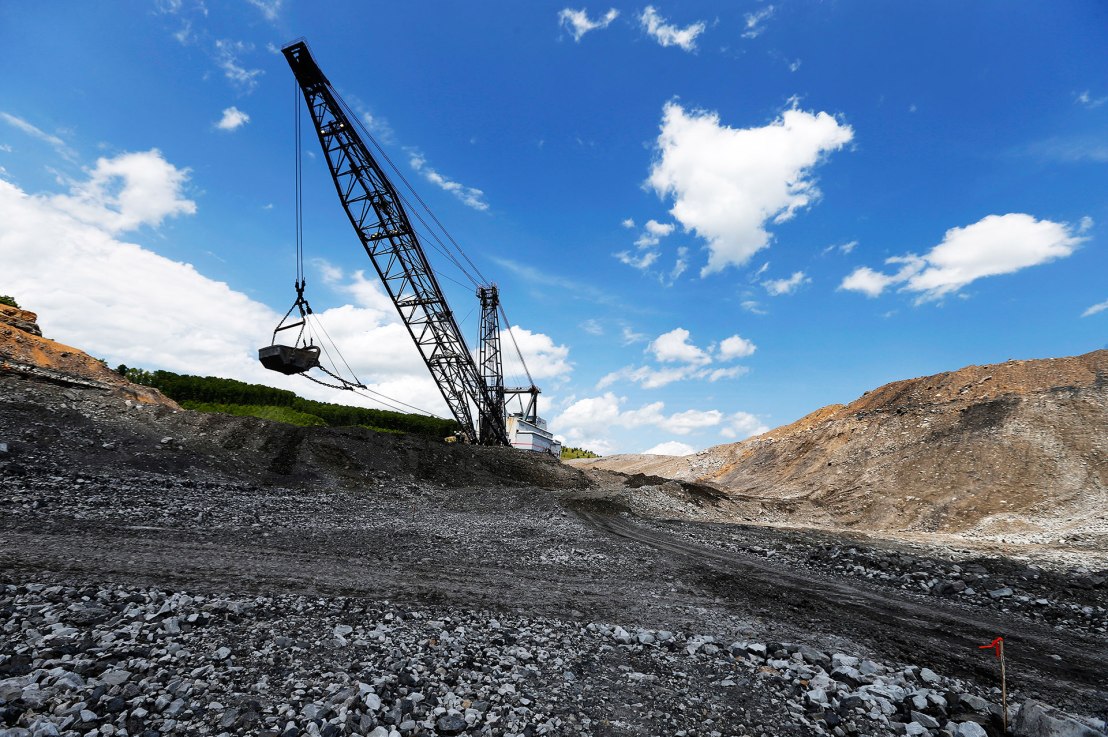
As a result of the irreplaceable nature of non-renewable forms of energy, the economics associated with using the resources is becoming more volatile as time goes on. When the supply of these materials that humanity holds shifts, economic perturbations will take effect that can devastate entire industries. To illustrate, in 2014, as a result of the revolution in fracking technology generated an economic boom of activity in the U.S state of North Dakota. However, this gas fueled economic engine already has seemed to have been exhausted, with the resultant oversupply causing a precipitous plunge in prices, leading to near unprofitability in operations and scores of ghost towns strewn throughout the state. (Scheyder, Ernest.) The coal industry in the United States, once the primary economic driver of the Appalachia region, is in the midst of a complete collapse, with frequent bankruptcies and production levels dropping down to a thirty-five year low (Goldberg, Suzanne.). The oil industry, a resurging power a few years back, has seemed to have again dipped down in unprofitability, with the corporate mega-conglomerate British Petroleum announcing hundreds of thousands of layoffs worldwide (Reed, Stanley.). And this unceasingly pendulum-like fortune of the non-renewable energy industry is in no way a recent phenomena, with the oil and natural gas industry being infamous for its high frequencies of booms and bust (Alsaadi, Nawar) (Mastrangelo, Erin). This extreme volatility is not sustainable for the basis of an economy, and by continuing to rely on it, we will suffer as a nation.
But economic ruptures are not the only form of destruction that non-renewable sources bring. The most used forms of non-renewable sources (Petroleum, coal, natural gas) are major contributors to a most ruinous phenomenon known as global warming (Laikha, Rinkesh). To put it simply, the pollutants emitted by the production of these resources cause an increase in average global temperature, which in turn throws the operation of our planet out of balance by melting polar ice caps, increasing ocean levels, and disrupting weather patterns. This in turn not only causes further economic but also health and environmental devastation. To elucidate on this point, a very recent natural disaster named Hurricane Sandy was tremendously amplified by global warming due to a combination of higher sea levels temperature (Freedman, Andrew. ). Nearly sixty-five billion dollars were lost and countless homes destroyed in the aftermath (Rice, Doyle). Much of this could have been avoided if humanity was more foresightful about the usage of dangerous fuel sources. Events like Hurricane Sandy are only bound to get worse, as anthropogenic temperature change is increasing at an exponential rate, possibly being raised up by over seven degrees by the end of the century! (Friedrich, Tobias et. all) It doesn’t take a rocket scientists to know that negligence to act against such a coming threat would prove disastrous
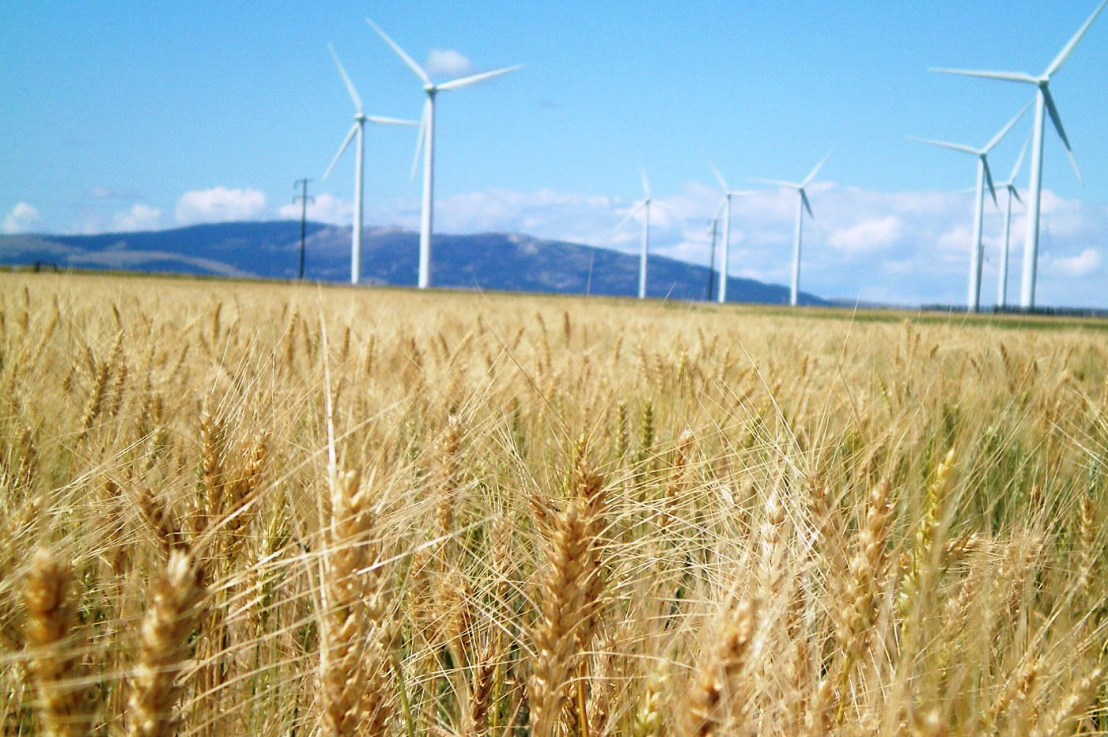
So how can humanity get off this eternal nauseating boom and bust cycle of non-renewable sources? The answer is to invest in sustainable energy, systems, and policy. Sustainable energy is energy from natural processes such as wind and solar that differs from traditional sources primarily in that such natural supplies are constantly being replenished, allowing for a “never ending” usage of said resources. If humanity truly wants to ensure an infinite future, it would only be logical to base its infrastructure off sources that could exist for such a time period.
However, technology alone will not be able to solve the global problems faced by humanity caused by its past negligence of the Earth’s resources, sustainable policies must be put in place. Current examples can be drawn from Portugal’s remuneration system for individuals generating their own renewable energy (Jimeno, Moïra) , California’s “action plan” to obtain 33 percent of its power be based on renewables by 2020 (Elliott, E. Donald) and setting pollution threshold limits for areas of nature (Fenn, M. E). However, we must not settle for what already has been done, and as the climate rises so must our endeavors.
Nations around the world have already taken heed to this call. China, one of the most powerful countries on earth and heaviest polluters on the planet, is pouring money into environmental protection(Janing, Wang) and sustainable energy (Dupuy, Max, and Wang Xuan). The United Arab Emirates, one of the premiere powers of the OPEC group, has admitted that relying exclusively on the petroleum market is unmaintainable for a country in the long term (Saadi, Daania), and is planning to have thirty percent of the nation’s energy come from renewable sources by 2030 (McAuly, Anthony). India, one of the fastest growing economies on the planet, targets to increase the nation’s solar capacity to 100 gigawatts by 2022 (Ross, Katherine.) ( For reference, the world’s solar capacity was 181 gigawatts in 2014 (Renné, David)) For the United States to make a true paradigm shift, the federal government should act similarly and conduct a strategic maneuver by setting up a national sustainable energy target date, and ensure it through tactical action by constructing new large-scale renewable energy projects and subsidizing existing businesses to use green technology. Such a move with a sturdy monetary backing would cajole individuals, corporations, and governments to take action to shift the infrastructure of the United States to be sustainable for the long term
But to its own detriment, the United States has decided to select the most anti-sustainability candidate for its future lear, Donald Trump. Trump not only doubts the veracity of climate change (openly calling it “a hoax created by the Chinese” (Trump,Donald)), but also wants his administration to implement a “100 day plan” which include rescinding all Obama-era restrictions on non-renewable resources, going forward with the Keystone pipeline, and canceling billions in payments to the U.N climate change protocols (Pandey, Avaneesh) (Kelly, Amita, and Barbara Sprunt).
In Trump’s viewpoint, investment into sustainable energy and policies (which he directly calls “an expensive feel-good for tree-huggers” (Trump, Donald 65)) should take a backseat to what he claims are more “proven” forms of energy such as petroleum and coal (Plumer, Brad), Trump’s policies goes even further with this mindset by proclaiming that any environmental restrictions created by preceding administrations (specifically ones concerned with coal production) should be abolished, as they supposedly restrict the potential of the United States economy (Trump, Donald J.). In his own words, Trump states that “Obama’s war on coal [implying regulations] is killing American jobs,.. and is creating a great business disadvantage”(Trump, Donald) and that “[He is] going to get rid of the EPA, of it in almost every form” (Fix, team)
However, Trump is not the only individual with this viewpoint. Many proponents of non-renewable energy like to point out that investment in such industries through projects likes the Keystone pipeline brings jobs, that comparable renewable energy projects are indeed quite expensive (Musial, Walter), and that such systems have to be constructed not only at a large scale to provide a practical amount for civilization but are also limited by geography and times of day (Laikhal, Rinkesh). According to their reasoning, it would be wise for the United States should go down Trump’s path and invest more into non-renewable sources.
But to the contrary, investment in sustainable energy and infrastructure has shown to have a great impact on the economy. Such technology has shown the possibility of creating up to one million more jobs by 2030 while increasing the U.S GDP by 145 billion dollars (Muradov, Nazim). Jobs in the renewable energy sector if the United States already have exceeded the number employed in petroleum/natural gas extraction and coal(Hirtenstein, Anna) and new technologies such as offshore wind turbines will allow for much more flexibility in geographic locations as well as higher efficiency extractions (Iyalla, Atelisika). Not only that, the price for solar panels and wind turbines have been dropping at astounding rates, making investment far less prohibitive (Randall, Tom). One could easily say that green energy implies both types of green, environmental and monetary.
In contrast, jobs created by non-renewable resource industries projects are of lesser quantity compared to ones created by renewable equivalents (Jobs, Bill) (with works such as the Keystone pipeline will only amount to 35 permanent positions (Sanders, Keith)), coal is on a path to death being dictated by market forces (Worland, Justin), and as stated before, the sinusoidal market of non-renewables is too volatile to supplement an economy. As for the question of the beneficiality of imposing environmental regulations over it, economics research has shown that not only do stringent regulations not cause major harm to economies (Dechezleprêtre, Antoine et. all), but that failure to act in unison in preventing further climate has the potential to ravage thirty-six percent of the United States GDP by the end of the century (Burke, Marshall et. all). By no means can old forms of energy provide a new future for our civilization.
To put this theory into practice, a clean energy path is necessary, and only through individual action can this happen. Such change can happen at the grassroots level. Not only can citizens act with their wallet by adopting and installing green technology to support companies and shift the market further into green energy’s favor, but can get out into the streets, join green organizations and lobby government officials to take heed. With such a proactive mindset, people can convince other individuals to change their minds and shift the coming tide into a new, sustainable future, both economically and environmentally.
References
Alsaadi, Nawar. “Why Oil Booms And Busts Happen.” OilPrice.com. OilPrice.com, 25 Feb. 2016. Web. 06 Dec. 2016.
Burke, Marshall, Solomon M. Hsiang, and Edward Miguel. “Global Non-linear Effect of Temperature on Economic Production.” Nature 527.7577 (2015): 235-39. Web.
Dechezleprêtre, Antoine, and Misato Sato. The Impacts of Environmental Regulations on Competitiveness. Issue brief. London: London School of Economics, 2014. Print.
Dupuy, Max, and Wang Xuan. “China’s String of New Policies Addressing Renewable Energy Curtailment: An Update.” Pardon Our Interruption. Renewable Energy World, 18 Apr. 2016. Web. 06 Dec. 2016.
Elliott, E. Donald. “Why the U.S. Does Not Have a Renewable Energy Policy.” SSRN Electronic Journal (2013): n. pag. Web. 7 Dec. 2016.
Erin, Erin. An Analysis of Price Volatility in Natural Gas Markets. Rep. Washington DC: US Energy Information Administration, 2007. Print.
Fenn, M. E. “Setting Limits: Using Air Pollution Thresholds to Protect and Restore U.S. Ecosystems.” Issues in Ecology 14 (2011): n. pag. Print.
Fix, Team. “The Fox News GOP Debate Transcript, Annotated.” The Washington Post. WP Company, 3 Mar. 2016. Web. 06 Dec. 2016.
Freedman, Andrew. “How Global Warming Made Hurricane Sandy Worse.” Climate Central: A Science & News Organization. Climate Central, 1 Nov. 2012. Web. 06 Dec. 2016.
Friedrich, Tobias, Axel Timmermann, Michelle Tigchelaar, Oliver Elison Timm, and Andrey Ganopolski. “Nonlinear Climate Sensitivity and Its Implications for Future Greenhouse Warming.” Science Advances 2.11 (2016): n. pag. Print.
Goldberg, Suzanne. “The Death of US Coal: Industry on a Steep Decline as Cheap Natural Gas Rises.” The Guardian [London] 8 Apr. 2016: n. pag. Print.
Hirtenstein, Anna. “Clean-Energy Jobs Surpass Oil Drilling for First Time in U.S.” Bloomberg.com. Bloomberg, 25 May 2016. Web. 07 Dec. 2016.
Iyalla, Atelisika. “Onshore vs. Offshore Wind – LCA of Wind.” LCA of Wind. LCA of Wind, 8 Nov. 1997. Web. 07 Dec. 2016.
Jimeno, Moïra. Portugal: Summary. Rep. Sres-legal, 29 June 2016. Web. 07 Dec. 2016.
Jobs, Bill. “Employment in Green Goods and Other Services.” Bureau of Labor Statistics (2011): n. pag. Print.
Kelly, Amita, and Barbara Sprunt. “Here Is What Donald Trump Wants To Do In His First 100 Days.” NPR. NPR, 9 Nov. 2016. Web. 06 Dec. 2016.
“Key World Energy Statistics 2016.” Key World Energy Statistics (2016): n. pag. Web.
Laikha, Rinkesh. “Overview of Non-Renewable Energy Sources – Conserve Energy Future.” Conserve Energy Future. Conserve Energy Future, 16 May 2013. Web. 06 Dec. 2016.
Laikha, Rinkesh. “Pros and Cons of Renewable Energy – Conserve Energy Future.” Conserve Energy Future. Conserve Energy Future, 03 Feb. 2015. Web. 06 Dec. 2016.
Mcauly, Anthony. “UAE Eyes New Clean Energy Generation Target by 2030.” The National. The National, 20 Jan. 2016. Web. 06 Dec. 2016.
Muradov, Nazim. “Pathways to Decarbonization of Energy.” Lecture Notes in Energy Liberating Energy from Carbon: Introduction to Decarbonization (2014): 117-39. Web.
Musial, W., and B. Ram. “Large-Scale Offshore Wind Power in the United States: Executive Summary.” National Renewable Energy Lab Proceeidngs (2010): n. pag. Web.
Musial, Walter. Large-Scale Offshore Wind Power in the United States. Rep. National Renewable Energy Laboratory, 4 July 2016. Web. 6 Dec. 2016.
Pandey, Avaneesh. “Donald Trump Wants To ‘Cancel’ The Paris Climate Deal.” International Business Times. IBT, 10 Nov. 2016. Web. 06 Dec. 2016.
Plumer, Brad. “The 6 Most Important Parts of Donald Trump's Energy Policy.” Vox. Vox, 26 May 2016. Web. 06 Dec. 2016.
Randall, Tom. “Wind and Solar Are Crushing Fossil Fuels.” Bloomberg.com. Bloomberg, 6 Apr. 2016. Web. 07 Dec. 2016.
Reed, Stanley. “Stung by Low Oil Prices, BP Will Cut 4,000 Jobs.” The New York times 12 Jan. 2016: n. pag. Print.
Renné, David. Renewables 2015 Global Status Reporty. Rep. Cambridge: REN 21, 2015. Print.
Rice, Doyle. “Hurricane Sandy, Drought Cost U.S. $100 Billion.” USA Today. Gannett Satellite Information Network, 25 Jan. 2013. Web. 06 Dec. 2016.
Ross, Katherine. “India Charts a Roadmap to Achieve Ambitious Solar Targets.” Renewable Energy World. Renewable Energy World, 8 June 2016. Web. 06 Dec. 2016.
Saadi, Daania. “Adipec 2016: Dearth of Energy Investment Could Trigger Soaring Oil Prices, Says UAE Energy Minister | The National.” The National. The National, 07 Nov. 2016. Web. 06 Dec. 2016.
Sanders, Keith. “CNN’s Van Jones Says Keystone Pipeline Only Creates 35 Permanent Jobs.” Politifact. Politifact, 10 Feb. 2014. Web. 07 Dec. 2016.
Scheyder, Ernest. “In North Dakota’s Oil Patch, a Humbling Comedown.” Reuters. Thomson Reuters, 18 May 206. Web. 06 Dec. 2016.
Donald, trump (realDonaldTrump) “The concept of global warming was created by and for the Chinese in order to make U.S. manufacturing non-competitive.” 11:15 AM – 6 Nov 2012
Donald, trump (realDonaldTrump) “Obama’s war on coal is killing American jobs, making us more energy dependent on our enemies & creating a great business disadvantage.” 11:32 AM – 3 Jun 2014
Trump, Donald. Crippled America: How to Make America Great Again. New York, NY: Threshold Editions, 2015. Print.
Trump, Donald J. “Energy.” Donald J Trump for President. Donald Turmp, 20 July 2016. Web. 06 Dec. 2016.
Wang, Wang. “Related Stories.” China Daily. China Daily, 13 Aug. 2015. Web. 06 Dec. 2016.
Worland, Justin. “Donald Trump Says He’ll Bring Back Coal. Here’s Why He Can’t.” Time. Time, 14 Nov. 2016. Web. 07 Dec. 2016.