Month: August 2017

The s-plane

The s-plane

The s-plane

08/14/17

“What is the plane that Laplace transforms are graphed in?”


When performing a Laplace transform, a function in the t domain will be transferred into one of the s-plane. In the s domain, the real part of the function will be displayed on the horizontal axis while the imaginary component will be on the vertical axis. This allows for both the sinusoidal and exponential parts of a function to be visualized.

Open loop control

Open loop control

Open loop control

08/13/17

“How can we make a simple control system?”


Control systems can be very complicated in nature due to their reliance on feedback systems. However, if we want, we can make our systems much more flexible if we take away such a mechanism. This is known as an open loop control. An example of an open loop control is a movement mechanism that pushes an object towards a destination regardless of what is in the way. If we were to model this on a control diagram, then the input would go straight to the output and never come back (hence the name open loop)

Linear and Time Invariant Systems

Linear and Time Invariant Systems

Linear and Time Invariant Systems

08/13/17

“What is the most ideal form for controls systems?”


There is a motley of types of control systems out there. So before we begin any sort of analysis, let’s start with the most simple form, known as Linear and Time Invariant Systems. LTI systems have three properties.

  • Homogeneity If an input signal is scaled by a constant then the output will be scaled by the same constant
  • Superposition If two unique inputs are summed together, then the sum of their outputs will be produced.
  • Time Invariance The system will perform the same way no matter what the time is.

Unfortunately, Most controls systems are not LTI systems, but they are still important to study due to their easy to solve structure.

Fourier transform

Fourier transform

Fourier transform

08/13/17

“How can we take a function in the time domain and put it into the frequency domain?”


When dealing with signals, we are sometimes only given information about the time domain or frequency domain, even though it would be nice to see the other side. So how can we transform this information to suit our need? Well, let’s think about it. We know that we can decompose a continuous signal into multiple sine waves of varying frequency.


If we wanted to convert from frequency to time, what if we were to go through all of the frequencies, take the area under the curve to be an amplitude and multiply it by a sine wave with its prescribed period? Well, this is the fundamental idea behind an Inverse Fourier transform and can be represented by the equation f(s) = 1/(2pi) * (integral from -infinity to +infinity)f(omega)*e^(i*omega*t)d omega


The normal Fourier Transform simply goes in reverse and can be represented by the equation f(t) = (integral from -infinity to +infinity)f(omega)*e^(-2pi*i*omega*t)dt


Fourier transforms are the bedrock foundation of signal processing, making it possible for complex control systems to exist

Thermal energy storage

Thermal energy storage

Thermal energy storage

08/12/17

“How can we optimize our cooling systems?”


We often run into problems when using air conditioning. Sometimes we don’t have enough refrigerant or we it might be too expensive to make some more.


But there is a simple solution to this!


What if we were to make the ice needed for HVAC systems overnight? This way, we will not have to worry about it being used and we can take advantage of the lower utility night rates. This strategy is known as thermal energy storage and is used for cooling systems worldwide

PID Control

PID Control

PID Control

08/12/17

“What is one model for a closed loop controller?”
Imagine a robot moving from one spot to another. If it was operating under a closed loop controller system, it would work by sensing the target location, comparing it to the current location and performing an error estimation. However, what is one way that we can implement this? Well, let’s begin with one idea; for every second we are not at our setpoint (destination) let’s take how far we are, take it as an error value, and put it on a graph. Then, let’s take the proportion (or magnitude of the error), integral (area under the graph) and derivative (current rate of change) and combine these values to estimate how far we are from our desired value. This type of control is known as proportional-integral-derivative control (or PID) and is implemented in control systems worldwide.

Bode plots

Bode plots

Bode plots

08/11/17

“How can we plot the gain and phase shift for a transfer function?”

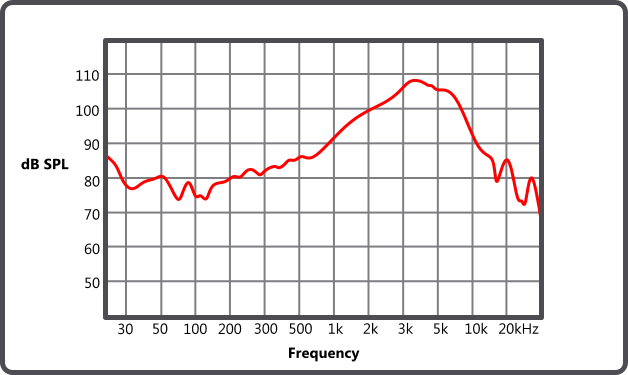
A transfer function will change the magnitude and phase of a sinusoid in some way. So wouldn’t it be logical if we could plot this out on a graph? Well, let’s think about how we could do this ourselves. First, since we have to plot two different outputs (gain and phase shift) let’s put make two separate graphs side by side. Then, let’s put the input (frequency) on the x axis and the output (gain or phase shift) on the y axis. Now, since our input variable will cover an extremely large range, let’s make it on a logarithmic scale. Specifically, let’s take a frequency as an input, plug it into the formula 20log10(omega)), and then graph. Since the units on the x axis are not normal numbers but rather ratios, let’s give them the unit decibels. This type of plot is called a bode plot and is used for analyzing control systems worldwide.