Tag: Mechanical Engineering

Carbon capture and storage

Carbon capture and storage

Carbon capture and storage

“Could we fight climate change by taking CO2 out of the atmosphere and putting it into the ground?”
It is a well-known fact that there is an overabundance of carbon dioxide in the atmosphere as a result of human activity. So are there any creative ways in which we could reduce this amount? Well, This, how about if we were to take the carbon dioxide during an energy generation process, and then funnel it into the ground? This seems like a good (yet crazy) concept, but as engineers, we can’t just make ideas, we have to implement them as well. The first step is to capture the CO2 during energy generation. This can be accomplished through one of two methods, post-combustion (which takes in the extra flue gas released during the burning of fossil fuels and uses a filter to separate out the CO2) and pre-combustion (which traps the CO2 gas before it is burned). This gas will then be transported through a pipe towards a deep rock formation, where it will finally be ejected and stored for a longer period of time. Carbon capture and storage has the potential to save much CO2 from entering the atmosphere (upwards of 14% of energy-related CO2 reductions by 2050). A stalwart example of a Carbon capture and storage plant is the Canadian Boundary Dam plant, which has the potential to save up to 90% of CO2 related emissions.
Orbiting solar panels

Orbiting solar panels

Orbiting solar panels

12/31/16

“Could we increase the efficiency of solar panels by placing them in Earth’s orbit?”
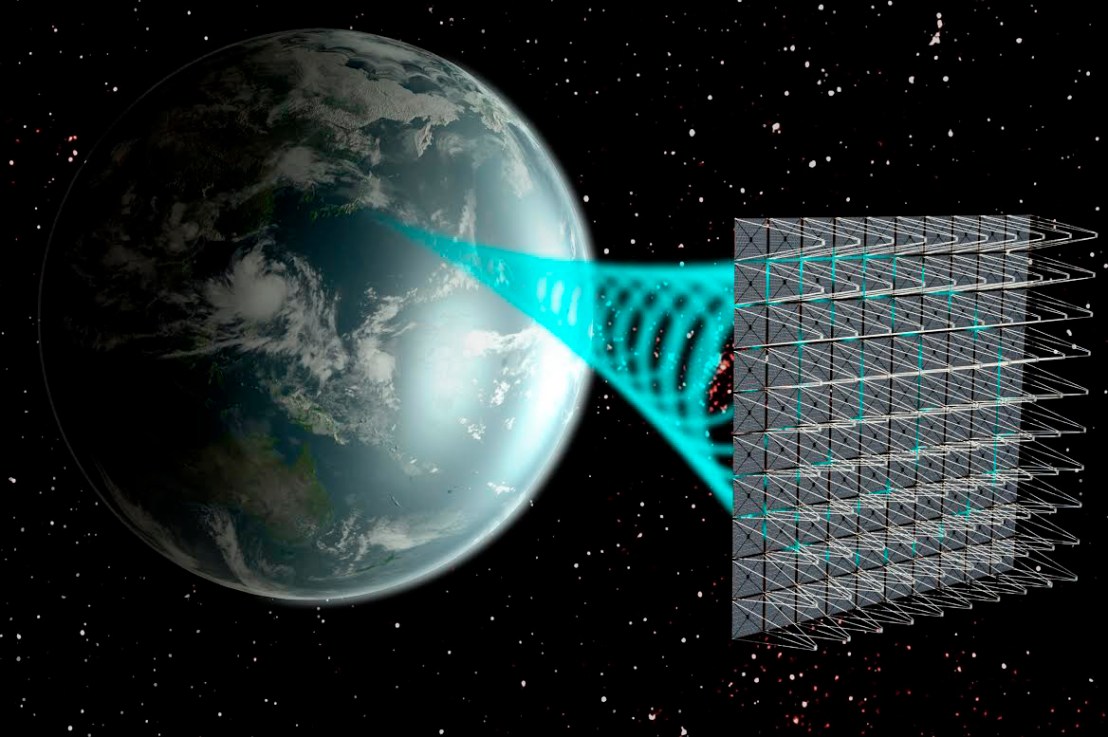
Our sun is an undoubtedly powerful object, on any given day, the Earth will receive 1.74*10^17 watts every second from it! However, much of this energy will be dispersed through the atmosphere of the Earth, limiting the potential of solar panels. So how could we work around this impinging phenomena? Well, let’s use our engineering mindsets to think outside of the box. Since the power of the sun is only mitigated after it enters the Earth’s atmosphere, wouldn’t it be logical if we were to place solar panels outside of the Earth? This most creative idea is being pursued by the Japanese Space Agency JAXA, where they plan to be able to create wireless power transmission units for orbiting solar panels by the year 2030.

Smart grid

Smart grid

Smart grid

12/28/16

“How can we advance the grid into the 21st century?”


The grid as we known it is heavily outdated. When the grid was first conceived of a century ago, the users lived in heavily localized areas, and often only had a few electrical needs, often all electrical appliances could be counted on one hand. However, as just as how electrical technology has matured in an exponential fashion, so has the complexity of the systems, resulting in a strained communication with the grid. We now have dozens if not hundreds of vastly more complicated items being used, each carrying different power requirements, with more being added at a superfluous rate. This is causing grave impingements on our grid, which could lead to pure devastation. So how can we apply our engineering mindset to take our aging electrical infrastructure into the 21st century? Well, why not just implement a two way grid communication system, also known as a smart grid? The fundamental idea is that all electrical signals from this new grid will be monitored and regulated by computer technology. To illustrate, a smart grid will be able to analytically distribute the voltage of electricity to units that require more of it, while supplying less to less intensive units. A smart grid will also be able to integrate more efficiently the sinusoidal nature of renewable energy sources like wind and solar through this monitoring technology. Smart grids are a foresightful investment, and will truly be the technology of the future.

Engineering tolerancing

Engineering tolerancing

Engineering tolerancing

12/07/16

“How do engineers specify the accuracy of their measurements?”


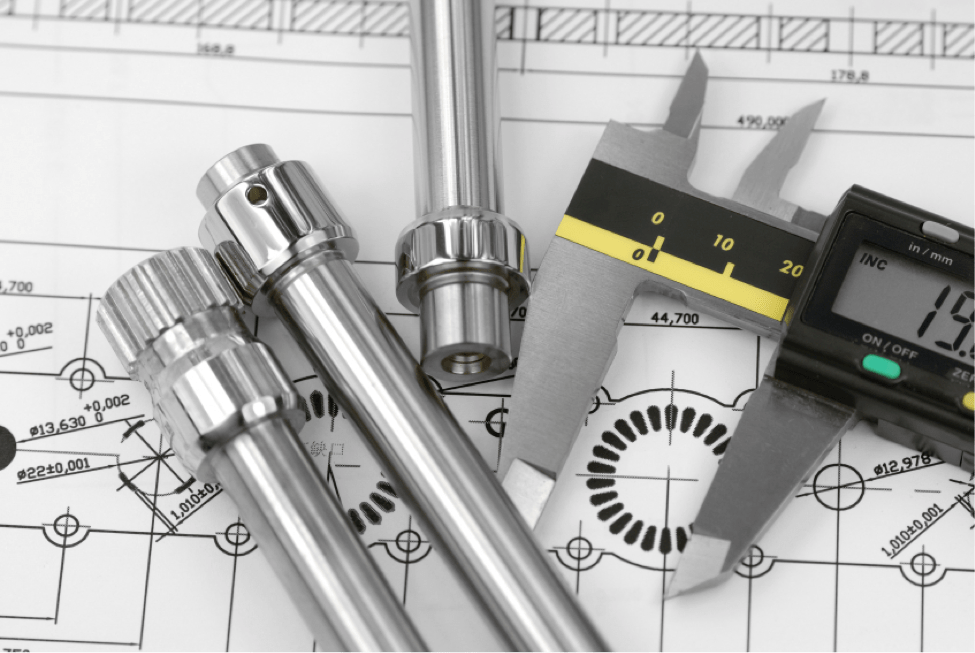
One of the most unfortunate aspects of the real world is that there will always be inefficiency, weather it be with the amount of energy available in a system or the weight distribution. One of the inefficiencies include the physical dimensions of an object. Specifically, material parts have small fluctuations in their sizes as a result of the manufacturing process so parts that should measure 5.1 meters in length can come out to be 5.143 or 5.102 meters. For a mass-produced machine, this could be an opprobrium, as the differences in physical size could lead to malfunctioning, which would causally prove disastrous. Luckily, engineers tend to be a very clever people, and they have invented something called engineering tolerancing to solve this issue. When giving off designs to a machinist, engineers will use significant figures to specify the tolerance that part can have. To illustrate a machine such as a cheap toy would not require a high precision, while something like a jet engine will!

Energy density and it’s importance

Energy density and it’s importance

Energy density and it’s importance

12/02/16

“How do scientists and engineers measure the density of energy within a system and why is it important?”

Energy is a quantity that is used omnipresently for calculations in all branches of science and engineering. However, energy is more than a theoretical abstraction, and since it is tied to the material universe, it must be stored somewhere in reality, such as in objects. And since objects of the same size can have different abilities to hold energy , we will need some conceptual way to understand this. As a result, scientists and engineers have developed the concept of energy density to represent the amount of energy stored within in object. Energy density is an important concept because when analyzing energy storage mechanisms such as batteries and capacitors, once must take in to consideration the volume vs power limitations that a project might have. To illustrate, let’s say that you want to build an autonomous boat. Since this boat will have no people on board, it will need a mechanism to power it’s systems. However, the boat can not uphold too much weight, or else it will sync. Therefore, when designing such a contraption, engineers will have to choose an energy storage technology with a high energy density.

Schmidt hammers

Schmidt hammers

Schmidt hammers

11/21/16

“How can we learn about the compressive strength of a material without destroying it?”


In engineering, knowing the compressive strength of the materials that you are working with is vital for all forms of analysis work. However, many testing methods are very expensive, and involve actually deforming some of the material. So what if we were to have a material that is both expensive and irreplaceable? Well, luckily for us, engineers are a very clever people, and have invented a device known as a Schmidt hammer to solve this problem. The schmidt hammer is comprised of three main parts, a solid chassis, a cylinder going through the center of, and a spring in the inside of the cylinder. When held vertical and pressed against a solid surface, the cylinder will stand in place, causing the chassis to move downwards, compressing the spring. When the cylinder moves all the way down, the user can press a button on the chassis, which in turn will release the compressed spring, and the resulting rebound will give a reading on the body of the chassis which corresponds to compressive strength.

What are frames?

What are frames?

11/01/16

“What are frames, why are they so commonly used, and how can we analyze them?”


Frames are some of the most utilized structures in engineering. In Fact, they are so commonly used that they are used in the name Framework. But what exactly are they, why are they so utilized, and how can we analyze them? Well, like I always say, let’s think about it. Frames are fundamentally structures that hold structures together. This allows them to hold multiple disjointed parts together to become continuous, therefore allowing for more complex structures to be built, therefore allowing for complicated urban systems to be developed! Frames can be analyzed by the fact that they provide static resistance to all parts connected to their system, allowing for loads and other members to balance each other out.

Press brake

Press brake

Press brake

10/07/16

“How can we using machines to bend metal to a specified shape?”


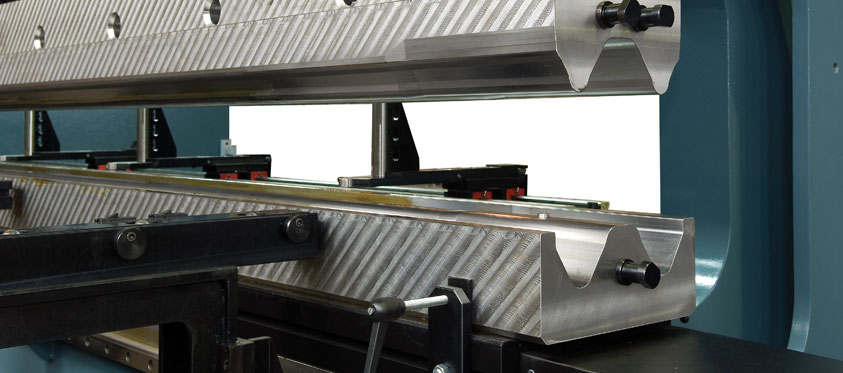
Metal is one of the most omnipresent materials used by humanity. However, before it can be used, it must be bent. And not only that, but to suit the quantity of our civilization’s needs, we must do it on an industrial scale. So, how can we accomplish this? Well, what if we were to use a machine dedicated to bending metal? This is the operating principle behind a Press brake. Press brakes work as follows. The machine will have two main components,  a platform for the sheet of metal to rest upon, and a brake that is used to bend the metal. The brake is powered by a servomotor. When activated, the brake will be lowered and apply a pressure to bend the sheet of metal into the user’s specifications. The platform will then move the sheet of metal along, to repeat the process to create a piece of metal designed to the user’s specifications. Press brakes can make all sorts of metals such as cold-formed steel.

Turbogenerators

Turbogenerators

Turbogenerators

10/09/16

“How can we use turbines for generating power?”
Turbines are excellent machines for extracting power. However, how can we use this knowledge to further apply it to generate large amounts of electric power? Well, let’s think about it. We know that turbines are able to produce mechanical energy when a fluid passes through their blades. And we also know that we can convert mechanical to electrical energy through the use of electric generators. So what if we hooked up a turbine to an electric generator? With this set-up, we would be able to extract large amounts of electric power. Due to the usefulness of such a contraption, it has become the operating principle behind wind turbines and hydroelectric power plants