Tag: Energy

Quantum Dots for Solar Panels

Quantum Dots for Solar Panels

Quantum Dots for Solar Panels

02/25/19

“Why are quantum dots for solar panels so useful?”


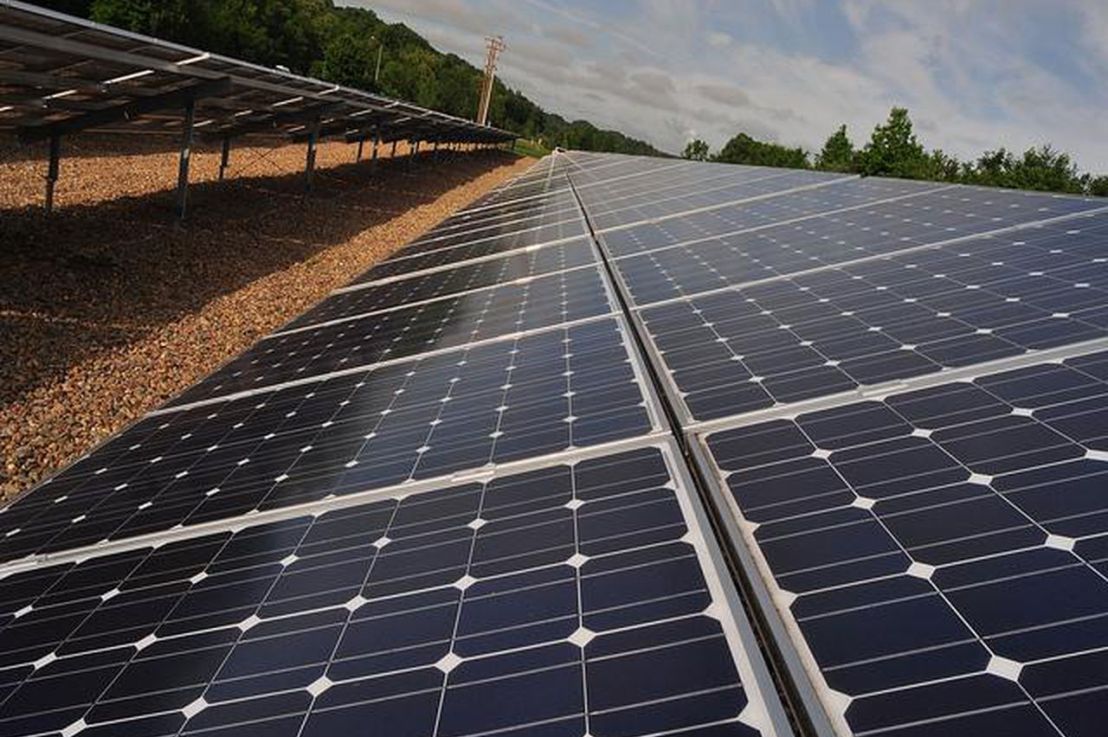
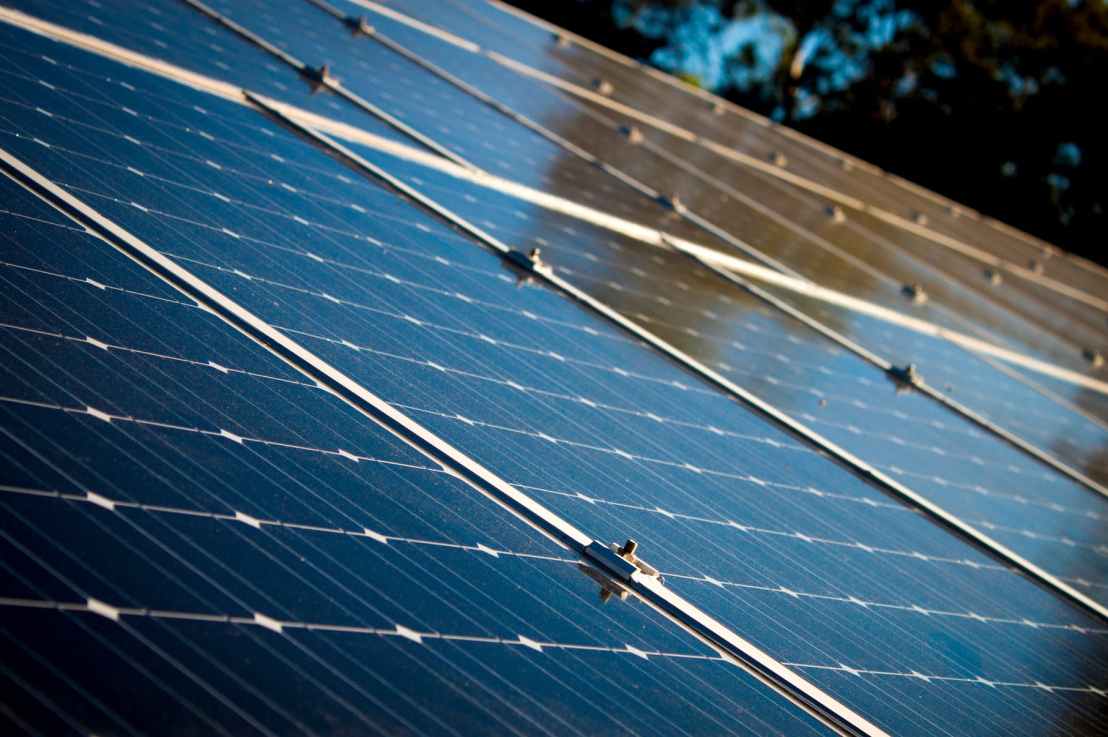
Quantum dots are bringing a revolution into the world of semiconductors. And since semiconductors are the backbones of solar panels, things will be greatly changed for them as well. The extra emissivity offered by quantum dots means that two and possibly three electrons can be generated for every photon received, vastly increasing its potential! Quantum dot solar panels can achieve as much as 65% efficiency, nearly double of the theoretical limit of normal panels. This is why Quantum Dots for Solar Panels are so exciting.

Image link https://upload.wikimedia.org

Quantum Dots

Quantum Dots

Quantum Dots

02/24/19

“What is the next big revolution in semiconductors?”


Semiconductors technology is going through a revolution. Nanosize semiconductor materials known as Quantum Dots which can give off light when illuminated are starting to be developed. Their small size allows them to be much more efficient than typical semiconductors and can give off a broader range of lights.


Image credit i.ytimg.com

How Tree Trimmings Could Help Build Power Resilience

How Tree Trimmings Could Help Build Power Resilience

How Tree Trimmings Could Help Build Power Resilience

02/21/19

“How could trimming trees help prevent blackouts?”


Grid failure happens all the time. But one of the most common causes actually stems from something very simple, trees! Tree foliage produces an area that is sensitive to burning and is also liable to falling down, crushing distribution. By taking away some of this foliage, some of this resiliency liability. This is How Tree Trimmings Could Help Build Power Resilience.


High-level Radioactive Waste

High-level Radioactive Waste

High-level Radioactive Waste

02/20/19

“What is the byproduct of nuclear energy?”


Nuclear energy is one of the promising power sources for the decarbonized future. However, like everything in this world it comes with serious consequences. The spent Uranium fuel rods will still give off enough radiation to kill a person for a quarter of a million years, meaning that this High-level Radioactive Waste must be contained somewhere.


Image credit http://www.world-nuclear.org

Methanol Fuel

Methanol Fuel

Methanol Fuel

02/18/19

“What is a more optimal fuel than gasoline?”


While gasoline is the most widespread vehicle fuel in the world, recent advances in science and technology have created competitors. One in particular comes in the form of Methanol Fuel. Methanol fuel is synthesized from carbon dioxide and hydrogen burns cleaner and is cheaper to produce sustainably than ethanol. Since it does not produce a thick cloud of smoke upon use, it is often used in racing applications. Although methanol is less toxic than petroleum, there exist very few methanol refueling stations, it is commonly found in a mixture with other fuels.

Image credit https://toxtown.nlm.nih.gov

Renewable Energy in Brownfields

Renewable Energy in Brownfields

Renewable Energy in Brownfields

02/14/19

“How can renewable energy be used in unusable land?”


Brownfields, or areas where pollution has made habitation unfit for humans, are often thought as unusable. However, since renewable energy is often immune to a lot of the toxins present in these areas, they have no problem being installed there. As a result Renewable Energy in Brownfields can open up a lot of sustainability potential in blighted areas.

Image credit thumbor.forbes.com


Cellulosic Ethanol

Cellulosic Ethanol

Cellulosic Ethanol

02/13/19

“How can we make potentially more sustainable fuels from plants?”


Fuel is the most common energy storage method in the world. Whether it is used in consumer vehicles, aircraft, or submarines, fuel seems to be present. However, the common petroleum or natural-gas derived fuel is quite disastrous for the environment, being one of the leading causes of greenhouse gas generation. So how can we make a cleaner substitute? Well, what if we were to instead make fuel from the stringy-fiber of a plant? This is known as Cellulosic Ethanol and has the potential to be a paradigm shift since it would not compete with existing food crops and does not emit greenhouse gasses. However, if land usage is implemented into the lifecycle analysis, then Cellulosic Ethanol is more destructive due to its intense water and land usage.


Image credit wi-images.condecdn.net

How Community Choice Aggregators Can Offer Cleaner Energy at Lower Rates

How Community Choice Aggregators Can Offer Cleaner Energy at Lower Rates

How Community Choice Aggregators Can Offer Cleaner Energy at Lower Rates

02/12/19

How can community-sourced energy be cheaper and greener?


There is a revolution brewing in the renewable energy world. While in the past residents and businesses were tied to one electric utility based on their geographic area, organizations known as Community Choice Aggregators are starting to sprout up and challenge this. Community choice aggregators or CCAs are non-profit organizations that procure power generation and deliver it to customers through a utility’s transmission lines. Since these do not operate for investors and only need to pay for energy and staff, they can give their customers better rates than traditional electricity service and focus on particular resources. To illustrate, just look at the CCA San Jose Clean Energy. Even though their energy portfolio is 45% Renewable Energy/80% carbon-free, they sell energy at rates 1% lower than the standard San Francisco Bay Area PG&E service which is 33% Renewable Energy/78% carbon-free. This is How Community Choice Aggregators Can Offer Cleaner Energy at Lower Rates!

  .

How Wave Energy Can Help Island Nations

How Wave Energy Can Help Island Nations

How Wave Energy Can Help Island Nations

02/11/19

“Why is wave energy really helpful for island nations?”


Island nations are strapped when it comes to energy resources. Their small land area limits the potential for distributed energy resources and centralized power plants pose a large resilience risk and monetary expense. However, there might be one form of power that can be a game changer. Since islands are surrounded by water, the can harvest the kinetic energy from the waves crashing onto their beaches. Complimenting this with other renewables, island nations can achieve true self-sufficiency. This is How Wave Energy Can Help Island Nations.