Author: Isaac Gendler

Kidney stones

Kidney stones

Kidney stones

09/25/16

“What are Kidney stones?”


You have probably heard of Kidney stones, those mysterious solid objects that cause major pain to everyone. But what are they and how do they form? Well, it turns out that kidney stones is caused by simple chemistry, insoluble compounds. When your urine contains too many insoluble components such as calcium, they begin to build up and cause kidney stones to form. In order to avoid Kidney stones, you should commit to regular exercise and avoid diets that are too high in protein, sugar, and sodium.

Screw thread

Screw thread

Screw thread

09/24/16

“What do those grooves on screws do?”


Have you ever wondered what those helical grooves on screws do? I mean, they need to have some sort of purpose, or else why would have mechanical engineers even have included them. Well, believe it or not, the functions of these groves, usually termed screw threads, is to convert between rotational and linear force, therefore enabling the entire operation of a screw!  This is as a result of the screw thread helical geometry, since the thread both wraps around and along cylinder, a rotation against object will cause it to be pushed into the object. The power of screw threads are contingent upon how close the grooves are to each other (called the pitch) and the diameter of the grooves (called the lead). When the lead undergoes a full rotation, the screw will move the size of the lead. Because of these properties are so important to functioning, screws are classified by the size of their pitch and lead.

Washers

Washers

Washers

09/23/16

“How can we distribute the loads of threaded fasteners in a simple way?”

 
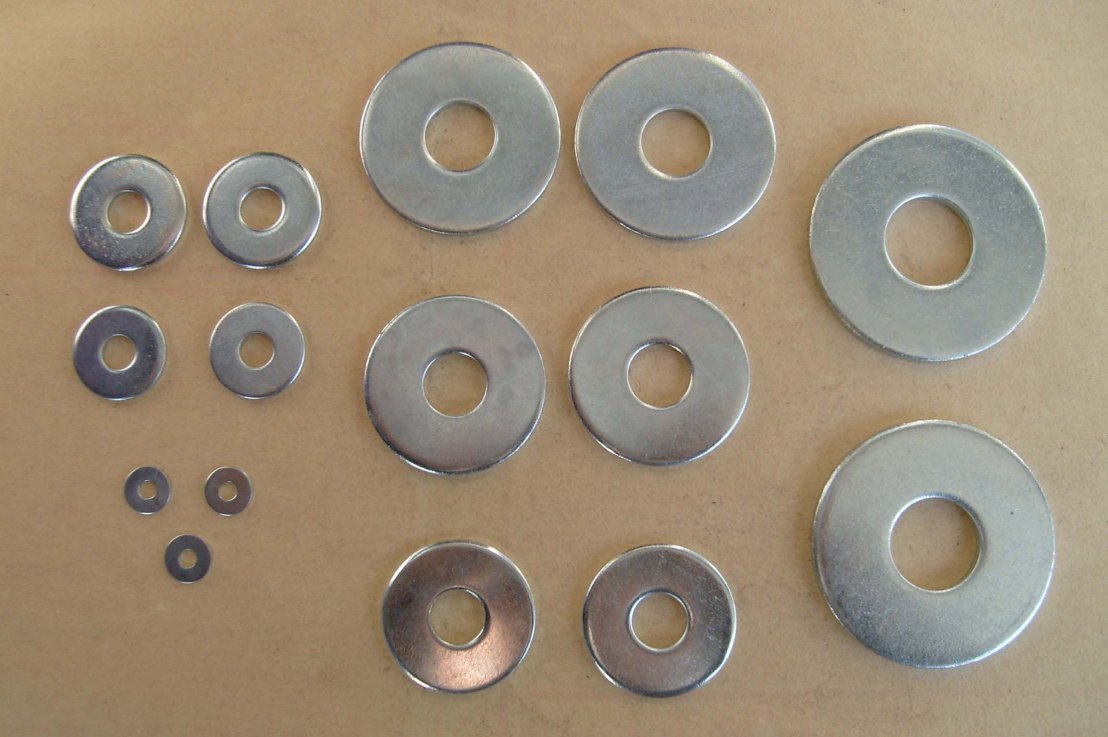
When working in engineering, we often have to consider how the loads of threaded fasteners such as a nut will impact a project. Often times, these parts will cause damage onto surrounding objects due to their threaded nature. So, how could we prevent such problems from happening without having to add too much complexity to the system? Well, let’s use our engineering mindset to think about it for a moment. If we do some research, we can find out that circular geometries are superb ways to safely distribute a load due to their symmetric nature. Also, since nuts are usually on the very small scale, we don’t have to have too much weight to absorb the resulting load. So what if we were to create thin, ring-like materials to cover up the burden resulting from the fastener? This is the exact idea behind a very common piece used in engineering called a washer. Washers can be not only be used to intake loads from a fastener, but can also be used  spacers, springs, locking devices,  and vibration reducers. Different sizes of washers can be identified by the size of their inner hole and their outer diameter. All in all, washers are another example of the ingenuity of the human species.

Telescoping expansion joint

Telescoping expansion joint

Telescoping expansion joint

09/22/16


“How can we implement an expansion joint for tubular geometries?”

Expansion joints are very useful devices. However, how can we create affordable versions to implement on tubular geometries such as in pipes? First of all, let’s look at the problem at hand. Thermal expansion causes a material to change it’s size depending upon the surrounding temperature, and as such there needs to be “breath gaps” to ensure that a structure will not collapse. However, using something like a plaster or a soft filling will not be strong enough to sustain the expected pressures on a pipe, and having loose material might cause a leakage into the fluid flow. Therefore, we will have to think of an adjustable solid part. Well, how about we take some design inspiration from one of humanity’s greatest achievements, the telescope. Part of what makes telescopes the machines they are is the fact that they have a telescoping build, which means that solid parts are made so that they can slide past each other. Now, how about we take this mechanism and apply it to our thermal expansion joints?


Well, what we could do is have two concentric expansion tubes, one with a larger tube and the other with a smaller one. The smaller diameter tube will connect to the two joints of the mechanism, and will expand and contract upon need. The larger diameter tube will act as a fixed support in order to center the smaller diameter tube, and as such have a smaller diameter. You can analogize the larger diameter tubes as being like the “braces” of the smaller diameter tube. O-rings are often used to seal these parts to ensure that all operations are smooth. This layout is known as a telescoping expansion joint. Telescoping expansion joints are very useful due to their simple yet effective design, and the fact that they can be curated for tubular geometries.

How to solve oxidation-reduction reactions

How to solve oxidation-reduction reactions

How to solve oxidation-reduction reactions

09/21/16

“How can we solve these complex oxidation-reduction reactions?”


Oxidation reduction reactions can be quite difficult to grasp for many new students in Chemistry due to the long process often involved. However, I will show you how even through working through these problems might be convoluted at first, they are actually very intuitive if you think about how it works from a systematic point of view.

Let us start with an example oxidation-reduction reaction, CrO4 -2 + I- → I2 + Cr +3. The first thing we must do is split the problem into two half reaction, I- → I2 and CrO4 -2 → Cr+3. Now that we have isolated these problems into separate forms, we now have to balance the equation with the exception of hydrogen, oxygen, and charges! (Which we will come to later). So our new half reactions will be 2I- → I2 and CrO4 -2 → Cr+3. Now, you are probably curious about how oxygen is present on the left side of the second equation but not on the right! But before we give up, it is possible to add hydride ions to both sides. So what we do is take hydride, add enough to balance out the charge of the oxygen, and then add the corresponding amount of H2O on the other side. Now that we have done this, we have to account for the extra charges on both side. To solve this, we simply add extra electrons to the more positive sides of the reactions. To illustrate, the first equation will become 2I- → I2 + 2e-, and the second one will become CrO4 -2 → Cr+3 + 5e-. Now that both equations are fully balanced, it would seem logical to just combine them again, right? Well, not quite yet. If we would do that, there would be an imbalance in electrons. To solve this, all we have to do is multiply each side by a numerical constant to the lowest common factor of the electron charges to balance the electron charges. Since we have 2 electrons for the first equation and 5 for the second, the lowest common factor between them will be 5 and 2 respectively. So then our equation will be 2(CrO4 -2) + 5(2I-) + 10e- →2(Cr+3)  + 2(4H20) + 5I2 + 10e-, and after crossing out the electrons on both sides, our final answer will be 2(CrO4 -2) + 5(2I-) →2(Cr+3)  + 2(4H20) + 5I2

Once you have completed this process a few times, you will realize how logical and systematic it can be!

O-rings

O-rings

O-rings

09/20/16

“How can we apply our knowledge of gaskets to tubular geometries?”


Pipes and tubes are some of the most ubiquitous materials used to transfer fluids. And since they often do it at such high pressures, safety must be a central focus of their design. We already know that gaskets can be utilized to ensure the secure transfer of fluids, so how can we take our knowledge of these parts and apply it to tubular machines? Well, let’s use our engineering mindset to figure this out.


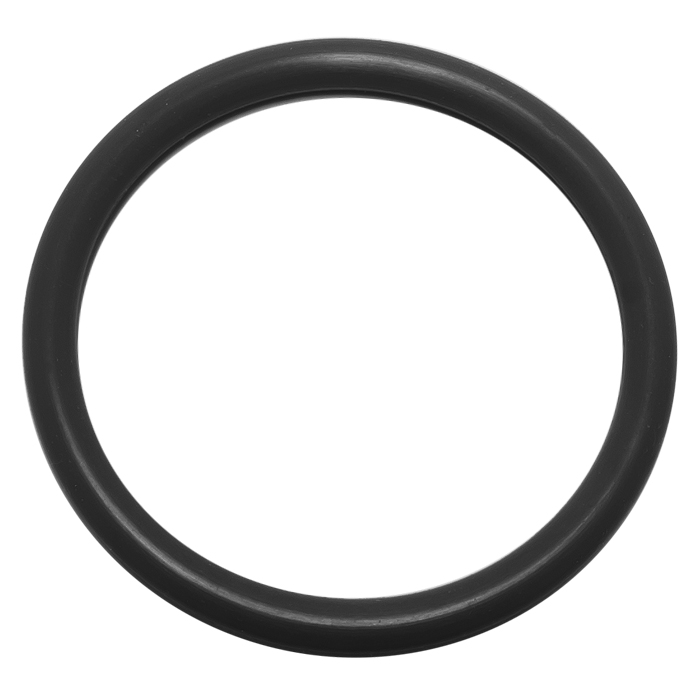
First of all, let us analyze the geometry that we are working with. This problem specifically has a uniform circular nature. So any fluid that might escape will do so in a direction perpendicular to the surface. So wouldn’t it be logical if we covered all critical points with a ring like material? Well, this is the operating principle behind an O-ring. O-rings can be found in all of sorts of applications, ranging from everyday uses such as car engines and even to extraordinary achievements of human through such as space shuttles! (in fact, the primary reason behind the infamous challenger failure was due to an O-ring failure)Since O-rings come in a diverse range of shapes and sizes for their diverse uses, these items are typically defined by the diameter of the inner circle and outer circle. All in all, O-rings are a salient example of how a simple part can have be utilized in far more complex ways.

Gasket

Gasket

Gasket

09/19/16

“What is a simple way to ensure that fluids can be transferred without leakage while under compression?”


In modern machinery, fluids are often transferred when under compression. However, this action often leads to fluid leakage, so how can we design an apparatus that allows us to safely transfer this fluid . Well, let’s think about at using our engineering mindset. Well, often times it is the compressed space surrounding the mechanical transferring parts that causes the leakage. So wouldn’t it be logical if we just added a new part in between this space to prevent any unwanted interference? Well, this is the operating principle behind a very fundamental piece of technology called a gasket. The design of gaskets are usually made out of soft materials such as asbestos, aluminum and copper. The design and material makeup of gaskets is contingent upon the substance needing to be sealed, the operating temperature, and the geometry of the conjoined parts. Gaskets are often prone to be worn out after continual use, and must be replaced. Gaskets have many ubiquitous applications, most notably in car engines. In some applications, gaskets are being phased out in favor of sealants. 

Guide to the chemical hazard diamond

Guide to the chemical hazard diamond

Guide to the chemical hazard diamond

09/18/16

“What does that multi-color diamond near each chemical symbol represent?”


Have you ever noticed how this a multi color diamond near many chemical containers? And have you ever wondered what it represented? Well, it turns out that that geometric object is simply a chemical hazard diamond. A chemical safety diamond is an indicator of the types of hazards that are found in the contained chemical. The yellow diamond on the left indicates the reactivity, the red diamond on the top indicates the flammability, the blue diamond on the left indicates the toxicity, and the white diamond indicates the specific hazard. The first three use a 0-4 numbering system to indicate the danger level, 0 being the lowest and 4 being the highest, while words and symbols will be written on the bottom white diamond to attest to it’s specific danger. Manufacturers by law are required to print the diamond on each container to inform the users about the safety precautions they must make.

Aqueous solution

Aqueous solution

Aqueous solution

09/17/16

“What makes solutions in water so unique?”
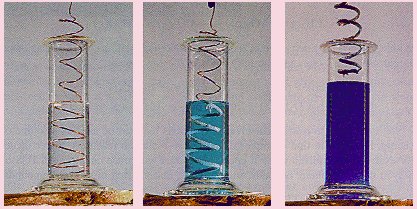
During one’s study of chemistry, one will come across the fact that many substances dissolve in water. However, how can Chemists classify this, and how are they unique? Well, this phenomena is usually termed an aqueous solution (Aqueous coming from aqua-, Latin for water). However, what is truly special about aqueous solutions is that  allow for the substances to be dissolved into ions within it. This gives rise to electrolytes, which can make water conductive, and this is where acid and base reactions take place. In fact, this ability to dissolve substances into ions is one of the reasons that makes water the prime factor for life, as different substances can be transformed and reacted within it.