Month: June 2018

Additive Manufacturing

Additive Manufacturing

Additive Manufacturing

06/12/18

“How can we make items on the spot?”


Advances in manufacturing have corresponded with paradigm shifts in human capability, whether it be the introduction of metals early in human society or industrialization later. But we may be on the cusp of another. Additive Manufacturing, also known as 3D printing, promises to bring more change by taking a 3D software object file and realize it in reality by adding layers upon layers of material.
Urgent Report: Humanity is not Investing Enough into Renewable Energy!

Urgent Report: Humanity is not Investing Enough into Renewable Energy!

Urgent Report: Humanity is not Investing Enough into Renewable Energy!

06/11/18

“How much more renewable energy do we exactly need to build?”


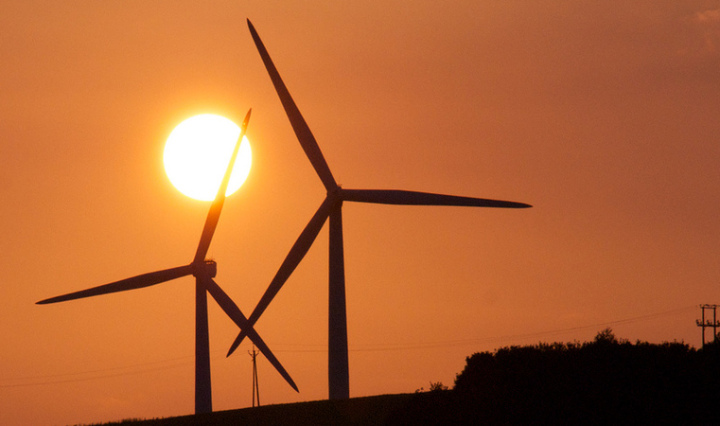
Humanity is in big trouble. Although we have been investing more in renewable energy than ever before, at our current rates it is still not enough. A paper by Ken Caldeira at the Carnegie Institute for Science has calculated that the entire world will need to 1.1 gigawatts of clean energy per day to limit climate change levels to be below 2 degrees Celsius. But against this monumental number, we are only adding around 15% of that! If we keep going at this pace, it will take four centuries to completely overhaul our energy system, which could lead to drastic consequences. 

How Locally Owned Distributed Energy Resources Can Help Disadvantaged Communities

How Locally Owned Distributed Energy Resources Can Help Disadvantaged Communities

How Locally Owned Distributed Energy Resources Can Help Disadvantaged Communities

06/10/18

“How would disadvantaged communities be helped if they owned their own solar?”


Although Solar is often thought to be a plaything for the wealthy, disadvantaged communities would benefit the most from locally owned renewable and distributed energy. Since these communities often have to live near the greatest amount of air pollution and pay the highest electrical bills as a result of inefficient appliances. But by owning their own solar energy, they could cut their reliance on dirty energy technology and make some money through feed-in tariffs, resulting in much more healthy and prosperous communities.

DC Fast Charging

DC Fast Charging

DC Fast Charging

06/08/18

“How exactly does fast charging work?”


We have a problem. The electrical grid is AC, while an EV battery runs off of a converter on board of the EV. The inbuilt transformer on a vehicle’s battery allows for quick conversion, but at the cost of quick speeds. The solution is to use DC Fast Charging, which allows for direct conversion, enabling much faster charge speeds.

California Rule 21

California Rule 21

California Rule 21

06/07/18

“What governs how Californian solar connects to the grid?”


Solar energy is booming in California. But as more is put on, the variable fluctuations must be controlled. To solve this, California has created a standard known as Rule 21 which governs how grid-tied power producing plants can connect to the grid. The first phase of this includes a Smart Inverter requirement which allows disconnection from the grid in the case of wild solar fluctuations.

How Electric Vehicle Deployment Could Help Increase Energy Security

How Electric Vehicle Deployment Could Help Increase Energy Security

How Electric Vehicle Deployment Could Help Increase Energy Security

06/05/18

“Why are Electric Vehicles Helpful for National Security?”


If a nation’s economy is driven by a resource it receives from another country, then it will be at risk in the case of a dispute. And unfortunately, this is the case with many countries and petroleum. To combat this dependence, nations could pursue policies which reduced their petroleum use, which includes adopting petroleum free electric vehicles!

Load Shedding

Load Shedding

Load Shedding

06/04/18

“How can we reduce the load when we don’t have enough supply?”


Energy in the grid is always about a balance between supply and demand. And sometimes, the demand outstrips the supply greatly. As a result, appliances on the grid will be forced to shut down to artificially reduce demand and create balance in a practice known as Load Shedding.