“What happens when stress is applied parallel to the surface area of a material?” Any force acting upon a three-dimensional object will produce an internal stress. However, how do engineers classify the types of stress that are parallel to the material’s surface area? Well, after many years of research, this phenomenon has been classified as a shear stress. A shear stress will produce a shear strain in the object proportional to the object’s modulus of rigidity, which can be symbolically represented with the equation (Tau = G*(Gamma), with (Tau) being the shear stress (Gamma) being the shear deformation and g being the modulus of rigidity. The higher a material’s shear strength is, the more it will be able to resist shear strength.
“Could we make wind turbines more efficient by adding a second rotor?” The wind turbine is one of the finest inventions that humanity has conjured. It is simply amazing how these machines can take in the kinetic energy of the wind and transfer it into power to be used by humans. However, the designs of these machines often come with a problem. The rotor of the turbine, one of the most important components of the device, disrupts the surrounding wind, inducing turbulence and lowering the amount of energy to be obtained. So how could we use our engineering mindsets to solves this problem? Well, Aerospace Engineers Anupam Sharma and Hui Hu of Iowa State University made a thorough investigation on this problem, and discovered that one way to solve this problem is actually to add a second rotor to the turbine! This would not only increase the amount of energy absorbed, but also prevent much of the unwanted turbulence. This team is currently working on optimizing the design, such as the location of the turbine, the direction it should take, the size, and what kind of airfoil the dual rotor wind turbine should have.
“Could we use the batteries of electric vehicles to power our homes?”
Renewable energy has a problem. The peak times for generating such power (mid-day) is often not in sync with the peak stress on the grid (sunset, when solar energy is no longer available), and local battery storage can be quite expensive. So how can we circumvent this issue? Well, let’s use our engineering mindsets to solves this problem. One of the main problems stems from the lack of affordable energy storage. However, many sustainability conscious individuals also own electric vehicles. And in these electric vehicles are electric batteries which often times have excess energy. So what if when these cars were parked at night, they would feed energy back into the local smart grid to power homes? Well, this is the main idea behind a system which researchers refer to as vehicle to grid technology, which is not only environmentally friendly but economically with the use of net-metering.
“Can we make wind turbines to be placed on another axis?”
Wind turbines are famous for their horizontal axis rotor design, looking like giant fans in the distance. However, do things have to be this way, and could it be possible to shift the turbine onto another axis? Well, let’s think about it. We know that the wind is always blowing perpendicular to a post in the ground. We also know that this wind can exert a pushing force on objects in its direction and that if such an object was freely attached a solid post a torque would be induced that would cause it to move around said post. Now, what if we were to take this torque and have it spin a generator to make electricity? Well, this turns out to be the operating principle behind a vertical wind axis turbine. The symmetric design of vertical wind axis turbines (also known as VAWTs) allows them to not need to “track” the direction of the wind (as the machine would be affected equally in all directions), place less fatigue on the gearbox, and can possibly be more efficient than traditional wind turbines. However, VAWTs are also more failure prone, which could prove to be burdensome on a company’ economics.
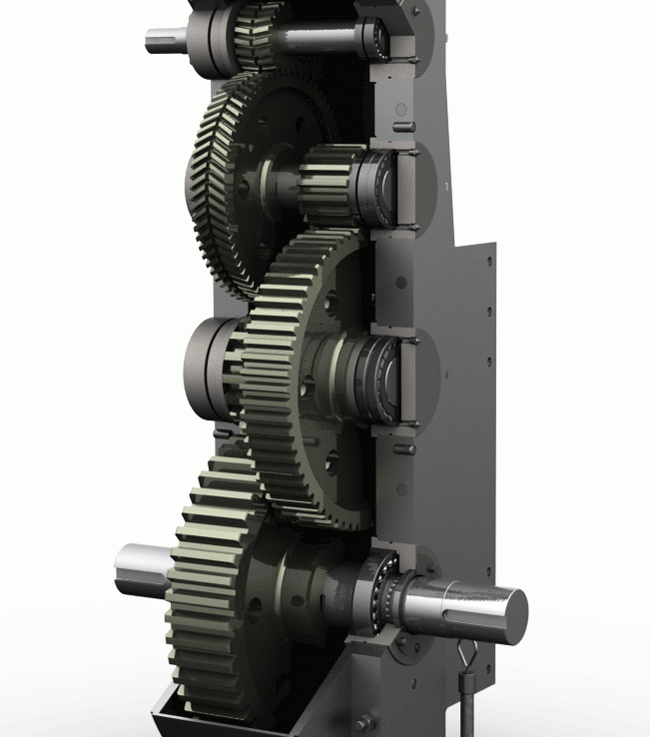
“How can we change the rotational speed of an engine to a more appropriate value?” A large portion of modern complex mechanical devices use engines of some sort to generate rotational motion. However, usually the speed of said motion is too small for any practical purposes. So how could we channel the kinetic energy to artificially increase the speed? Well, let’s think back to a very old concept, gears. Gears are special because of you were to take a large gear and connect it to a smaller one, any motion induced in the first one would be amplified in the second, and vice versa for the opposite direction. So what if we were to take this system and apply it to engine mechanics? Well, this gearbox setup is not only possible but is also one of the primary components of automobiles (to be used as transmission between the engine and the drivetrain) and wind turbines (translating the heavy torque low speed motion of wind blades into a faster RPM necessary for large energy generation)
“How can we achieve greater efficiency of solar arrays using water?”
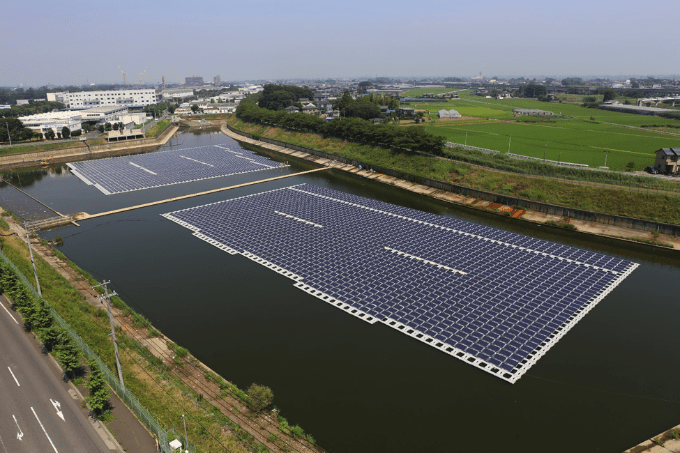
Solar panel arrays are some of the most benevolent technologies in existence. However, they can often require large parcels of land, which could be expensive and take away from the possibility of being used for other activities. So how can we use our engineering mindset to circumvent this issue? Well, if our main quandary is that solar panels take up a large amount of land, why not take them off land? Specifically, what if we were to create solar panels designed to float on water? This is the operating principle behind floating photovoltaics (also known as “floatovoltaics”), which use a specialized form of solar panels placed in water reservoirs to generate clean electricity for the local area. Floating solar arrays are more efficient than traditional models and can be hidden from the public view, but designers of such systems must take into consideration the effects of increased wind speeds over water and the local habitat. Companies around the world are already suiting to take up the challenge of implementing these systems, with Kyocera of Japan, Sonomoa clean power of California, and Infratech industries of Australia investing money to build these models.
“How can we move fluids within a machine using mechanical power?”
Modern mechanical machines such as automobiles and solar heaters work using an internal transfer of fluids. However, since fluids can be difficult to control, specialized machinery must be used to ensure a smooth transfer of material. So how can we make such an apparatus? Well, we know that fluids are respondent to mechanical actions such as suction or pressure, what if we were to make a solid device that accomplishes this? This is the fundamental idea behind an engineering tool known as a pump, and it has become one of the most widely used devices in the current technological paradigm of humanity.
“Why are wind turbines placed at higher altitudes?”
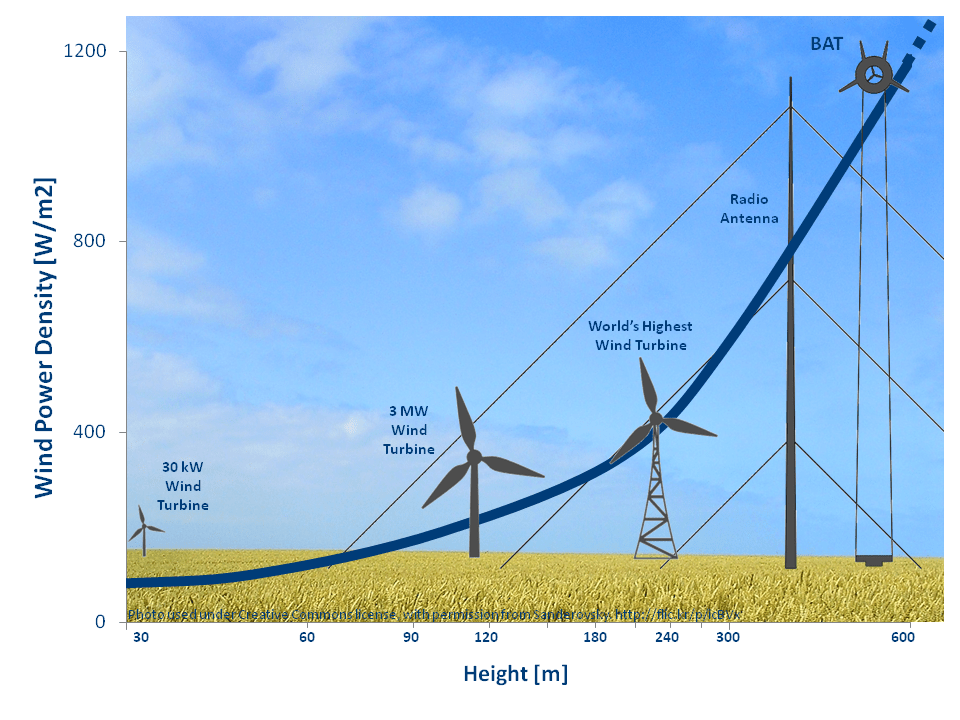
Wind turbines are a very common sight nowadays. However, if you look closely, you can notice a recurring pattern: such edifices seem to be disproportionately placed at higher altitudes. Why is this so? Well, we simply have to analyze the physics and engineering surrounding the decision. When the planet’s wind collides with solid objects, turbulence will generated, disrupting wind flow and inducing a lower speed. The closer the wind is to the ground, the closer it will be to solid objects, causing more turbulence, and since the amount of energy that a wind turbine produces is contingent to the surrounding wind velocity, it would be only logical to place them at higher altitudes.
“Why is it that wind turbines always seem to have three blades?” Wind turbines can be seen everywhere nowadays, from the coasts of Brazil to the mountains of Scotland. Throughout these installations, they all seem to have one peculiar feature in common: only three blades are attached to the turbine. Why is it like this? Well, let’s use our engineering mindsets to figure this out. The more blades that a wind turbine has, the more torque, generating more electricity. However, each blade will come with its own particular weight and cost, so simply adding more would prove ineffective. If one were to create a performance vs cost analysis, they would find that the three blade design would come out as the most efficient! This little example is a great showcase for how engineering is not utterly based off the laws of physics but the nature of economics as well.




 Isaac's Science Blog