Tag: Mechanical Engineering

Magnetic attraction bearings

Magnetic attraction bearings

Magnetic attraction bearings

04/24/17

“How can we use magnetic attraction to make bearings?”


Conventional mechanical bearings are limited by the effects of mechanical friction which impinges their durability, speed, and control. However, by removing physical contact with the shaft, the bearing will become far more optimal. So how could we implement such an idea into reality? Well, one method is to use the physical mechanism of magnetic attraction to remotely control the bearings. Such magnetic attraction bearings would be freed from the limitations of traditional mechanisms and could provide for far more efficiency. However, due to chaotic nature of rotation, a self-centering device must be used with such mechanisms, so that no side becomes too close to the magnetic center and therefore lose balance. Such conundrums can be remedied with magnetic repulsion models.

V-6 engines

V-6 engines

V-6 engines

04/23/17

“How can we make an engine with six pistons?”


Most non-American car models are powered by conventional four-piston engines. However, such technology can be slow and weak. So how could we create a new engine that would be faster and offer more powerful acceleration? Well, let’s use our engineering mindset to figure this out. We know that one of the bottlenecks of four-stroke engines is their limited stroking numbers. So what if we were to increase the amount of pistons active? Well, if we were to take six cylinders, put them at 60 degrees from the horizontal (to smoothen vibrational effects) and activated them, we would have an engine that is both compact and powerful. This configuration is known as a V-6 engine, and is used widely by American automobile manufacturers.

Desalination plants

Desalination plants

Desalination plants

04/21/17

“How can we make saltwater drinkable for humans?”


Humanity is running into a problem. With each year our water supplies are getting lower and lower. Soon enough, we may not be able to provide ourselves with one of the most basic components of life.


But does it have to be this way?
If we apply our engineering mindsets, then we can devise a method for water purification to sustain our livelihoods. To begin, let’s start out with some simple chemistry. 96% of the water on this planet is stored in oceans as salinated water. And because of its salty nature, by default, it is unsafe for human consumption. However, we must take one more fact into consideration, that the evaporation point of liquid water is lower than that of salt. So what if we used some simple logic and create a device that would heat salt water up until the point of evaporation, move it over into another container, and then condense it into drinkable water? Well, this is the fundamental idea behind a system which engineers have termed desalination plants, and are used to treat saltwater around the world. One downside of traditional desalination plants is the vast amount of energy required to heat up the water, taking around 5 kWh for a cubic meter of just fresh water!

Magnetic repulsion bearings

Magnetic repulsion bearings

Magnetic repulsion bearings

04/16/17

“Can we use magnetism to improve bearings?”


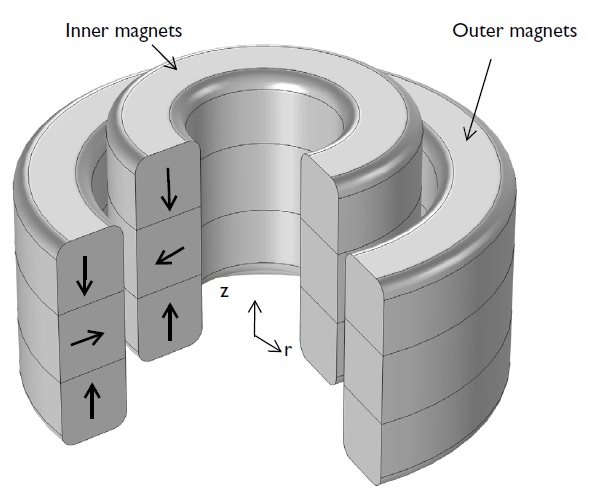
Normal bearings use mechanical forces to lock onto a rotor. However, this method can be made highly inefficient due to heat and frictional losses resulting from contact. However, can we use our engineering mindset to improve this system? Well, to start, let’s look at the root of the problem, the mechanical contact. If we remove this feature, then our system can work with much fewer impingements. One way to create a non-contact grip is to use a magnetic force. So what if we made bearings that make use of magnetic levitation technology to keep in contact? Well, this is the exact idea behind magnetic repulsion bearings, which use a repulsive force to achieve passive levitation. Not only does the repulsion effect keep the bearing afloat, but it also introduces a self-centering mechanism, so if one part becomes to close it will be repelled away.

Pipeline transport

Pipeline transport

Pipeline transport

04/14/17

“How can we move fuel over long distances?”


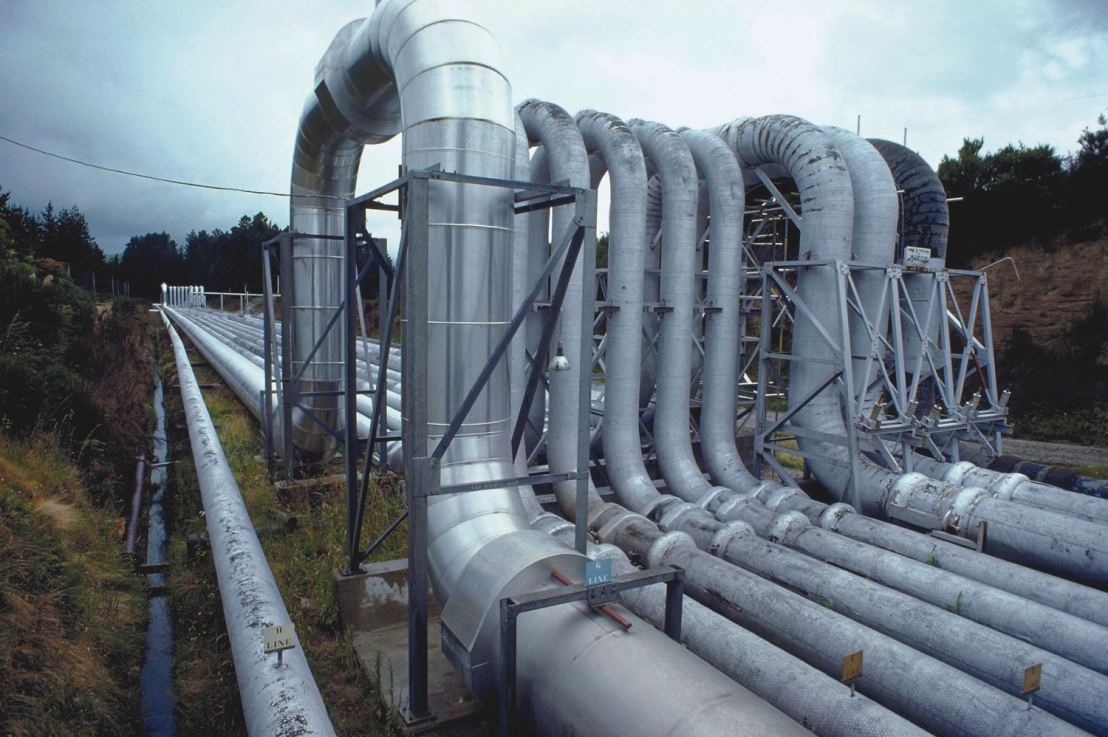
Human infrastructure has a logistics problem. The resources needed for the operation of our civilization (such as water and petroleum) are produced in locations far, far away from where they are consumed. So how can we devise a mechanism to transport these materials over long distances? Well, let’s use our engineering mindset to solve this problem. We know that these resources are often extracted in fluid form. And we know that one way to transport fluids is to use piping systems. So what if we were to use giant pipelines strewn throughout the landscape for the transportation of this material? Well, it turns out that pipeline transport of resources is more than a theoretical idea but a practical reality, and is used by almost every country in the world.

Hydrogen pipelines

Hydrogen pipelines

Hydrogen pipelines

04/13/17

“How is hydrogen transported?”


Hydrogen is one of the most fundamental resources for modern day infrastructure. However, since hydrogen is a raw resource produced far away from the areas that it is used in, it must be transported in some fashion. So how exactly is this accomplished? Well, let’s use our engineering mindset to find out. Well, we know that fluids can be easily moved through piping systems. And we also know that raw hydrogen often takes the form of a fluid. So wouldn’t it be logical to use specialized hydrogen pipelines to transport hydrogen to its specified location? Well, it turns out that engineers all over the world have implemented this technology, ranging from the Netherlands to Lousiana.

Thermal  Batteries

Thermal Batteries

Thermal  Batteries

03/16/17

“How can we reinvent batteries using heat?”


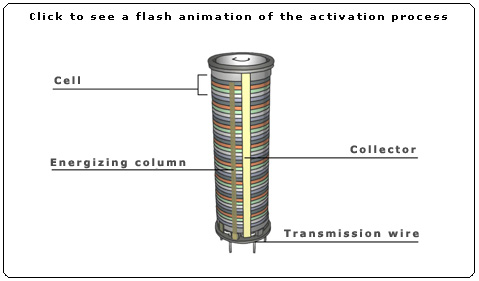
The most widely used for of batteries are oxidation process based batteries. Even though these units are plentiful, their construction can be very destructive to the environment. However, their use as large-scale energy storage systems is most valuable, so how can we change their composition to be less intensive on our resources? Well, let’s think about it. One way to release energy from cells is to heat them up. An easy way to do this is to use a material near such cells. So what if we were to put this theory into practice and create a series of heat dependent cells between an anode and a cathode contained with a meltable electrolyte? This setup is known as a thermal battery. Thermal batteries are compact and lightweight, making them a popular application for electric vehicles, and can store energy for upwards of 50 years!

Traffic barriers

Traffic barriers

Traffic barriers

03/08/17

“How can we control the flow of traffic away from dangerous road elements?”
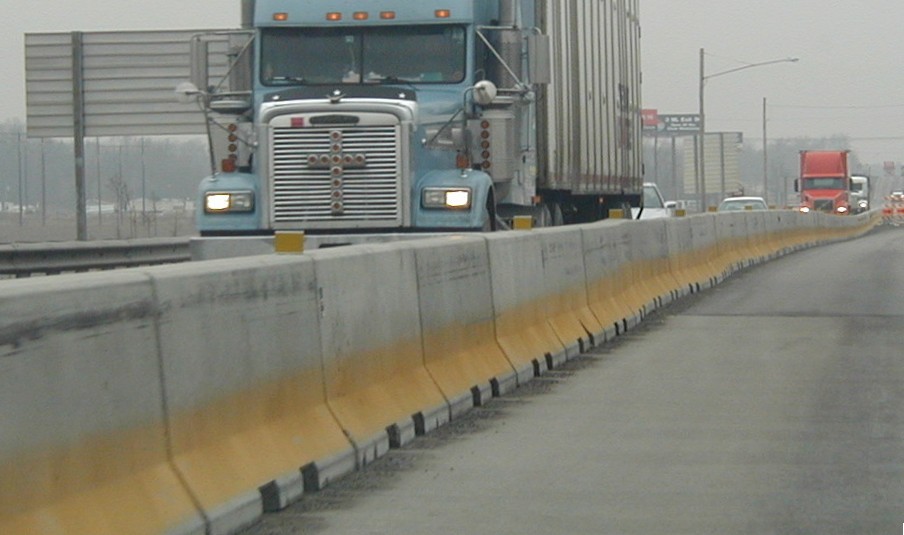
Personal vehicle transportation is one of the most used forms of transportation throughout the world. However, due to the autonomous nature of such machines, drivers can non-intentionally make collisions with errant road elements such as trees, boulders, and walls, or even the air if they run off an elevated freeway! So how could we change roads to make them much safer for general use? Well, let’s use our engineering mindset to figure this problem out. Well, we know that one way to stop an object from moving is to have it collide with a rigid object that will absorb all of its kinetic energy. So what if we were to take this idea and put it into reality? This is the exact type of thinking behind something known as a traffic barrier, which can be seen omnipresently around roads throughout the road. Examples of traffic barriers range from the exotic guard rail to the tiny traffic cone!

True Stress-Strain diagrams

True Stress-Strain diagrams

True stress-strain diagrams

03/01/17

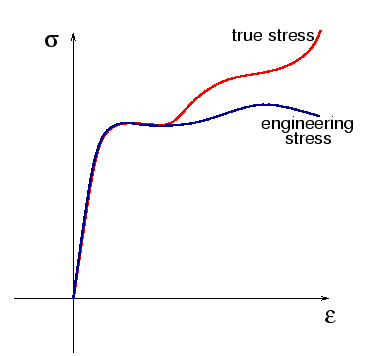
“Why is there a negative slope on a stress-strain diagram and how can we fix it?”
The stress-strain diagram is probably one of the most used concepts in all of engineering. However, there seems to be one counterintuitive aspect to it. Specifically, after the ultimate strength is reached, the stress-strain slope seems to become negative. This can’t be, since the stress can only increase with strain, not the other way around. So what exactly is behind this incongruity? Well, it all comes down to one simple fact. When constructing an engineering stress-strain curve, the cross-sectional area of the object is assumed to be static. However, due to the law’s of Poisson’s ratio, an elongation in length must be countered by a decrease in the associated cross-sectional area. And since this cross-sectional area will have s smaller capacity to carry force, the force distribution will go down. Therefore, if we do not include an updated area with the force, the stress will decrease with strain. Structural Engineers and Materials Scientists have recognized this flaw and have created true stress-strain diagram in response, which uses an ever-changing cross-sectional area. True stress-strain diagrams never have negative slopes, and are commonly used for research purposes.