Tag: Fluid mechanics

Air Filters

Air Filters

Air Filters

11/14/17

“How can we remove solid particles from the incoming air?”


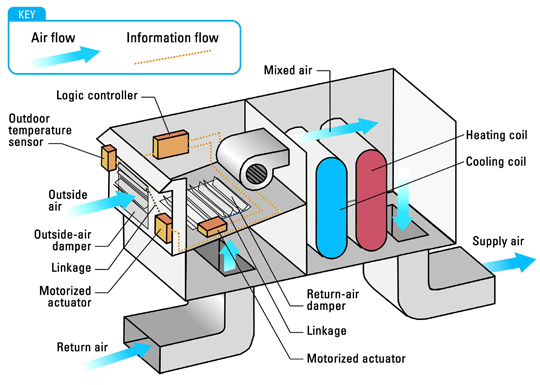
When working with ventilation based applications, we often have to deal with particulates such as bacteria and dust coming into the mixture. An influx of these materials at the wrong time can prove hazardous and even disastrous for the system. So how can we use our engineering mindset to solve this problem? Well, what if we were to simply apply a layer of fibrous materials that could absorb such materials? Well, this is the idea behind a technology known as air filters, and are used in applications ranging from wind tunnels to internal combustion engines.
Benefits and Drawbacks of Displacement Ventilation

Benefits and Drawbacks of Displacement Ventilation

Benefits and Drawbacks of Displacement Ventilation

11/09/17

“What are the benefits and drawbacks of displacement ventilation?”


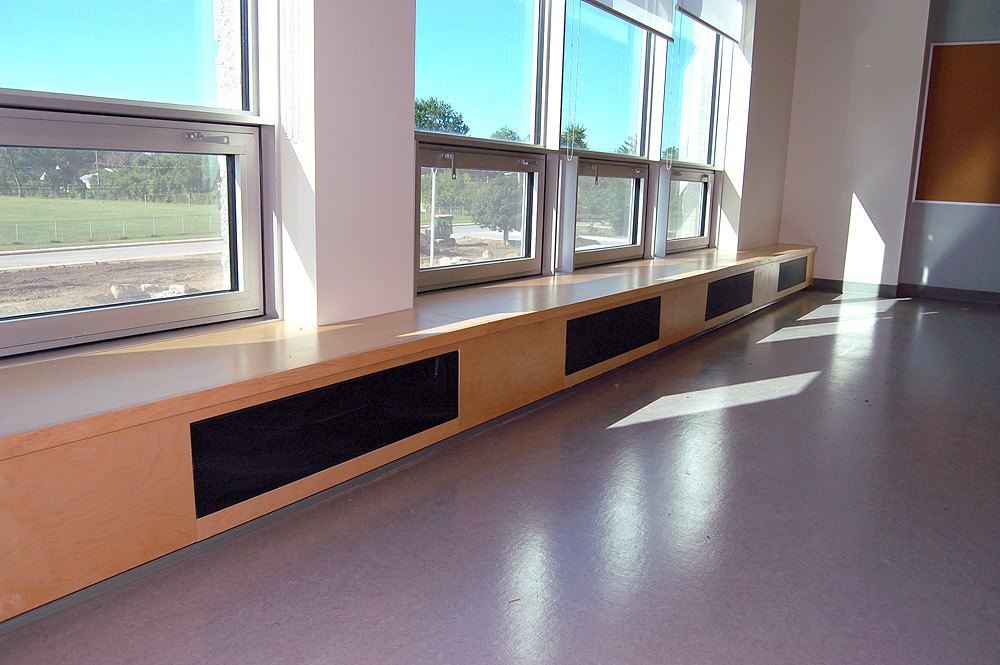
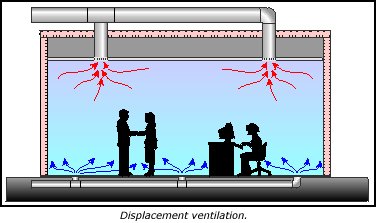
Displacement ventilation is a technology with quite a bit of potential behind it. These systems typically provide better indoor air quality through natural ventilation. This also saves large amounts of energy and gives it lower airflow rates for the same or better quality. The lacks of mechanical parts improve acoustics which lowers pressure losses through diffusers. Unfortunately, the novelty of these systems means that they are usually not well known by contractors. Their specialized geometry requires coordination of building features and diffuser locations, require larger quantities of air where cooling loads are needed, and the ceiling based filtering systems also means that higher ceilings will be needed.

Displacement Ventilation

Displacement Ventilation

Displacement Ventilation

11/08/17

“How can we make an air ventilation systems that relies upon pulling natural air?”


Air ventilation systems typically rely upon controlling artificial air to supply co into a surrounding environment. However, this can consume a large amount of energy and can make a large amount of noise. So how can we use our engineering mindsets to fix this problem? Well, we know that at all times buildings will have clean air surrounding it. And if we could get some of this into our building, then it would make the internal environment much nicer. So what if we were to use diffusers near the floor of an edifice to siphon outside air at low velocities into the interior, and then let the waste heat rise and recycle it into the exterior? Well, this is the fundamental concept behind displacement ventilation. Displacement ventilation is quite popular in Scandinavian countries.

Radiators

Radiators

Radiators

11/01/17

“How can we achieve radiative heating?”


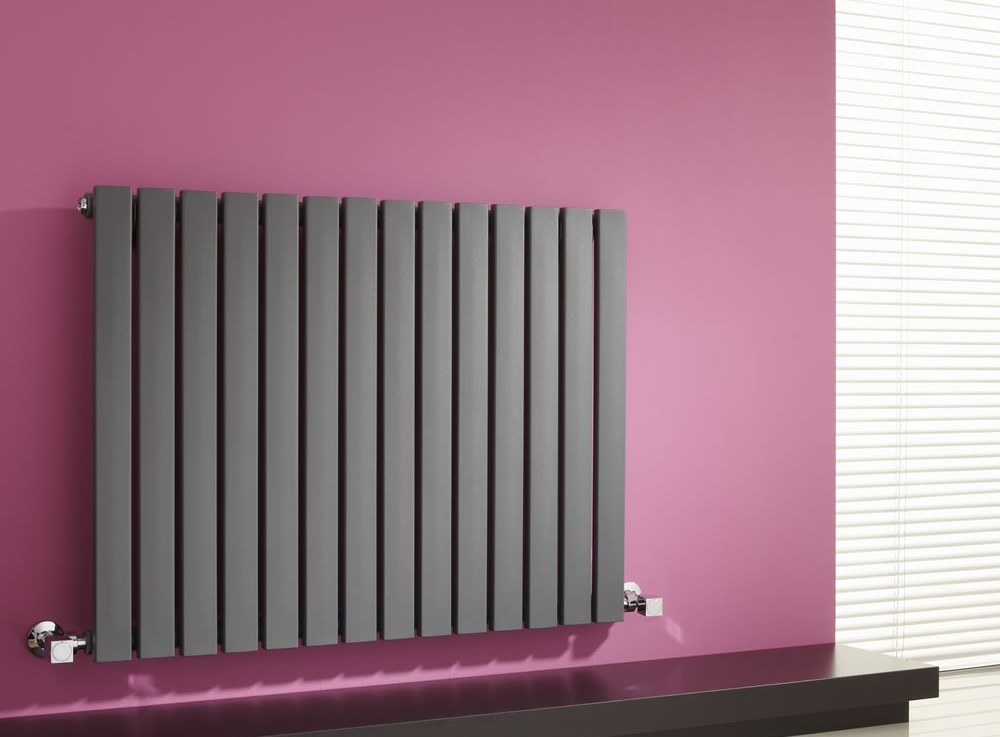
Radiative heating has a plethora of energy and ergonomic benefits. However, how can we put this idea into practice? Well, we know that we can use heat exchangers to transfer heat from one medium to another. So what if we were to simply build a specialized model to transfer heat to the surrounding atmosphere? Well, this mechanism is known as a radiator and has become one of the most common HVAC appliances in the world.

Advantages and Disadvantages of Chilled Beams

Advantages and Disadvantages of Chilled Beams

Advantages and Disadvantages of Chilled Beams

10/31/17

“What are the advantages and disadvantages of chilled beams?”


Chilled beams are a most innovative approach to building climate control that comes with their own advantages and disadvantages. Their water-based design allows them to be run at lower costs and can work in smaller building environments. When the University of North Carolina – Chapel Hill switched one of their buildings to chilled beams, they were able to see a cost reduction of 20%! However, these systems have their drawbacks as well. Because Chilled Beams work by absorbing rising hot air, rooms with these systems must not be too large to ensure optimal use. In addition, the circulative nature of their operation means that hospitals in the U.S are unable to implement such systems due to health concerns. When choosing whether or not to implement Chilled Beams, one must be observant of their qualities and choose wisely.

Chilled Beams

Chilled Beams

Chilled Beams

10/30/17

“How can we make Air Conditioning without using any electricity?”


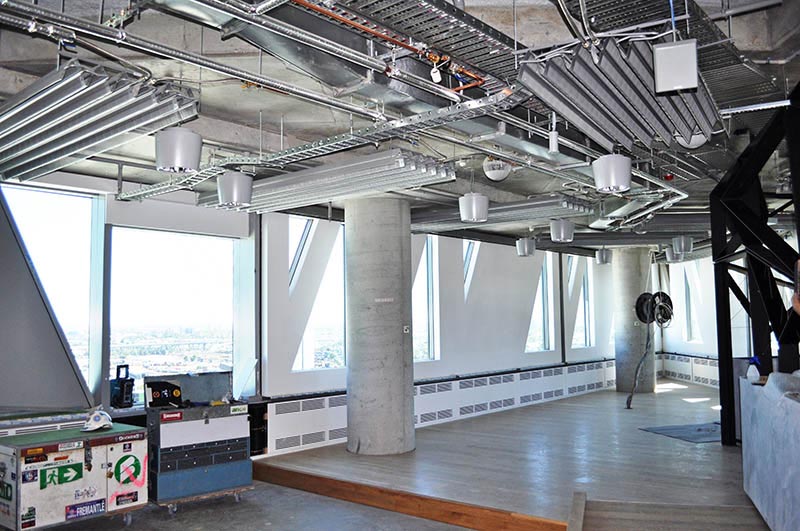
Air conditioning systems are excellent for cooling a building, but they come at a steep price in terms of a large electricity usage. So how can we use our engineering mindsets to solve this problem? Well, let’s start by thinking about two fundamental physical heat phenomena. The first involves one of the primary components of practical heat transfer, heat exchangers, which can cause two different fluids to change their temperatures by placing them right next to each other. The second principle involves the fact that cold air sinks and hot air rises. So what if we were to cycle cooled water near the ceiling of a room to cool the surrounding air, therefore letting the hotter air rise and decreasing the temperature of the lower parts of the room? Well, this is the fundamental idea behind a technology called Chilled Beams and is a very popular setup in Europe and Australia (and increasingly in North America!)

Economizers

Economizers

Economizers

10/17/17

“How can we combine preheating and heat exchangers into one device?”


Preheating is very useful for reducing the energy needed to change a substance’s temperature. In addition, heat exchangers a very efficient way to exchange heat between surrounding fluids. So what if we were to combine these two mechanisms? This is the fundamental idea behind devices known as economizers, which have become a commonplace in homes all over the world.

Barrier pipes

Barrier pipes

Barrier pipes

09/30/17

“How can we make pipes that are resistant to corrosion?”


We need pipes to transport into our homes water and other fluids necessary for survival. However, the interface of these fluids can interact with the pipe casing and cause corrosion, which can make the material dangerous for use. So how can we use our engineering mindset to fix this problem? Well, what if we were to develop a pipe whose material is impenetrable to oxygen? Well, this is the idea behind a technology known as barrier pipes and is used in residential units around the world.

Impellers

Impellers

Impellers

09/27/17

“How can we add energy to a fluid with one simple part?”


Fluids are so useful for doing things! But sometimes our fluid doesn’t have enough energy inside it. So how can we use our engineering mindset to solve this problem? Well, what if we were to use a mechanical motor with a hole in it, and if we were to pass our fluid through it? Then the fluid would gain energy from the rotational motion. Well, it turns out that this solution actually works and is known as an impeller. This added energy can change the pressure of a fluid, and energy can even be decreased if we use smart planning! In fact, it turns out that turbines are a specific form of an impeller.