Tag: Civil Engineering

How to make faucets more sustainable

How to make faucets more sustainable

How to make faucets more sustainable

Isaac Gendler

06/15/17

“How can we make our faucets more sustainable?”


I want you to think about something. What exactly do you use to clean yourself after you have used the restroom? Well, if you live in a developed country, then you probably immediately think of faucets. Quite simply, without faucets, we would be unable to function in our daily lives! However, as engineers, we must always think more critically not just about the outputs of a system but the inputs as well. Specifically, faucets use water for their operation. And since water is an increasingly finite resource (especially in dry areas such as California), how can we modify these mechanisms to be more sustainable? Well, believe it or not, there is a very simple solution for this, having the faucets use less pressure! When less pressure is used, a smaller volume of water will be transported, thereby using less water!
How cement is made

How cement is made

How cement is made

06/12/17

“How is cement made?”


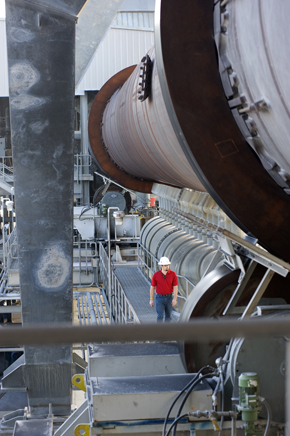
Cement is one of the most versatile materials on the planet. However, how exactly is it made? Well, let’s use our engineering mindset to find out. First, we must gather up its primal ingredients: limestone, clay, and others. Then, we must crush these rocks. Then we must combine this crushed material with other ingredients such as iron ore and feed it into a cement kiln. The kiln will then heat all of these ingredients, burning away some, and producing a red-hot compound known as clinker. This clinker must then be ejected into a cooling plant, and be mixed with gypsum and limestone to eventually form the cement that we know and love.

Pipeline transport

Pipeline transport

Pipeline transport

04/14/17

“How can we move fuel over long distances?”


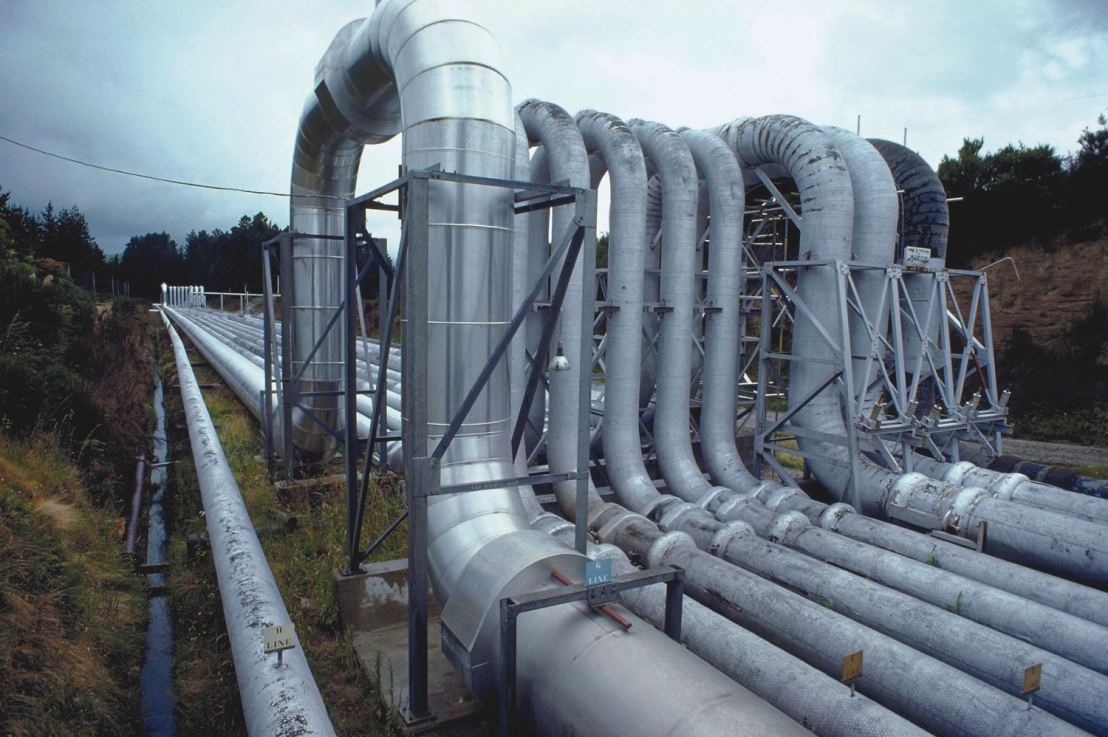
Human infrastructure has a logistics problem. The resources needed for the operation of our civilization (such as water and petroleum) are produced in locations far, far away from where they are consumed. So how can we devise a mechanism to transport these materials over long distances? Well, let’s use our engineering mindset to solve this problem. We know that these resources are often extracted in fluid form. And we know that one way to transport fluids is to use piping systems. So what if we were to use giant pipelines strewn throughout the landscape for the transportation of this material? Well, it turns out that pipeline transport of resources is more than a theoretical idea but a practical reality, and is used by almost every country in the world.

Hydrogen pipelines

Hydrogen pipelines

Hydrogen pipelines

04/13/17

“How is hydrogen transported?”


Hydrogen is one of the most fundamental resources for modern day infrastructure. However, since hydrogen is a raw resource produced far away from the areas that it is used in, it must be transported in some fashion. So how exactly is this accomplished? Well, let’s use our engineering mindset to find out. Well, we know that fluids can be easily moved through piping systems. And we also know that raw hydrogen often takes the form of a fluid. So wouldn’t it be logical to use specialized hydrogen pipelines to transport hydrogen to its specified location? Well, it turns out that engineers all over the world have implemented this technology, ranging from the Netherlands to Lousiana.

Traffic barriers

Traffic barriers

Traffic barriers

03/08/17

“How can we control the flow of traffic away from dangerous road elements?”
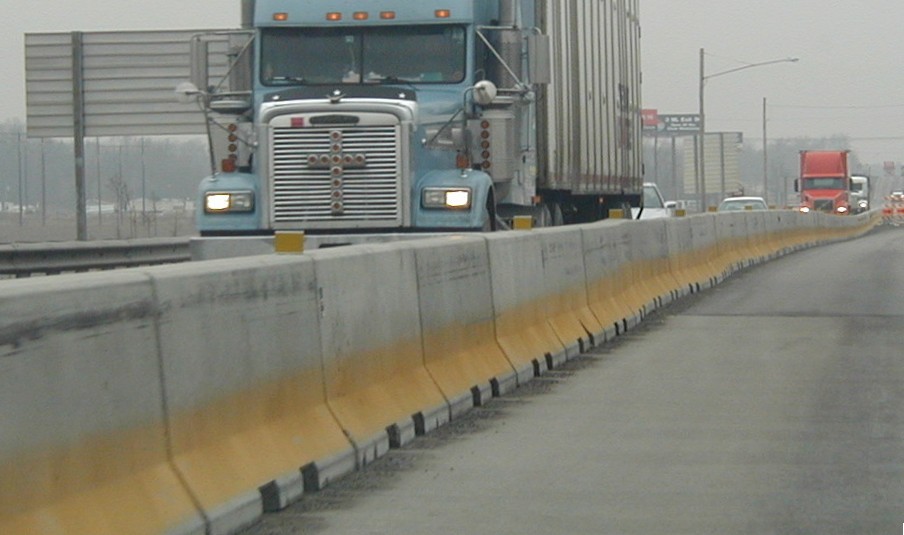
Personal vehicle transportation is one of the most used forms of transportation throughout the world. However, due to the autonomous nature of such machines, drivers can non-intentionally make collisions with errant road elements such as trees, boulders, and walls, or even the air if they run off an elevated freeway! So how could we change roads to make them much safer for general use? Well, let’s use our engineering mindset to figure this problem out. Well, we know that one way to stop an object from moving is to have it collide with a rigid object that will absorb all of its kinetic energy. So what if we were to take this idea and put it into reality? This is the exact type of thinking behind something known as a traffic barrier, which can be seen omnipresently around roads throughout the road. Examples of traffic barriers range from the exotic guard rail to the tiny traffic cone!

True Stress-Strain diagrams

True Stress-Strain diagrams

True stress-strain diagrams

03/01/17

“Why is there a negative slope on a stress-strain diagram and how can we fix it?”
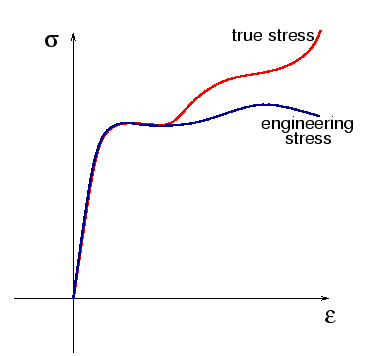
The stress-strain diagram is probably one of the most used concepts in all of engineering. However, there seems to be one counterintuitive aspect to it. Specifically, after the ultimate strength is reached, the stress-strain slope seems to become negative. This can’t be, since the stress can only increase with strain, not the other way around. So what exactly is behind this incongruity? Well, it all comes down to one simple fact. When constructing an engineering stress-strain curve, the cross-sectional area of the object is assumed to be static. However, due to the law’s of Poisson’s ratio, an elongation in length must be countered by a decrease in the associated cross-sectional area. And since this cross-sectional area will have s smaller capacity to carry force, the force distribution will go down. Therefore, if we do not include an updated area with the force, the stress will decrease with strain. Structural Engineers and Materials Scientists have recognized this flaw and have created true stress-strain diagram in response, which uses an ever-changing cross-sectional area. True stress-strain diagrams never have negative slopes, and are commonly used for research purposes.

Shear Stress

Shear Stress

Shear Stress

02/24/17

“What happens when stress is applied parallel to the surface area of a material?”
Any force acting upon a three-dimensional object will produce an internal stress. However, how do engineers classify the types of stress that are parallel to the material’s surface area? Well, after many years of research, this phenomenon has been classified as a shear stress. A shear stress will produce a shear strain in the object proportional to the object’s modulus of rigidity, which can be symbolically represented with the equation (Tau = G*(Gamma), with (Tau) being the shear stress (Gamma) being the shear deformation and g being the modulus of rigidity. The higher a material’s shear strength is, the more it will be able to resist shear strength.

Green rooftops

Green rooftops

Green rooftops

01/01/16

“How can we fix the problems of conventional rooftops while simultaneously making them friendlier for the environment?”
Traditional rooftops, while useful for insulating us against the hazardous external world, have many drawbacks associated with them. They can get hot in the summer, get moist during the rainy season, and can sometimes be unpleasant to look at. These grievances look like the perfect sort of job for an engineer to solve. To start, we should address the primal causes of the heating and water runoff. What sort of material would be capable of countering these effects? Well, if we look hard enough, then we would be able to discover that plant matter itself would be a perfect substitute. Think about it, they can absorb water, heat and are rather aesthetic. Now, let’s go a step further, and create a green rooftop by covering the surface of our roof with plant matter. Green rooftops can twice as long as traditional rooftops, absorb harmful UV radiation, and provide far superior cooling for hot summer days. There are two types of green rooftops: intensive and extensive. Intensive roofs contain far more developed vegetation, while extensive units are lighter and less complex. A most stalwart example of a green rooftop is the Chicago City Hall (pictured), which combines both types of roofing

Smart grid

Smart grid

Smart grid

12/28/16

“How can we advance the grid into the 21st century?”


The grid as we known it is heavily outdated. When the grid was first conceived of a century ago, the users lived in heavily localized areas, and often only had a few electrical needs, often all electrical appliances could be counted on one hand. However, as just as how electrical technology has matured in an exponential fashion, so has the complexity of the systems, resulting in a strained communication with the grid. We now have dozens if not hundreds of vastly more complicated items being used, each carrying different power requirements, with more being added at a superfluous rate. This is causing grave impingements on our grid, which could lead to pure devastation. So how can we apply our engineering mindset to take our aging electrical infrastructure into the 21st century? Well, why not just implement a two way grid communication system, also known as a smart grid? The fundamental idea is that all electrical signals from this new grid will be monitored and regulated by computer technology. To illustrate, a smart grid will be able to analytically distribute the voltage of electricity to units that require more of it, while supplying less to less intensive units. A smart grid will also be able to integrate more efficiently the sinusoidal nature of renewable energy sources like wind and solar through this monitoring technology. Smart grids are a foresightful investment, and will truly be the technology of the future.