Category: Engineering

Building Automation Systems

Building Automation Systems

Building Automation Systems

12/27/17

“How can we make an intelligent building?”


With the advent of the internet of things, automation has become a very trendy topic. Due to its generalized nature, it can be applied to almost anything. And buildings are no exception. Building Automation Systems are computerized networks that take input from temperature, pressure, and humidity sensors to actualize adjust internal settings in the building,. This includes adjusting the HVAC setpoints and air handler settings. Building Automation Systems are often referred to as smart buildings and can pave the way to the future in energy efficiency.

Direct Digital Control

Direct Digital Control

Direct Digital Control

12/26/17

“How can we control a building automation system?”


Building components can consume quite a bit of energy. However, this energy usage can be mitigated greatly if devices were able to obtain data from the surrounding environment and communicate it to one another. This IoT-like technique is known as Direct Digital Control, and can be a great investment by increasing productivity while lowering utility costs, occupant complaints, and maintenance fees.

Electrostatic Precipitators

Electrostatic Precipitators

Electrostatic Precipitators

12/25/17

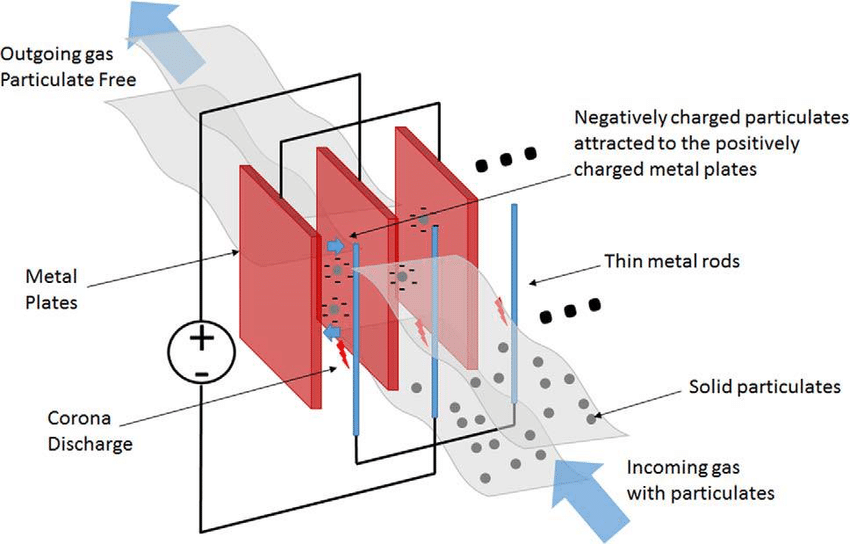
“How can we remove fine particles from a gas without contact?”


When a gas is being transported for use, it often has many fine particles (such as dust and smoke) attached, which can induce health issues. Traditional methods of removing these particles involve using physical barriers to filter out all particles. However, this has the effect of disrupting the flow of the gas. So how can we use our engineering mindset to solve this problem? Well, we know that from fundamental physics that there are two types of forces (contact and distance). And we also know that the latter can be caused by either gravitation, electrical, or nuclear interactions. And these fine particles in the gas are susceptible to become polarized and become at the whim of electromagnetic interaction. So what if we were to simply implement electromagnetic plates perpendicular to the flow of a gas, and suck up all of the fine particles while keeping the gas itself intact? Well, this is the fundamental idea behind Electrostatic Precipitators and are used in industries all around the world.

Absorption Heat Pumps

Absorption Heat Pumps

Absorption Heat Pumps

12/24/17

“How can we make a heat pump without using electricity?”


Heat pumps usually operate because of electrical energy. However, sometimes we may not have a constant supply of it. So how can we design heat pumps to compensate for this? Well, let’s think about it using our engineering mindset. Normal heat pumps work by taking a refrigerant (commonly ammonia), pumping condensing and depressurizing it, and exposing it to outside air to increase its temperature and evaporate it and then returning to its original state through the use of a mechanical pump. Our non-electricity driven Absorption Heat Pumps diverge by stuffing the ammonia directly into water after evaporation and pumping up the pressure through a low power compressor. Absorption heat pumps require a gaseous form of energy such as solar fuels and can be commonly found in industrial and commercial edifices.

Solar Air Conditioning

Solar Air Conditioning

Solar Air Conditioning

12/23/17

“How can we have solar powered air conditioning?”


Solar PV is set to take the world of residential energy by storm, with its low-cost and emission-free technological prowess. However, it currently faces one serious bottleneck, HVAC systems. HVAC systems consume tremendous amounts of energy, and an affordable solar system powerful enough to run it could prove expensive.


Or at least it used to be.


With the advent of higher efficiency AC systems and cheap PV, Solar Air Conditioning is more science fact than science fiction. Solar AC not only has the potential to save on a voluminous emission load but also energy bills. With this milestone reached, expect even higher adoption rates of residential PV!

Pyrheliometers

Pyrheliometers

Pyrheliometers

12/22/17

“How can we measure direct sunlight irradiance?”


One of the most important things for an area’s solar energy potential is the amount of direct solar irradiance. However, how can we measure this? Well, let’s use our engineering mindset to solve this. First, let’s make a portable apparatus. Then, let’s put a window in this device such that sunlight can be collected. Let’s then focus this slight onto a thermopile, and convert the heat generated into an electrical signal which can describe the power incident on the panel. This machine is known as a pyrheliometer and is vital for measuring solar energy.

Thermal Power Stations

Thermal Power Stations

Thermal Power Stations

12/21/17

“What type of facility can convert thermal energy to electrical?”


Energy can be generated in a wide multitude of methods. However, (and perhaps unfortunately) the most popular method is to heat an energy dense material to boil water into steam to drive a turbine. This facility known as a Thermal Power Station. Thermal Power Stations usually operate under a Rankine Cycle and can run on multiple types of input such as coal, petroleum, and municipal waste.

Cooling Towers

Cooling Towers

Cooling Towers

12/20/17

“How can we cool a large flow of water?”


Water is often used to cool buildings. However, during the process, it absorbs heat from its surroundings, thereby warming it up and making it less usable for future use. So how can we ensure that this water can be cooled down to usable levels? Well, let us use our engineering mindset to find out. We know that if water comes into contact with surrounding air, it will cool down a bit, and some may even evaporate. So what if we were to take our stream, move it through condensers, causing some to evaporate and the rest to cool down to a workable state? Well, this technology is known as cooling towers and is used in industrial processes all over the world.

Head Loss In Fluids

Head Loss In Fluids

Head Loss In Fluids

12/19/17

“How do fluids lose potential due to viscosity?”


Understanding of fluids has led to some of the most important breakthroughs in engineering. However, when analyzing these systems, it is very important to take into consideration that viscous forces will act upon the fluid in transit. So how can we take this into account? Well, what if we were to just take into account all of the losses from both frictional and inertial changes? This is known as the head loss in fluids and is one of the most important foundations of one’s study of fluid mechanics. Head loss can be visualized by the pressure drop in a manometer like the one shown in the picture.