Month: June 2017

How cement is made

How cement is made

How cement is made

06/12/17

“How is cement made?”


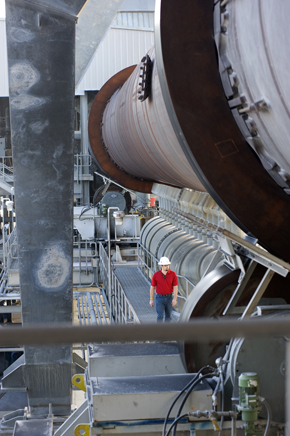
Cement is one of the most versatile materials on the planet. However, how exactly is it made? Well, let’s use our engineering mindset to find out. First, we must gather up its primal ingredients: limestone, clay, and others. Then, we must crush these rocks. Then we must combine this crushed material with other ingredients such as iron ore and feed it into a cement kiln. The kiln will then heat all of these ingredients, burning away some, and producing a red-hot compound known as clinker. This clinker must then be ejected into a cooling plant, and be mixed with gypsum and limestone to eventually form the cement that we know and love.
Microturbines

Microturbines

Microturbines

06/11/17

“Is it possible to have turbines the size of refrigerators?”


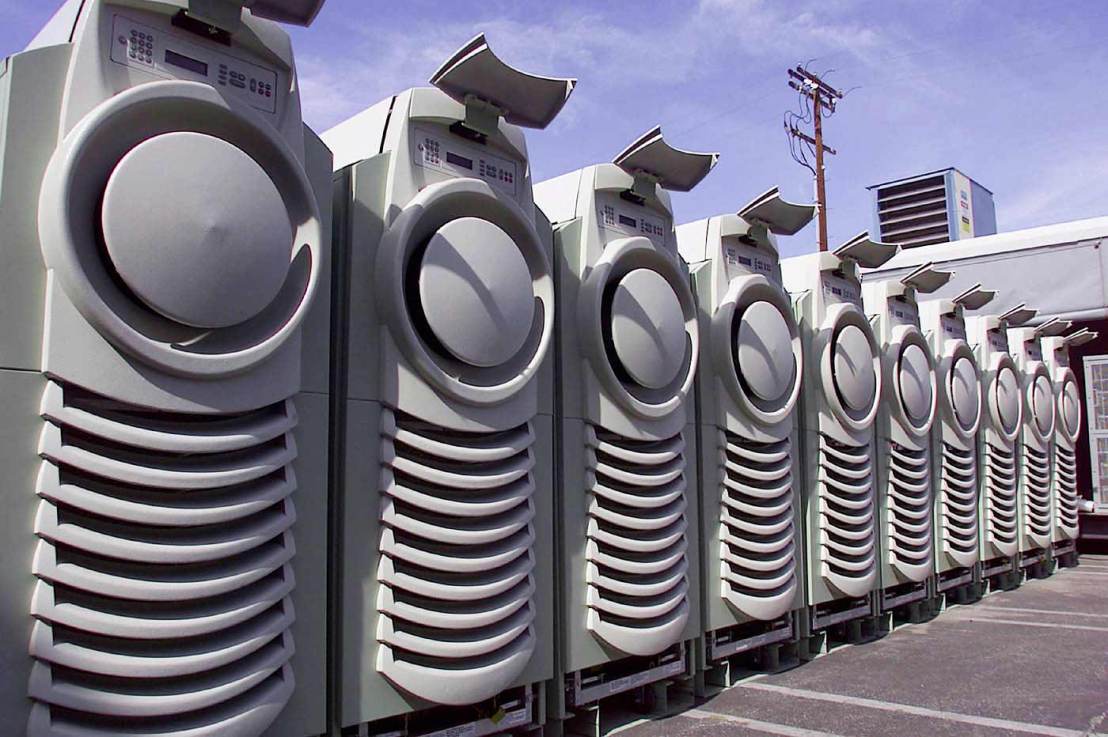
Turbines are the most prevalent means of generating electricity. However, they are often very large, and can’t be used for smaller applications. But what if we were to somehow make them smaller in size? Well, this turns out to be the operating principle behind a device known as a microturbine. Microturbines are the size of refrigerators, can generate between 25 to 500 KW of energy, (enough to power 250-5000 100kw light bulbs!) and can have up to an 80% efficiency of energy! standby power, power quality and reliability, peak shaving, and cogeneration applications, and have the potential to capture a large portion of the turbine market.

Stirling engines

Stirling engines

Stirling engines

06/10/17

“What is the alternative to the internal combustion engine?”


Internal combustion engines are infamous for their loud and emissive nature. However, would it be possible to have a different type of engine that fixes most of the problems of ICEs? Well, let’s think about with our scientific mindset. First, let’s take two pistons and enclose them on two sides of a chamber. Then, let’s heat up one side of the chamber. This extra heat will cause the volume to expand against the first piston, doing work, cooling the gas, and pulling the second piston up. Eventually, it will expand so much that the first cylinder will be able to compress it, shoving the cooled gas into the second piston’s chamber. Soon enough, the second piston will reach its threshold and the direction will be able to reverse. This engine is known as a Stirling engine and can reach efficiencies of up to 50% while remaining quiet, making them an ideal candidate for use in high specialty applications.

Printed Circuit Boards

Printed Circuit Boards

Printed Circuit Boards

06/09/17

“What is the casing for modern electrical systems?”


Primitive electrical systems are connected through a dangerous process of point to point wiring. However, how could we improve and replace this framework? Well, let’s start with the basics. First, let’s obtain a base material called a substrate to act as the base unit. Then, let’s put copper wiring on both sides of the substrate. Afterward, let’s apply a solder mask to prevent the substrate from interacting with other electrically conductive parts. Finally, let’s imprint a silkscreen so people can easily identify all of the components of the system. This device is known as a printed circuit board, and is the fundamental framework for all modern electrical systems!

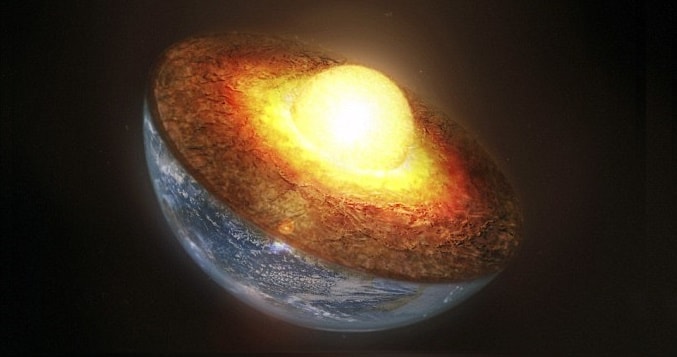
What would happen if Earth’s core cooled down?

What would happen if Earth’s core cooled down?

What would happen if Earth’s core cooled down?

06/08/17

“What would be the effects if the Earth’s core cooled down?”


The core of the Earth contributes substantially to the operation of the planet. But what would happen if it were to cool down greatly? Well, let’s think about it. Not only does the core’s high internal temperature (with levels matching the surface of the sun) keep the exterior of the Earth can stay warm in the void of space, but it also serves to sustain the terrestrial magnetic field that shields the Earth from harmful radiation. So if the Earth were to cool down, it would become much like the moon, lacking an electromagnetic shield and being subject to the whims of intense temperature swings.

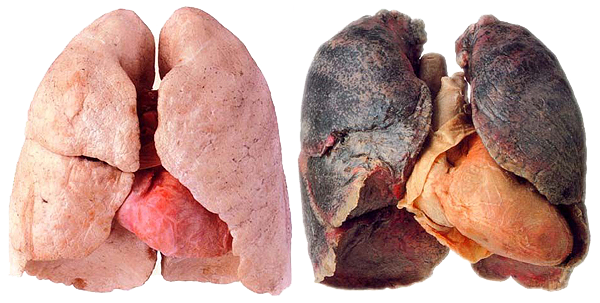
Coal Worker’s Pneumoconiosis

Coal Worker’s Pneumoconiosis

Coal Worker’s Pneumoconiosis

06/07/17

“What does coal do to the lungs?”


Coal dust does not decompose in a human body. And since coal miners have to sustain long-term exposure inhaling such material, it would only be logical that the coal dust would build up and permanently damage the body. Specifically, such individuals would develop something known as Coal Worker’s Pneumoconiosis, also known as Black Lung for the dark tint that the organs develop. Symptoms of Black Lung include shortness of breath, chronic cough, coughing up black mucus, high blood pressure, and heart problems. Coal Worker’s Pneumoconiosis is just another reminder that relying on outdated technologies will only destroy humanity and hinder progress.

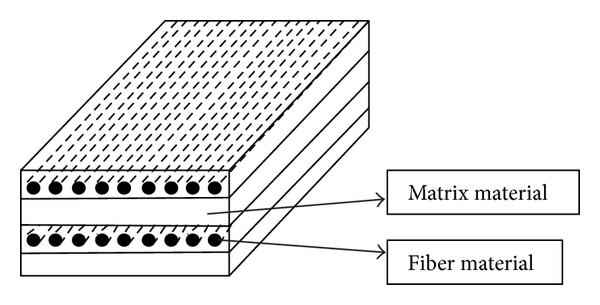
How materials in a composite bond

How materials in a composite bond

How materials in a composite bond

06/06/17

“How do materials in a composite bond with one another?”


In all composites, there are two bonding materials. However, have you ever wondered how exactly do they bond with another without merging? Well, let’s use our engineering mindset to find out. If we look closely, then we will notice that one material (known as the “matrix” or “continuous” material will serve as a medium that surrounds the other material (known as the “discontinuous” or “fiber” material), therefore creating the composites that we know and love!

Valence gap

Valence gap

Valence gap

06/05/17

“Why are materials electrically insulative, conductive, or semiconductive?”


All materials fall into one of three classifications when it comes to moving an electric current, insulative, conductive, or semiconductive. However, what property determines this? Well, let’s look at the atomic level to find out. When multiples atoms come close together, their possible energy states branch out into multiple bands. The two most important bands are the valence (which holds the outermost electrons) and conduction bands (which holds electrons ready to conduct) These bands will be separated by a valence gap.. If there is no difference, then it takes no extra energy to conduct energy and the material is conductive. If there is a noticeable but surmountable gap then the material is semiconductive. And if it is impossible to reach then it is insulative. You can think of it like the distance to a basketball hoop, the higher the height the more energy is required.

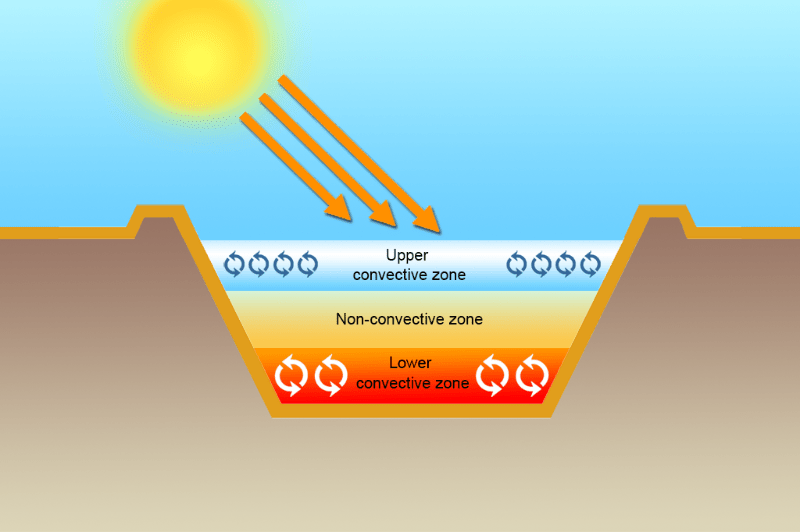
Solar ponds

Solar ponds

Solar ponds

06/04/17

“How can we generate solar energy using ponds?”


It is well known that we can generate solar energy using photovoltaics and concentrated solar thermal, but is there another way? Well, let’s use our scientific mindset to find out. First, let’s collect a pool of salt water. Because of the salinity gradient between the top and bottom layer, there will be a noticeable temperature gradient (usually of around 30 degrees at the top and 90 degrees at the bottom). This temperature gradient can then be exploited with a thermocouple to produce an electrical current, thereby inducing electrical power! This system is known as a solar pond and is popular in developing countries for its low cost