Tag: Thermodynamics

ASHRAE Standard 55

ASHRAE Standard 55

ASHRAE Standard 55

11/05/17

“What exactly specifies what is the proper working conditions for buildings?”


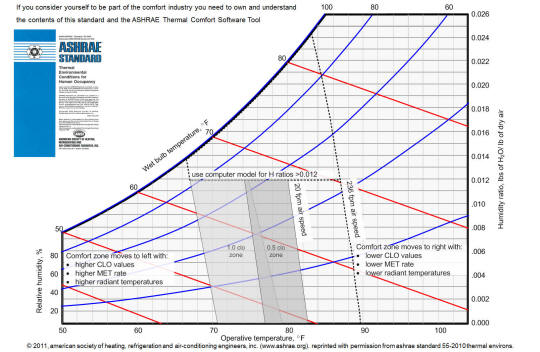
Proper working conditions are vital to the operation of the modern world. And one of these conditions includes thermal comfort, which consists of temperature, thermal radiation, humidity, and airspeed. And because buildings are constructed in all sorts of operating environments, we must need some form of standard that stipulates what are the proper indoor conditions. Well, after much debate, the good engineers of the American Society of Heating, Refrigerating and Air-Conditioning Engineers have developed a protocol known as ASHRAE Standard 55, which takes in the operative temperature, wet bulb temperature, humidity ratio, and relative humidity to create a thermal comfort zone. You can see a demonstration of this in action at http://comfort.cbe.berkeley.edu/, provided by the Center for the Built Environment at the University of California, Berkeley

Radiators

Radiators

Radiators

11/01/17

“How can we achieve radiative heating?”


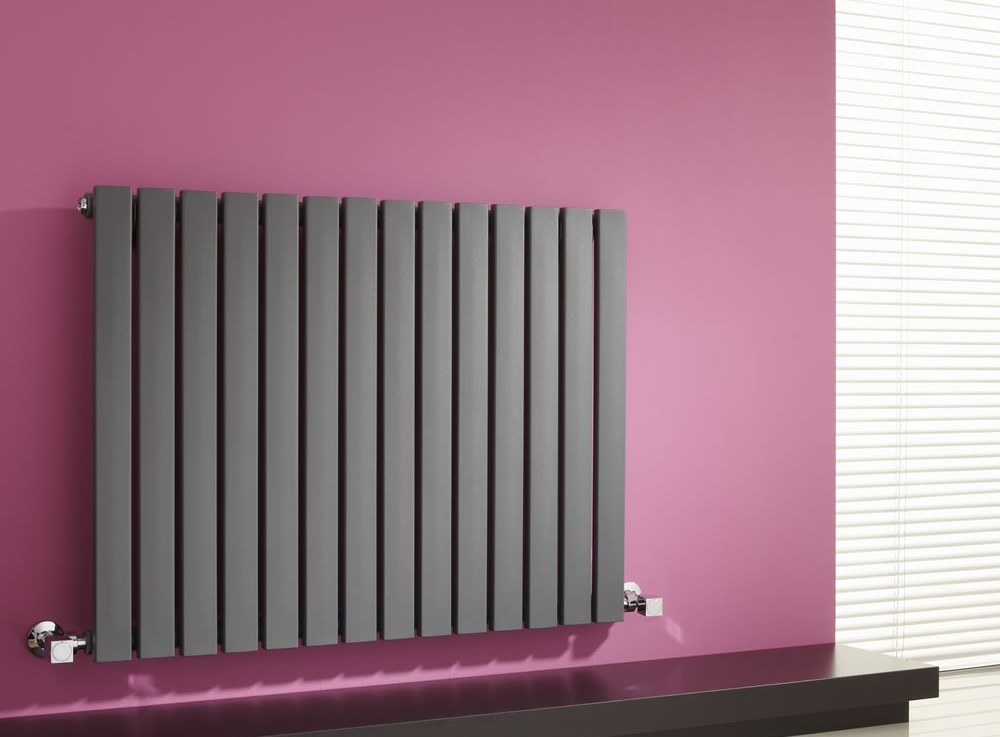
Radiative heating has a plethora of energy and ergonomic benefits. However, how can we put this idea into practice? Well, we know that we can use heat exchangers to transfer heat from one medium to another. So what if we were to simply build a specialized model to transfer heat to the surrounding atmosphere? Well, this mechanism is known as a radiator and has become one of the most common HVAC appliances in the world.

Advantages and Disadvantages of Chilled Beams

Advantages and Disadvantages of Chilled Beams

Advantages and Disadvantages of Chilled Beams

10/31/17

“What are the advantages and disadvantages of chilled beams?”


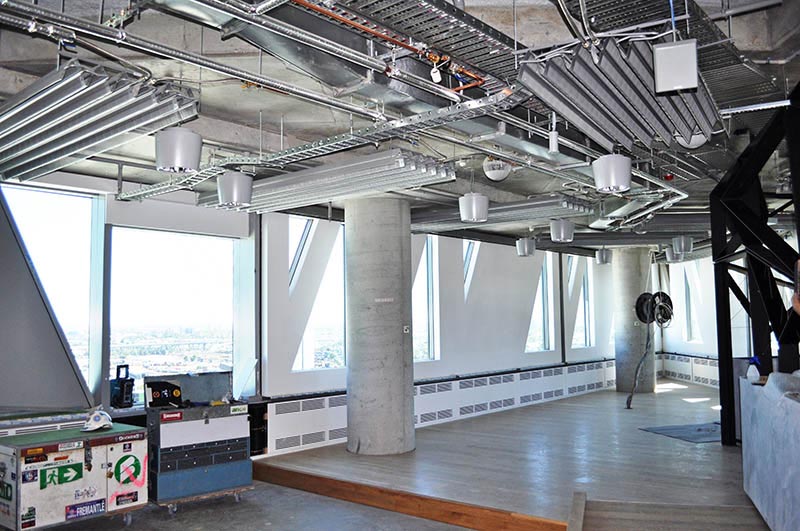
Chilled beams are a most innovative approach to building climate control that comes with their own advantages and disadvantages. Their water-based design allows them to be run at lower costs and can work in smaller building environments. When the University of North Carolina – Chapel Hill switched one of their buildings to chilled beams, they were able to see a cost reduction of 20%! However, these systems have their drawbacks as well. Because Chilled Beams work by absorbing rising hot air, rooms with these systems must not be too large to ensure optimal use. In addition, the circulative nature of their operation means that hospitals in the U.S are unable to implement such systems due to health concerns. When choosing whether or not to implement Chilled Beams, one must be observant of their qualities and choose wisely.

Desktop Fans

Desktop Fans

Desktop Fans

10/28/17

“How can we have a fan on our very own desktop?”


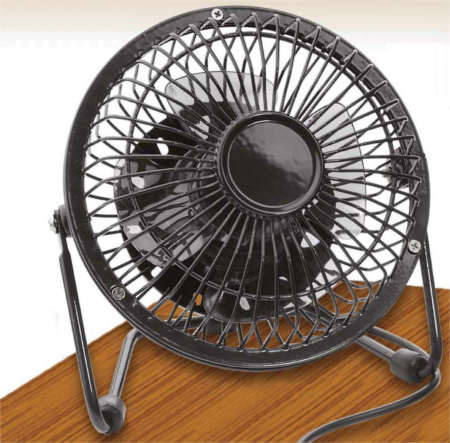
Often times, we can feel overheated at our very own desks, especially when no AC system is present. Feeling uncomfortable with the surrounding temperature can cause numerous issues, whether it be productivity impairments or even sickness! So how can we use our engineering mindset to solve this problem? Well, what if we were to simply have a miniature plug-in fan that we can have at our desks? Well, it turns out that this desktop fan has not only been invented but is also a widely available commercial product! Some fans are even USB powered, allowing them to be run straight from a computer

Heat-only Boiler Station

Heat-only Boiler Station

Heat-only Boiler Station

10/28/17

“How can we provide hot water for district heating?”


District heating is world-renowned for its ability to provide large urban communities with the heating that they need. However, how exactly can we provide them with the water that they need? Well, what if we were to have generators that instead of generating electricity would generate hot water? Well, this is the idea behind a Heat-only Boiler Station and is one of the prime elements in modern-day district heating systems

On Peltier Elements

On Peltier Elements

On Peltier Elements

10/19/17

“How can we completely rethink cooling systems?”


              Engineers often run into a very peculiar problem. Machines and devices can create large amounts of heat during operation as a result of their high energy use. A common remedy for this conundrum is to implement a thermal cooling system. Examples of these systems include heat sinks (a special form of heat exchanger built for electronics that uses a working fluid to transfer heat away from the device to another location), air conditioning (machines that use a fluid refrigerant operating at a cycle to take heat from one area and transfer it into another).

But even with these current processes, there is a new, most intriguing technology that holds much promise. Consider this. When a current is drawn between two conductive objects, heat may be either added or removed at the junction, making one side hot and another side cold. The hot side will then be attached to a heat sink while the other side will go below room temperature.  This device has been termed by engineers a Peltier Element.

One can construct a Peltier Material as follows. First, take two semiconductors, one a p-type and the other an n-type, and place them in parallel thermally and in series electrically together. Then join them together using a thermally conductive plate. If one were to apply a D.C voltage between the free ends of these two semiconductors then a temperature potential difference will merge. The side with the cooling plate will absorb the heat, which is later transferred to the opposing side that contains the heat sink. The more Peltier Elements within a given space the more efficient that the system will operate at.

Peltier element devices have numerous advantages. First, they have they do not have any moving parts, so much less maintenance is required and less brake-down will occur. No Chlorofluorocarbons (elements commonly found in traditional HVAC systems that induce ozone depletion) are used in their operating process so these machines will be much less damaging to the environment. Furthermore, the control of temperature with these units is so granular that it can even go to the fractional level, much better than older systems. In addition, these systems are made to have a very flexible shape than older, more rigid cooling systems so they can be placed in much more convenient locations. Building on top of this more flexible geometry is their greater temperature bandwidth, meaning that they can perform in conditions not before seen in HVAC systems. This leads to a longer lifespan so Peltier elements can give an individual “more bang for their buck”. Finally, these systems are easily controllable due to their voltage input system.

We can accomplish many feats with Peltier element technology. Their small and modular geometry allows them to be placed in a variety of locations such as in camping equipment and portable coolers. The granular control on Peltier elements make them a strong contender for use in scientific equipment, making them effective in assisting with sunlight temperature irregularities on satellites and military technology.

This is not to say that Peltier Elements have no downsides. One of the biggest hindrances to further adoption is their low efficiencies. Specifically, Peltier Elements require a large amount of electricity to function properly. This also only make Peltier elements very expensive to maintain, as power costs money. Their small form factor also makes it difficult to use in larger scale applications such as industrial operations (Lorenzo, Sarah 2016).

In summation, Peltier elements are a novel technology that holds much promise. Their operating process, the Peltier effect, is a wonderful facet of the physical universe that grants it many useful properties, such as a smaller form factor, a modular geometry, and a longer lifespan. This also allows Peltier elements to be more useful for applications such as satellites and military equipment where flexibility and longevity are needed. However, many of these same advantages can also bring detriment to it, with Peltier elements being to electrically consumptive and too small for large industrial applications. Perhaps with enough time and investment into research, Peltier elements will be able to solve these problems and replace traditional cooling methods.


References

Lorenzo, Sarah. What is a Peltier Cooler? 6 June 2015, http://www.tech-faq.com/peltier-cooler.html. Accessed 18 Oct. 2017.
Bypass Dampers

Bypass Dampers

Bypass Dampers

10/12/17

“How can we relieve excess pressure on HVAC systems?”


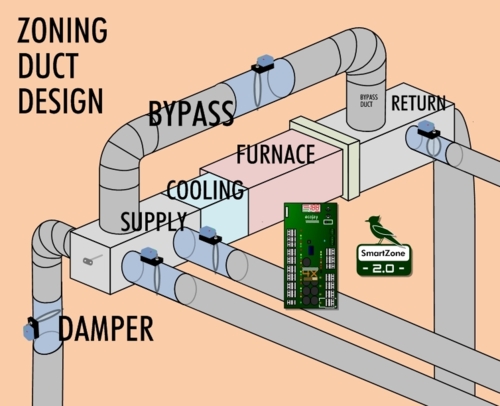
Dampers are commonly used in HVAC zoning systems to create multi-zone systems. However, with continued use, a pressure imbalance can grow between the zones, creating numerous issues. So how can we use our engineering mindset to solve this problem? Well, what if we were to implement an extra duct that would connect the zones to one another, and have a damper control air flow between them to equalize the pressure. This system is known as a bypass damper, as has been implemented in homes around the world. However, One of the drawbacks of these systems is that these systems will introduce non-conditioned air into the system, increasing the energy needed for operation and vastly decreasing the efficiency. In fact, these systems are so bad that the U.S state of California has actually banned them!

Superchargers

Superchargers

Superchargers

10/05/17

“How can we increase the pressure and density of air supplied to an internal combustion engine?”


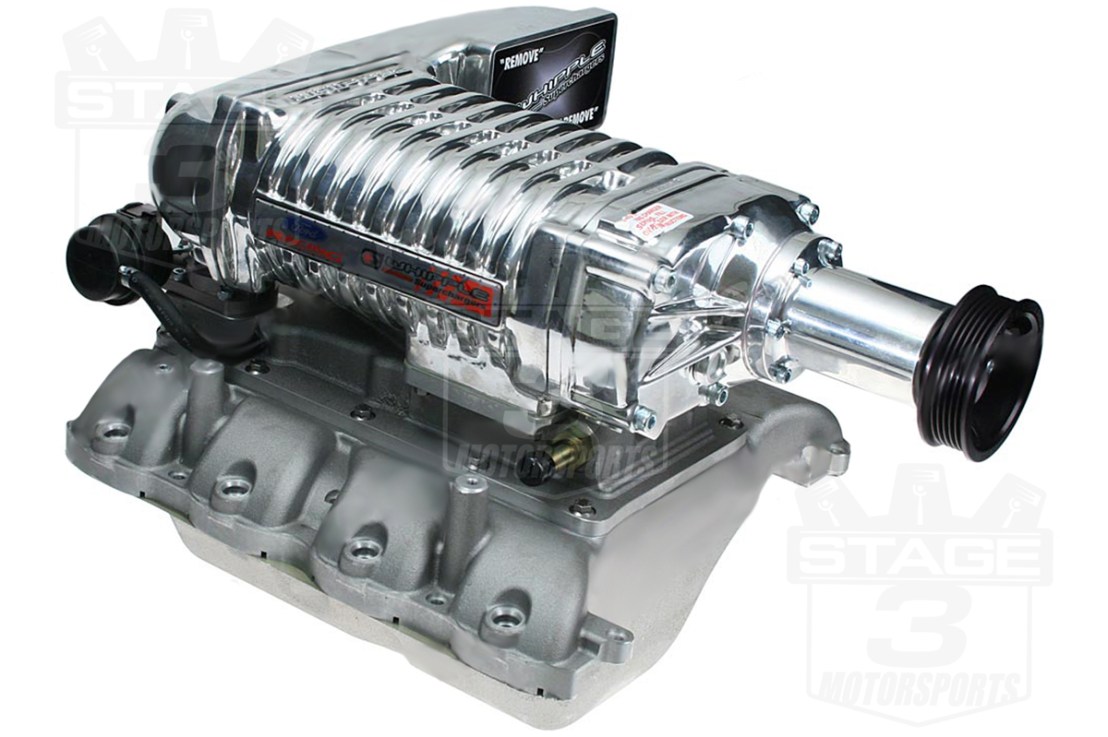
Internal combustion engines are famous can consume a lot of energy. However, we can drastically reduce the amount of energy to power them by pre-increasing the pressure and density of supply air with a special type of compressor called a supercharger. Superchargers come in many different varieties and can be found in automobiles all over the world.

District Cooling

District Cooling

District Cooling

09/29/17

“Is there a cooling equivalent to district heating?”


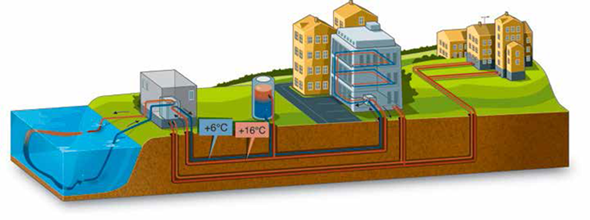
District heating is great for delivering hot fluids to a local community. But sometimes we want things to be cooled instead. So is it possible to create a cooling equivalent to district heating? Well, it turns out that engineers have created something called district cooling which can store and transport chilled water at command!