Month: January 2026

Fluid Pressure Diagrams

Fluid Pressure Diagrams

Fluid Pressure Diagrams

01/31/26

“How can we visualize how fluid pressure changes with depth?”

Fluids increase in pressure as you get deeper. If the fluid has a non-uniform density with depth, then the pressure will increase differently at different heights. We can visualize this information with a Fluid Pressure Diagram, which graphs depth on the negative y-axis and pressure on the x-axis. Fluid pressure diagrams are a great way to find out what the force on an area of the fluid container is because you can integrate the fluid pressure diagram and multiply by surface area.

Waste Compaction

Waste Compaction

Waste Compaction

01/30/26

“Why do people compact waste?”

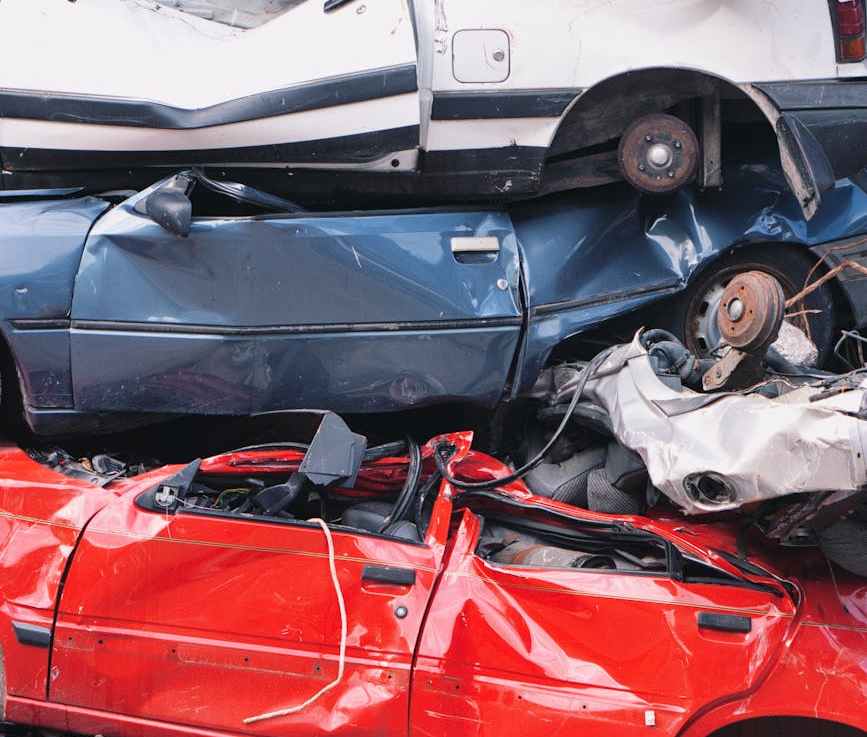
Waste takes up space. The less dense the waste is, the more land area it takes to store it, increasing complications. By densifying it with Waste Compaction, we can make waste storage easier to manage. This follows the same logic as you shoving boxes together before taking them out to the trash. While waste compaction is useful, it can also destroy items that may be reused. 

Bond Value

Bond Value

Bond Value

01/29/26

“How can we estimate the current value of a bond?”

Entities take out bonds for all kinds of reasons, ranging from infrastructure development to trade balancing. Financial institutions want to know how much a potential bond might be worth. To accomplish this, people can estimate the present value of the bond’s final worth and the present value of the bond payments to arrive at the Bond Value. Bond values are fundamental for quantifying a bond’s appeal.

ESC Dust Control

ESC Dust Control

ESC Dust Control

01/28/26

“Why is it so important to implement dust control practices during construction erosion and sediment control?”

Construction operations disturb soil and unleash dust into the surrounding area. This dust can pose a major health problem for surrounding communities. Construction roads, movement access points, and other disturbed areas can create dust pollution. Construction operators can implement ESC Dust Control, such as vegetation buffer areas, soil stabilization, mulch, spray adhesives, barriers, windbreaks, and polymer additives. ESC Dust Control is an important aspect of preventing air and water pollution.

Hazard Quotient

Hazard Quotient

Hazard Quotient

01/27/26

“How can we quantify the lethality of exposure to a substance?”

People are exposed to potentially hazardous substances all the time, whether it’s traces of air pollution or bacterial growth on food. We also know that if exposure breaches a certain level, it becomes dangerous. So how can we quantify the lethality of exposure to a substance? Well, what if we divide the exposure level by the reference dose? This is how the Hazard Quotient works, and it is a very useful tool in toxicology.

Time Value of Money

Time Value of Money

Time Value of Money

01/26/26

“Why is money today worth more than the same amount of money in the future?”

Money and currency are the backbone of global economics. Investing this money requires a certain amount of money. Whatever money you have today will give you more opportunities to invest than if you were to have the same amount of money in the future. The Time Value of Money is fundamental to financial decision-making. 

Uniform Amount per Interest Period

Uniform Amount per Interest Period

Uniform Amount per Interest Period

01/25/26

“How can we calculate equal payments per interest period under compound interest?”

Finance and interest move the investment world, whether it’s paying for infrastructure materials or the operations of a non-profit. Sometimes, when people take out a loan or investment, there will be an equal payment amount per interest period, even when there is compound interest involved. This Uniform Amount per Interest Period is a mix of paying off the interest and the principal amount. 

Noise Dose

Noise Dose

Noise Dose

01/24/26

“How can we quantify the level of noise someone is exposed to over time?”

Listening to too much loud noise is a well-known safety risk. The constant vibration in your ears can lead to long-term damage if not managed properly. The Noise Dose quantifies how much noise a person has been exposed to for the day, regarding safety levels. We can quantify noise dose by taking the hours someone listened to a certain decibel of noise and dividing it by the maximum number of hours it’s safe to listen to that noise level per day. We can sum this ratio for every noise decibel level heard throughout the day, multiplied by 100% to arrive at the total noise dose. If a noise dose exceeds 100 percent, then the person has breached the healthy recommended daily noise levels.

Chronic Daily Intake

Chronic Daily Intake

Chronic Daily Intake

01/23/26

“How can we calculate the amount of contaminant a person is exposed to daily?”

People are exposed to all kinds of substances throughout the day, whether it’s from the food we eat or the air we breathe. Some of these substances are harmful and can lead to health problems. We can measure how much of these contaminants we expose ourselves daily through Chronic Daily Intake. Chronic daily intake is typically expressed as milligrams of substance per kilogram of body weight per day. The US E.P.A uses chronic daily intake as part of health hazard assessment.