Tag: Sustainable Engineering

Smart grid

Smart grid

Smart grid

12/28/16

“How can we advance the grid into the 21st century?”


The grid as we known it is heavily outdated. When the grid was first conceived of a century ago, the users lived in heavily localized areas, and often only had a few electrical needs, often all electrical appliances could be counted on one hand. However, as just as how electrical technology has matured in an exponential fashion, so has the complexity of the systems, resulting in a strained communication with the grid. We now have dozens if not hundreds of vastly more complicated items being used, each carrying different power requirements, with more being added at a superfluous rate. This is causing grave impingements on our grid, which could lead to pure devastation. So how can we apply our engineering mindset to take our aging electrical infrastructure into the 21st century? Well, why not just implement a two way grid communication system, also known as a smart grid? The fundamental idea is that all electrical signals from this new grid will be monitored and regulated by computer technology. To illustrate, a smart grid will be able to analytically distribute the voltage of electricity to units that require more of it, while supplying less to less intensive units. A smart grid will also be able to integrate more efficiently the sinusoidal nature of renewable energy sources like wind and solar through this monitoring technology. Smart grids are a foresightful investment, and will truly be the technology of the future.
Solar cells

Solar cells

Solar cells

12/26/16

“How do solar panels produce energy?”


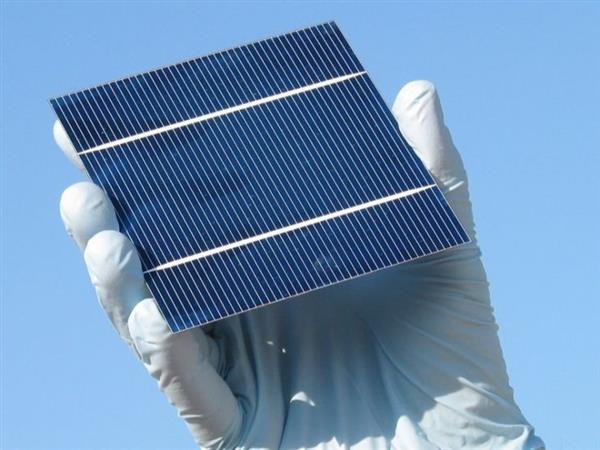
If you live in a sunny part of the world (such as California) then you probably have seen solar panels installed for all sorts of purposes. However, have you ever wondered what exactly causes them to work? Well, let’s explore. If we look closely, then it turns out that solar panels are composed of small solar cells stacked in arrays. These solar cells have semiconductors embedded in their build, so any photons that hit the solar panel will be absorbed. These photons will excite the electrons of this semiconductor to move, inducing a current. This current can then be used to power electrical devices, therefore enabling solar power generation!

Thin film solar cells

Thin film solar cells

Thin film solar cells

12/25/16

“How can we make solar cells that are 350 times smaller than average?”


Most traditional solar panels rely on crystalline technologies for their embedded framework. However, is there a different way to manufacture solar cells altogether, and what are the side effects? Well, let’s use our engineering mindset to build this new technology. We know, that the beating heart of every solar panel is the semi-conductor technology that converts light into energy. So what if we were to take a thin layer of small semi-conductors (such as cadmium-telluride[CdTe], and then deposit it onto a transparent substrate material such as metal, plastic, or glass? This is the operating principle behind thin film solar cells, whose manufacturing process results in a cheaper, smaller (around 350 times smaller in thickness) and flexible build but less efficient and heat resistant as well.

Polycrystalline solar panels

Polycrystalline solar panels

Polycrystalline solar panels

12/24/16

“How can we make the fabrication process for solar panels less expensive?”
Although monocrystalline solar panels are very useful devices, they might be too costly for an engineering team’s budget. So how can we create a less expensive fabrication process for solar panels? Well, let’s use our engineering mindset to think about it. Much of the expense of monocrystalline solar panels comes from the waste generation during the ingot creation process, so wouldn’t it be logical to change this aspect? Specifically, instead of crystallizing the silicon, we pour it into a square cast to let it cool down? This is the fundamental idea behind the creation of polycrystalline solar panels. As a result of this manufacturing process, not only do these solar panels tend to have a flat, matte dark blue look to them, but they also happen to be cheaper than monocrystalline solar panels but simultaneously less efficient

Monocrystalline solar panels

Monocrystalline solar panels

Monocrystalline solar panels

12/23/16

“What is the most efficient type of solar panel?”

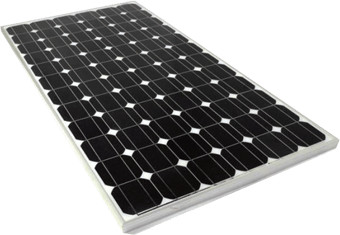
When looking to purchase solar panels, you will be confronted with many possible options. One of these will be the type of solar panel that you plan to use. And as such, you might be curious, which version is the most efficient one available? Well, let’s think about how we could optimize the process. Solar panels are made out of silicon. One way to obtain the material we need to make solar panels is to take silicon rocks, melt them at their melting point of 1370 degrees celsius, and then lower a seed crystal into the liquid silicon, and then pull it up while rotating a crystal to form a silicon ingot. We can then cut this ingot in to wafers, which can then be fashioned together to make a monocrystalline solar panels.Monocrystalline solar panels can be easily identified by their black coloring and their rounded wafers. Not only does their fabrication process make monocrystalline solar panels the most energy efficient on the market, but they are also the most space-efficient, the most heat resistant, as well as the longest lasting. However, one must keep in mind that there are some deficiencies, as this process is very wasteful as well as expensive.

A new way to collect transportation data

A new way to collect transportation data

A new way to collect transportation data

12/22/16

“How can we create a low-cost mobility measurement system?”
Many developing countries have a problem. Data regarding the usage of vehicles needs to be extrapolated in order to create more accurate transportation policies. The current method to obtain such measurements is to use an array of road sensors to track vehicle speeds, whose components cost an average of 10,000 USD per device and maintenance can go up to 4,000 USD per year per device. It goes without saying that this system can be insurmountably expensive for lower-income countries. So how can we use our engineering mindset to create a new, more affordable paradigm for transportation data collection? Well, a group of intrepid researchers at Lawrence Berkeley National Laboratory in California have published a paper regarding such a method. After much analysis, they realized that even though many developing countries such as India may not have the highest quality road infrastructure, they do have a fairly robust mobile communication infrastructure. And what everyday technology uses such infrastructure to transmit data? Why, smartphones of course! So what if we were to use citizen’s smartphones to collect driving data (at their own discretion of course) to create accurate information for policy makers? This is the operating idea behind the research done by the international transportation group at Berkeley lab, and it has the possibility of causing a paradigm shift in transportation analysis

Solar outlets

Solar outlets

Solar outlets

12/21/16

“How can we use sunlight to create an electrical outlet?”

It is well known that items powered by solar energy have a much cleaner impact on the environment. However, most of our electricity in our homes comes defiling non-renewable resources. So how can we replace our outlets with solar power alltogether? Well, let’s think about it. First, we need to obtain sunlight to create power. Well, In our homes, sun light often comes in through transparent windows. So what if we were to attach a suction-based device on to a window, attach a small solar panel to it,  and then add on a electricity storing unit and outlet? This is the operating principle behind a solar outlet, and they are a most intriguing and practial way to make your home a greener place.

Anti-islanding

Anti-islanding

Anti-islanding

12/20/16

“How can we turn off solar power generation when the grid shuts down?”


Grid islanding might be cool for keeping your residential unit powered when the grid experiences a blackout, but feeding electricity through a grid-tied system can be very dangerous to maintenance workers. So how can we develop a system in which the generation unit will shut off when the grid does? Well, let’s use our engineering mindset to solve this problem. One fact about grid-tied inverters is that they can sense the frequency of the incoming current.  We also know that when a blackout happens, this current will drop down. So what if we were to program the inverter to recognize when the frequency drops below a certain threshold, it would cut power generation? This is the operating principle behind what renewable energy engineers call anti-islanding, and it is required as a feature for all grid-tied systems in the United States.

Grid islanding

Grid islanding

Grid islanding

12/19/16

“What happens when a solar powered system experiences a blackout from the surrounding grid?”

Solar panels are truly an exquisite technology. Not only do they allow for energy independence from oil, but they also allow for energy independence from the surrounding grid! Because solar panels are self-sustaining, if you were to hook enough up to your residential area, you could provide enough electricity that you would not need to take from your local electric company, and even have enough to supply energy back! There is one large disadvantage to this, however. If a blackout were to happen, the electric grid would go down except for self-generating units such as solar panels, which would be islanded. This technology would continue to funnel electricity to the grid, an action that would open the potential for injury to repair workers. As such, most modern day solar panels come equipped with anti-islanding technology to prevent such a case from happening.