“Can we optimize hydraulic actuators using electricity?”
Hydraulic actuators are ever so useful in their ability to move heavy machinery and can found in areas ranging from construction equipment to manufacturing machinery. However, these machines often suffer from a burdensome design, being forced to integrate numerous disparate components into one coherent system.
So how can we simplify the operation of these actuators?
Well, what if we were to replace the hydraulic pumps and tubing with electrical power? Not only will this simplify the system complexity but also increase the internal safety and reliability. These machines are known as electro-hydraulic actuators and can be found in applications ranging from aerospace vehicles to automobiles.
“How can we use magnetic attraction to make bearings?”
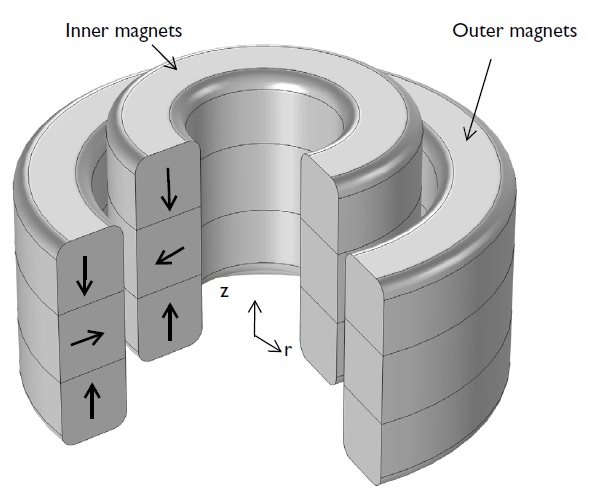
Conventional mechanical bearings are limited by the effects of mechanical friction which impinges their durability, speed, and control. However, by removing physical contact with the shaft, the bearing will become far more optimal. So how could we implement such an idea into reality? Well, one method is to use the physical mechanism of magnetic attraction to remotely control the bearings. Such magnetic attraction bearings would be freed from the limitations of traditional mechanisms and could provide for far more efficiency. However, due to chaotic nature of rotation, a self-centering device must be used with such mechanisms, so that no side becomes too close to the magnetic center and therefore lose balance. Such conundrums can be remedied with magnetic repulsion models.
Normal bearings use mechanical forces to lock onto a rotor. However, this method can be made highly inefficient due to heat and frictional losses resulting from contact. However, can we use our engineering mindset to improve this system? Well, to start, let’s look at the root of the problem, the mechanical contact. If we remove this feature, then our system can work with much fewer impingements. One way to create a non-contact grip is to use a magnetic force. So what if we made bearings that make use of magnetic levitation technology to keep in contact? Well, this is the exact idea behind magnetic repulsion bearings, which use a repulsive force to achieve passive levitation. Not only does the repulsion effect keep the bearing afloat, but it also introduces a self-centering mechanism, so if one part becomes to close it will be repelled away.
“Could we use the batteries of electric vehicles to power our homes?”
Renewable energy has a problem. The peak times for generating such power (mid-day) is often not in sync with the peak stress on the grid (sunset, when solar energy is no longer available), and local battery storage can be quite expensive. So how can we circumvent this issue? Well, let’s use our engineering mindsets to solves this problem. One of the main problems stems from the lack of affordable energy storage. However, many sustainability conscious individuals also own electric vehicles. And in these electric vehicles are electric batteries which often times have excess energy. So what if when these cars were parked at night, they would feed energy back into the local smart grid to power homes? Well, this is the main idea behind a system which researchers refer to as vehicle to grid technology, which is not only environmentally friendly but economically with the use of net-metering.
“How can we achieve greater efficiency of solar arrays using water?”
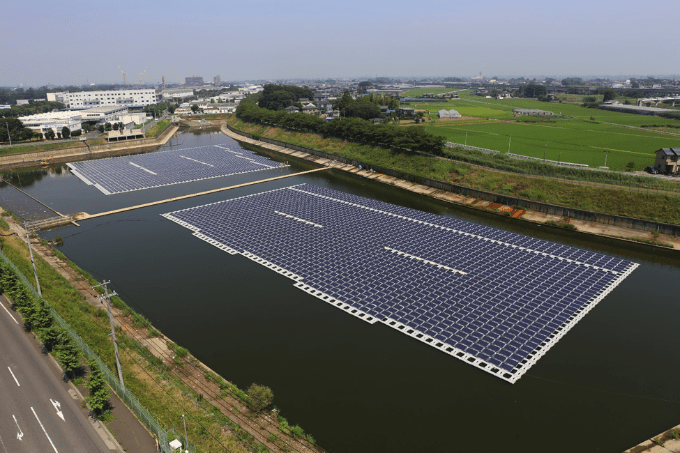
Solar panel arrays are some of the most benevolent technologies in existence. However, they can often require large parcels of land, which could be expensive and take away from the possibility of being used for other activities. So how can we use our engineering mindset to circumvent this issue? Well, if our main quandary is that solar panels take up a large amount of land, why not take them off land? Specifically, what if we were to create solar panels designed to float on water? This is the operating principle behind floating photovoltaics (also known as “floatovoltaics”), which use a specialized form of solar panels placed in water reservoirs to generate clean electricity for the local area. Floating solar arrays are more efficient than traditional models and can be hidden from the public view, but designers of such systems must take into consideration the effects of increased wind speeds over water and the local habitat. Companies around the world are already suiting to take up the challenge of implementing these systems, with Kyocera of Japan, Sonomoa clean power of California, and Infratech industries of Australia investing money to build these models.
The Netherlands’ electric is now completely powered by renewable energy
01/13/17
“How is it that the Netherlands’ electric train system is now completely powered by renewable energy?”
A most riveting milestone in global renewable energy adoption has just been reached. The Dutch national railway company NS has just announced that the entirety of their electric train fleet is running on renewable energy! This means that transportation systems that carry 600,000 passengers every day have and consumes 1.2 billion Kwh each year has just had their carbon footprint sabotaged! However, work is not done, as the company also plans to decrease energy used per passenger by 35% by 2020
“Can we combine both the series and parallel hybrid car drivetrains?”
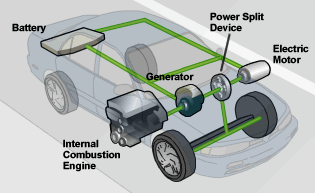
Both series and parallel hybrid car drivetrains offer their distinct advantages and disadvantages. The exclusionary principle of the series drivetrain allow for greater efficiency at lower speeds, while the combined efforts model of the parallel drivetrain allow for a smaller battery. However, would it be possible to combine both types in an attempt to have our cake and eat it too? Well, it turns out such a wild idea is indeed possible through the use of a series/parallel hybrid car drivetrain. These drivetrains are set up so that the electric motor and internal combustion engine can operate independently of the condition of the other. This allows for much greater efficiency than either component acting completely discrete or in union. However, these systems will come at a higher cost, making it prohibitive for many individuals to purchases such systems. Perhaps one day, the cost of the systems will plummet to the point that they will threaten to encapsulate the entire market.
“How can both an electric motor and internal combustion engine be integrated into a hybrid vehicle?”
Hybrid cars are truly captivating machines, being able to combine the ingenuity of electric motors with the range of internal combustion engines. However, both of these components are designed to work independently of each other. So how can we use our engineering mindset to create a system that can integrate both types of power sources? Well, let’s think of it. If we think back to electronic circuits, we know that we can have multiple batteries supplying a common load by placing the batteries in parallel with one another.So why not do the same thing with our electric motor and ICE to simultaneously power the wheels? This setup is known as a parallel hybrid vehicle drivetrain and is used to power lower cost hybrid vehicles.
“How can we combine traditional internal combustion engine vehicles with electrical ones?” Many consumers face a dilemma when purchasing a motorized vehicle. On one hand, they want to be energy efficient and environmentally friendly by purchasing an electric vehicle. On the other hand, they would like to have a large driving range with an internal combustion engine type vehicle. So how can we solve this problem? Well, why can’t have our cake and eat it two by combining them? This is the operating principle behind hybrid car technology, and it is becoming more prevalent in the automobile market every year.






 Isaac's Science Blog