“How can we measure the disturbance between a setpoint and an output?”
When a closed loop control system sends an output, it must be compared to an initial setpoint. This process is known as tracking control and is one of the most fundamental parts of every control system
“How can we have a self-correcting control system?”
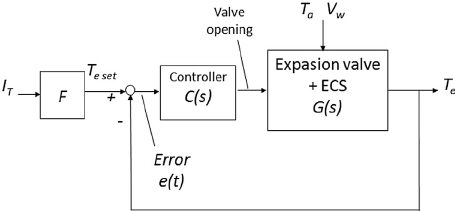
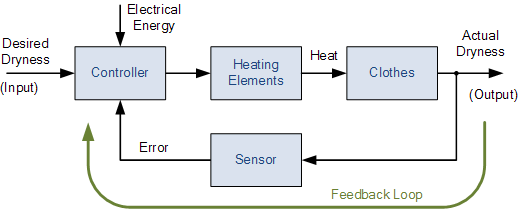
Open loop control systems may be affordable, but the lack of control over them (pun intended) makes them useful for only select applications. So how can we fix this problem? Well, what if every time our system was to produce an output, we compare it to our setpoint, and then modify the process to achieve our desired result accordingly? This is the fundamental idea behind a closed-loop control system and is used in a vast array of controls applications from electric vehicle battery life monitoring to drones and even laundry machine monitoring.
When a signal passes through a transfer function, its output will be modified in an according way depending on its frequency. So what do we call the change of magnitude of the signal? Well, after much debate, controls researchers have settled on the idea of gain to describe this. Gain is defined as the ratio of the new magnitude to the old magnitude, such that a system that is twice as large will have a magnitude of 2 and half the size would be 1/2
“How can we make a location history using past velocities?”
Making a location history can be very difficult. Having to make active GPS measurements for a cycle of intervals is very taxing on resources. However, is there a way that we could circumvent this and make a new less resource intense system? Well, let’s start off by thinking back to basic physics. We know that velocity multiplied by time equals a change in distance. So what if were to start off with an initial GPS location and then build an array of all of the measured velocities after that? Well, this is the fundamental ideas behind a technique known as Dead Reckoning and is commonly implemented in control systems and machines that are equipped to go into no-GPS locations.
“How can control systems be based on the summation of error levels over time?”
Control systems respond to an error between feedback and setpoints by making changes to the next output. However, sometimes the error does not change fast enough or it changes too quickly. So how could we devise a mechanism to solve this issue? Well, let’s start with a simple idea. We know that if an error value were to persist over time it would show easily on a graph. So what if we were to just take the area of the error under this graph and modify our outputs accordingly? This is the fundamental idea behind integral control and is one of the prime factors in the ever so often used PID control system.
“How can control the rate of change of our control system?”
Proportional control systems are great for correcting the error of simple applications. However, one major drawback is that this method does not control the rate of change of the control system. For example, let’s say that we have a self-driving car that needs to accelerate to the speed limit of a roadway. Proportional Control might accelerate so fast that it actually overshoots the speed limit and causes an accident! To solve this, we can introduce a factor called a derivative control which modulates the rate of change of the system. If we were to introduce it to the self-driving car, then its rate of change would be held in a sustainable manner and decrease to zero as it becomes closer to the setpoint.
“How can we have a control method proportional to the error?”
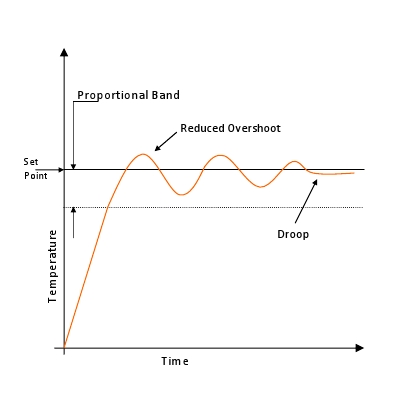
Closed loop control systems respond to external stimuli with the use of an error compared to a setpoint. So how can we use this information to make an easy to use control system? Well, what if we were to base our adjustment to be proportional to the error, such that the higher the error the higher the restoring force? Well, engineers have implemented exactly this in a form known as proportional control and are used in applications such as self-driving vehicles and valve systems.
“What process in Thermodynamics holds the pressure and volume to a constant?”
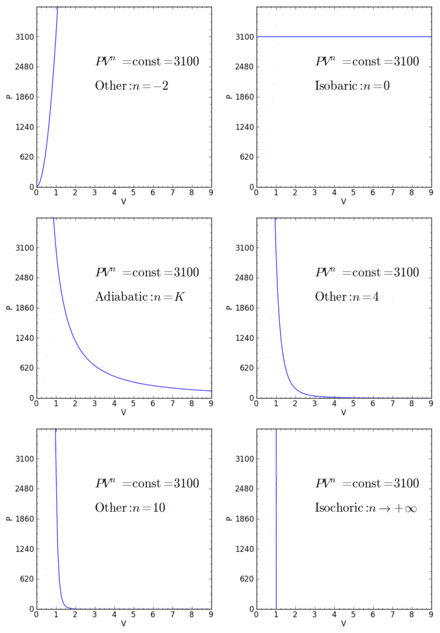
Thermodynamics is known for its intense reliance on processes. Some of the most important types are classified as Polytropic processes. In polytropic processes, the pressure and volume are held to the constant given by the relation pv^n=c, where p is pressure, v is volume, n is the polytropic index, and c is a constant. A process is polytropic if it obeys the ideal gas law and if the heat to energy transfer as work at each infinitesimal step of the process is kept constant
“Can machines operating at part loads have different efficiencies than full loads?”
Machines can operate at variable loads. For example, an electric grid might be providing electricity to its entire network during the daytime and only a few houses at night. Because these different loads have different parameters, machines operating at partial loads have something called a part-load efficiency, or the efficiency when not at full (100%) loading.



 Isaac's Science Blog