“What is the maximum amplitude of an oscillating system?”
In the physical world, systems can vibrate at different frequencies with different outputs. But when the system achieves maximum vibration at a certain frequency, it is called a resonance. Resonance has large impacts on the design of systems, from constructing electrical circuits to achieve certain characteristics to analyzing vibrational characteristics of bridges
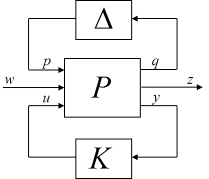
“How can we make controllers that deal with uncertainty?” In an ideal implementation, controllers will have to deal with no uncertainty. However, reality is not always as nice as we would like it to be, and often times things happen that we can not prepare for. Because of this, controls engineers have invented something known as robust control to deal with such events. Robust control works by having an internal operation error boundary such that any system can handle any stimulus within the zone of error.
Systems take an input and produce an output. However, a portion of this output can be cycled back to affect the input as feedback. Feedback that makes the input smaller is known as negative feedback while ones that make the input larger is known as positive feedback. Negative systems are much more stable while positive ones tend to instability. Feedback is vital for closed loop control systems.
“What are systems with a constant frequency response magnitude for all frequencies?”
We know that control systems are dependent upon frequency responses and that the magnitude of these responses is usually dependent on the input frequency. However, some systems have a constant frequency response magnitude for all input frequencies, which are termed All Pass Systems.
“What is the reaction to an abrupt change in conditions for a system?”
Complex systems are easily controlled by external forces, such as the flip of a switch. And when these forces do cause change, they can be quite quick and drastic, changing all of the conditions of the system. And since the reaction to such changes can be very quick and drastic as well, engineers and scientists have decided to term these changes as the step responses to the system. An example of a step response includes a mechanical body’s friction to moving forces.
“How can we control object characteristics of a control system?”
When we have control systems, we often have object characteristics that we desire but are not implemented. For example, we might want to have the phase shift of an output signal to achieve peak frequency at a certain value. Well, after many years of hard work, engineers have invented compensators to accomplish this task. Compensators can be commonly found in PID control systems and electrical power systems.
“What do we call systems that have all poles and zeros inside the unit circle?”
Systems that have all poles and zeros inside the unit circleare very special. Why? Well, because with these systems, their causal system will be completely stable and will have a phase lag less than a system of identical magnitude. Since these systems are so special, controls and signal engineers have termed them Minimum Phase Systems.
“When is the output unchanged from the input of a control block?”
In control systems, the output of a control block is usually modified from the input. However, when there is no change, the process is said to be in unity feedback
“What are the points on a control diagram for comparing the output and the setpoint?”
What makes a closed-loop control system truly closed loop is the comparison of the output and setpoint for making the error value. However, how is this represented on a control diagram? Well, Control Engineers like to use something called a Closed-loop Summing Point. Closed-loop Summing Points are small circular elements on a diagram that takes in an input on one quadrant, the setpoint on another and then produce the error term. Depending on the signs of the quadrant, the input value might be positive (for a + sign) or negative (for a – sign)





 Isaac's Science Blog