How Distributed Energy Resources Help National Security
02/10/18
“Does implementing distributed energy resources and national security go hand in hand?”
It is usually thought that renewable energy sources such as solar and wind cause danger onto communities due to their lack of centralization. However, can this feature actually be a security advantage? Well, it turns out that by having energy generation be distributed instead of in a centralized location like a power plant, the grid becomes less prone to attacks and can recuperate much faster in case of such an event. Therefore, Distributed Energy Resources actually help national security!
“How can we create a central management system for distributed energy resources?”
Without a doubt, distributed energy resources are the way of the future. With their ability to efficiently generated clean and renewable energy in optimal locations, they can make a truly sustainable civilization possible. However, if left unregulated, they can wreak havoc on the grid, and destroy an efficiency associated with them. So how can we use our engineering mindsets to solve this problem? Well, what if we were to create a centralized control system that could monitor and actuate upon these systems? Well, this is the main idea behind Distributed Energy Resource Management Systems, and are a very hot topic for the future of energy research!
“Can electricity flow in two directions between appliances and suppliers?”
In the 20th century, electricity distribution was thought to be a unidirectional, constant supply given from a generator to a sink. However, with the advent of the Smart Grid, this paradigm is now shifting. Distributed energy can be generated on site from home solar and electrical vehicles and then be fed back into the grid, therefore creating Bidirectional Electricity Flow.
“How can we make a jet that has an engine without a compressor?”
Jets are some of the most powerful machines that humans have made. However, their engines often have many fancy parts such as compressors which could result in numerous complications. So how can we completely redesign the jet engine? Well, let’s use our engineering mindset to think of this. We know that when an object goes really fast, then the air around it will also move very fast because of Newton’s third law. And if we are able to guide this air into a constricted area, then its pressure would rise immensely. And this pressure can then be used to produce thrust. So what if we were to have an aircraft move through at ultra-high velocities, capture in the surrounding air into its engines, compress it into a small area, and then heat it up to produce thrust? Well, this is the fundamental idea behind ramjets. Ramjets are able to travel much more efficiently at high velocities when compared to their traditional counterparts but require prior movement in order to operate.
“How can we make an industrial level of solar power generation?”
Solar photovoltaics are rapidly displacing traditional sources of power such as coal and nuclear energy. However, how exactly can we ensure that we can still obtain the same level of energy output as these technologies? Well, let’s use our engineering mindset to think of this. Well, we know that if we were to build a large number of solar panels, then our energy production would vastly increase. So what if were to simply create entire park-sized areas dedicated to solar panels? Well, this is the main idea behind Photovoltaic Power Stations, which are becoming some of the hottest items on the solar market!
“How can we prevent automotive parts from wearing out?”
Automotive vehicles are some of the most powerful machines in the world, with a multitude of mechanisms moving at blinding rates. However, if objects move fast with friction, then wear will have to be induced. So how can we prevent these machines from wearing down? Well, let’s use our engineering mindset to find out. We know that if we apply a fluid interface between two objects, then the resulting lubrication will result in much less wear. Because of this, car engines use something called motor oil to increase a vehicle’s lifespan! Most motor oils are derived from crude oil, which can be of links between 18 and 34 carbon atoms per molecule, being completely unsustainable. Electric vehicles, not possessing internal combustion engines, do not require motor oil.
“How can we have true localized energy generation?”
In the past, most energy was generated through large, expensive and environmentally intensive engineering projects such as nuclear power plants and steam boiler systems. But with the advent of renewable energy, such infrastructure can now be rendered obsolete. Since Renewable energy sources can work with a few separated units and does not cause drastic environmental harm, they can be positioned close to homes and offices. As such we can realize something known as Distributed Energy Resources, which will explode in the coming years!
Fuel economy is one of the key standards when evaluating automobiles. However, can this system also be applied to aircraft? Well, it turns out that not only is it entirely possible but also vital in the industry! Fuel economy for aircraft depends on aerodynamics, wing design, engine efficiency, weight, and propulsive efficiency.
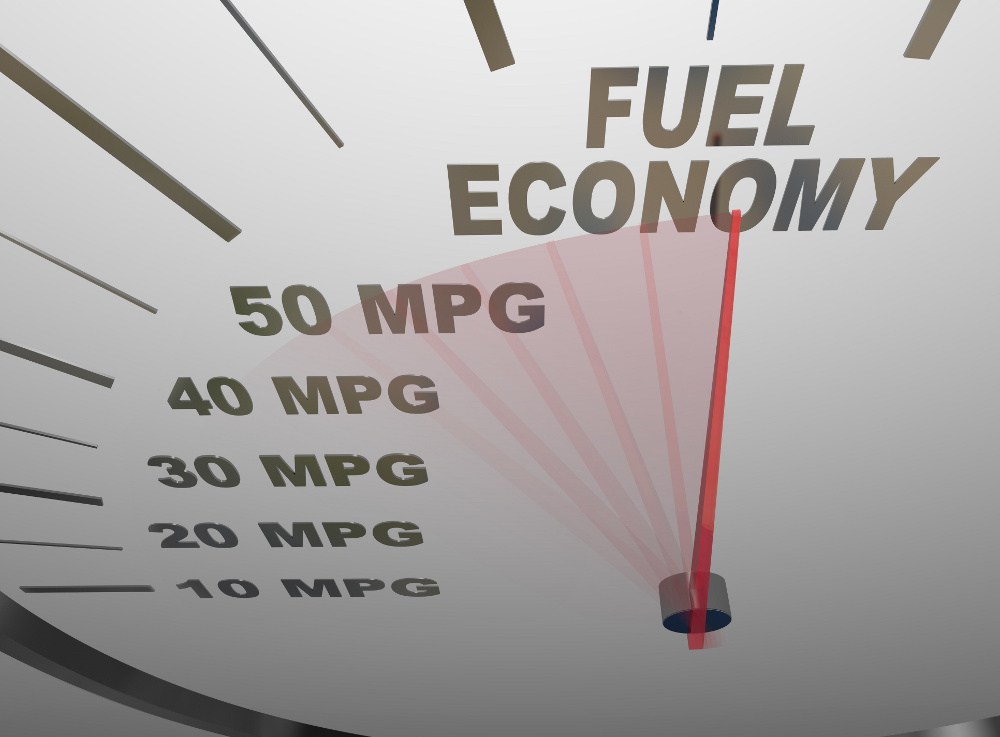
Cars are some of the most ubiquitous machines in the world. However, most of them are also powered by liquid petroleum, and since there is a myriad of different models they all consume this material at a different rate. So how can we create a measure of this efficiency? Well, if we use our engineering mindsets, then we will realize that we can standardize everything by seeing how much fuel is consumed per unit of distance, therefore creating something known as Fuel Economy. Fuel economy is affected by multiple factors, including onboard appliances, environmental conditions, and engine design. The better the fuel economy, the more sustainable the vehicle is.





 Isaac's Science Blog