“How can we more accurately predict an object’s failure?”
One of the most important duties of a design engineer is to ensure that objects do not fail. However, classical failure theory does not always suffice. Instead, we must use more advanced concepts. One example of this is the Von Mises Stress, which is characterized by a superposition of all of the stresses on the object. If the Von Mises Stress is greater than the yield stress, then failure will occur. The formula for Von-Mises Stress is given by sigma_v = sqrt (sigma_1^2+sigma_2^2+sigma_3^2-sigma_1*sigma_2-sigma_2*sigma_3-sigma_1*sigma_3), where sigma_v is the Von Mises Stress and sigma_1,sigma_2, and sigma_3 are all stress superposition values. The Von Mises Stress can be visualized as an ellipse in 2 and 3 dimensions.
“How can we design items so that they are not harmful to human health and the environment?”
Traditionally, human-made items and products have been designed without regard for the environment. However, how can we use our engineering mindset differently? Well, through one method known as Design for the Environment, items will be designed such that processing, manufacturing, packaging, and energy efficiency of their life-cycle will use as little resources as possible.
“How can we quantify the ratio between momentum and thermal diffusivity?”
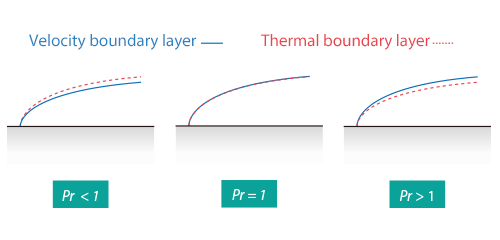
For fluids flowing over an object’s surface, momentum and heat will be transferred, oftentimes at different rates. How quickly one changes with respect to the other will completely affect its properties. As a result, engineers have devised something known as the Prandtl Number, which compares the diffusivity of momentum and heat as a ratio, symbolized as pr = c_p*Mu/k with C_p being the specific heat capacity of a gas at constant pressure, Mu being the dynamic viscosity and k the thermal conductivity.
Solar energy is growing at a rate that makes the adoption of computer technology look feeble. However, with this increased adoption comes increased instabilities, such as extreme variability in power generation. So how can we use our engineering mindset to solve this problem? Well, we know that if we were to add something to dampen the sudden influx of energy, we can smoothen out operations. So what if we were to add a form of Ramp Rate Control through techniques such as batteries and control strategies? Well, it turns out that this is the exact idea behind many modern grid control strategies.
“How can we predict if a fluid flow will be laminar or turbulent?”
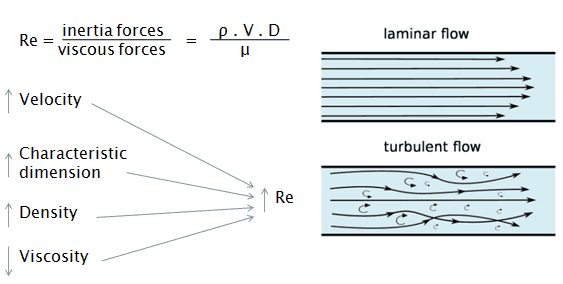
Fluids have a most remarkable form of movement with their flow. Some are laminar as a calm lake while others thrush around with the turbulence of a roaring river. But how can we predict if a fluid flow will be either turbulent or laminar? Well, let’s think about it using our engineering mindset. We know that two types of forces act on a moving fluid, inertial and viscous forces. The former are forces that tend to move an object, such as a pressure difference or momentum, while the latter are ones that tend to keep a fluid’s movement neutral, such as friction or momentum loss. It would be logical that if the former were stronger, then the fluid would be freer to move and therefore create turbulence while the latter would keep everything mellow and laminar. So what if we were to take the ratio of these forces and classify fluids based on it? Well, this is known as the Reynolds Number and is used to predict the flow type of a fluid. For simple fluids, the Reynolds Number can be expressed symbolically as Re = rho *v*L/mu, where Re is the Reynolds Number rho is the density of the fluid v is the velocity L is the characteristic linear dimension of the fluid and mu is the dynamic viscosity of the fluid.
Circuit components such as sensors have all sorts of voltages. However, sometimes we want to modify them in some way. So how can we use our engineering mindset to accomplish this? Well, what if we were to simply use an extra component to do this? These are known as Operational Amplifiers and are a vital part of mechatronic systems.
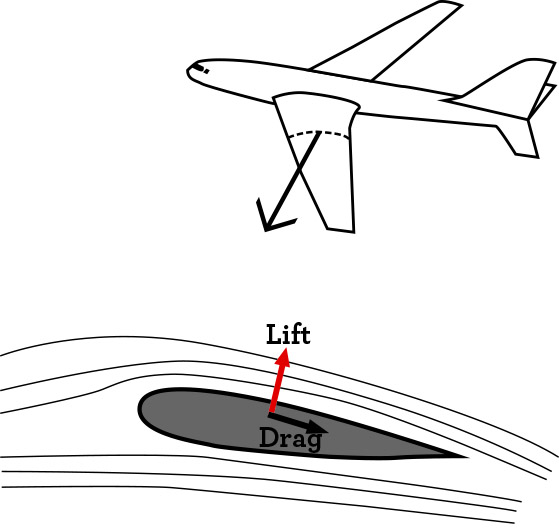
Airplane wings have a very peculiar shape. Their curved nature makes it seem as if they come from some science fiction movie. However, why exactly do they have their shape? Well, it turns out that it all comes from a very simple physical phenomenon, pressure. The wings are curved upwards such that more air goes below the wings, therefore creating a pressure difference that creates lift. Because of this, airplane wings have their futuristic look!
How the Portuguese island of Porto Santo is Using Smart Technology to Become More Sustainable
04/01/18
“How is the Portuguese island of Porto Santo is Using Smart Technology to Become More Sustainable?“
The Portuguese island of Porto Santo has struggled with energy adoption for years. Being a small piece of land under 42 square kilometers an hour, it had to import most of its energy from fossil fuels.
…..Until recently.
Thanks to a series of collaboration between industry and the island authorities, Porto Santo is now making strong headway into using smart and sustainable technologies to combat its energy problems. This includes deployment of Vehicle to Grid Technology, Solar Storage Management Systems, and Charging Control Systems.
“How is small-scale solar a cheaper alternative to large-scale grid distribution?”
Conventional wisdom holds that bigger is better. However, this turns out to not hold true in the arena of solar energy. A recent study has shown that when taking transmission and feedback into account, locally generated building-side distributed solar is more cost-effective than its grid-side alternative! Just goes to show the potential of renewable energy.






 Isaac's Science Blog