Tag: Fluid mechanics

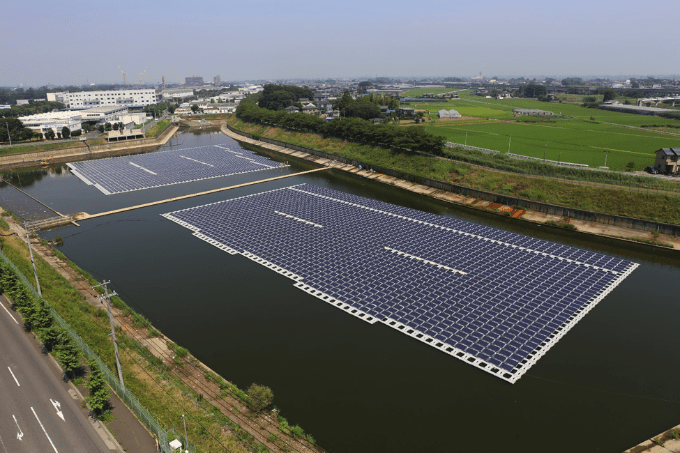
Floating solar arrays

Floating solar arrays

Floating solar arrays

01/18/17

“How can we achieve greater efficiency of solar arrays using water?”


Solar panel arrays are some of the most benevolent technologies in existence. However, they can often require large parcels of land, which could be expensive and take away from the possibility of being used for other activities. So how can we use our engineering mindset to circumvent this issue? Well, if our main quandary is that solar panels take up a large amount of land, why not take them off land? Specifically, what if we were to create solar panels designed to float on water? This is the operating principle behind floating photovoltaics (also known as “floatovoltaics”), which use a specialized form of solar panels placed in water reservoirs to generate clean electricity for the local area. Floating solar arrays are more efficient than traditional models and can be hidden from the public view, but designers of such systems must take into consideration the effects of increased wind speeds over water and the local habitat. Companies around the world are already suiting to take up the challenge of implementing these systems, with Kyocera of Japan, Sonomoa clean power of California, and Infratech industries of Australia investing money to build these models.

Pumps

Pumps

Pumps

01/17/17

“How can we move fluids within a machine using mechanical power?”


Modern mechanical machines such as automobiles and solar heaters work using an internal transfer of fluids. However, since fluids can be difficult to control, specialized machinery must be used to ensure a smooth transfer of material. So how can we make such an apparatus? Well, we know that fluids are respondent to mechanical actions such as suction or pressure, what if we were to make a solid device that accomplishes this? This is the fundamental idea behind an engineering tool known as a pump, and it has become one of the most widely used devices in the current technological paradigm of humanity.

Capillary action

Capillary action

Capillary action

11/16/16

“Why is it that liquids can move up against gravity in containers?”


Liquids are objects that we often see everyday, whether it be in the water that we drink or in the blood that runs through our veins. We also know that objects are held down to the Earth by gravity, but for some ominous reason liquids seem to have the ability to move upwards by themselves in a container against gravity. Why is this so? Well, like I always say, let’s think about it. When liquids are placed in containers, a concave meniscus will form from adhesive forces. If the diameter of the containing vessel is small enough, then the adhesive forces from the container will cause a vertical force on the fluid, and if these adhesive forces are more powerful than the internal cohesive forces will pull the liquid along with it, therefore causing vertical movement. Because this phenomena is so special not only has it been given a special name by scientists and engineers (Capillary action), it is found in many wonderful applications in nature. Plants use capillary action to absorb water from the soil using their roots, and human eyes utilize capillary action using two small diameter tubes called the lacrimal ducts to drain tear fluid in the eyes.