Tag: Energy

Carbon capture and storage

Carbon capture and storage

Carbon capture and storage

“Could we fight climate change by taking CO2 out of the atmosphere and putting it into the ground?”
It is a well-known fact that there is an overabundance of carbon dioxide in the atmosphere as a result of human activity. So are there any creative ways in which we could reduce this amount? Well, This, how about if we were to take the carbon dioxide during an energy generation process, and then funnel it into the ground? This seems like a good (yet crazy) concept, but as engineers, we can’t just make ideas, we have to implement them as well. The first step is to capture the CO2 during energy generation. This can be accomplished through one of two methods, post-combustion (which takes in the extra flue gas released during the burning of fossil fuels and uses a filter to separate out the CO2) and pre-combustion (which traps the CO2 gas before it is burned). This gas will then be transported through a pipe towards a deep rock formation, where it will finally be ejected and stored for a longer period of time. Carbon capture and storage has the potential to save much CO2 from entering the atmosphere (upwards of 14% of energy-related CO2 reductions by 2050). A stalwart example of a Carbon capture and storage plant is the Canadian Boundary Dam plant, which has the potential to save up to 90% of CO2 related emissions.

Microgrids

Microgrids

Microgrids

12/29/16

“Is it possible to have your own autonomous grid?”
Electrical grids usually have a leviathan-like size to them. This immense magnitude often comes with numerous drawbacks, such as lack of autonomy for local stations in case of a power outage. So what if were to develop our own grid that would connect and disconnect at will to the larger grid? This is the fundamental idea behind a technology that engineers term a microgrid. Microgrids are self-sustaining structures that can be separated from the larger grid through the use of a switch. Because of their autonomous nature, microgrids can be used to create stable islanding areas with renewable energies. These islanded microgrids are often used for high-security areas, such as the Alameda County Santa Rita Jail in Dublin, California.

Change in Enthalpy

Change in Enthalpy

Change in Enthalpy

12/04/16

“How can we measure the change of energy in a thermodynamic system when the system itself changes?”


All thermodynamic systems have the summation of the parts of their energy represented by enthalpy. However, the universe is almost never in a static state, and is always changing. Consequently, all thermodynamic systems will be in perpetual change as well. And it turns out that this change in enthalpy has very practical results for scientific use. A change in enthalpy can be quantitatively described by taking the difference of the enthalpy of the system after the change and before the change. If the  enthalpy has gone up, then that means that energy must have been added to the system, making it an endothermic process. If the enthalpy has gone down, then heat was removed from the system and it was an exothermic process. The change in Enthalpy is often symbolically represented using a (delta)H

Enthalpy

Enthalpy

Enthalpy

12/03/16

“How can we model the total energy inside a thermodynamic system?”


As a scientist or engineer, if you ever work with thermodynamics systems, then you will have to understand the amount of energythat you are working with. However, how can we represent this concept in more concrete terms? Well, luckily for us, after many years of hard labor, scientists and engineers have formulated the very concept of enthalpy of this very matter. Enthalpy can be defined as the amount of energy stored within a thermodynamic system, which can be symbolically defined as H = u + p*V, with H being the enthalpy, u being the internal energy of the system, p being the pressure and V being the volume.

Energy density and it’s importance

Energy density and it’s importance

Energy density and it’s importance

12/02/16

“How do scientists and engineers measure the density of energy within a system and why is it important?”

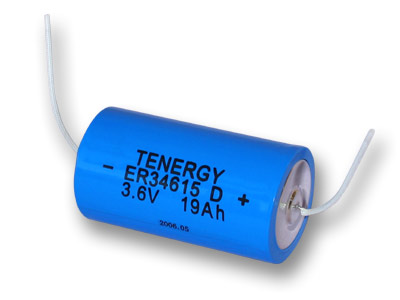
Energy is a quantity that is used omnipresently for calculations in all branches of science and engineering. However, energy is more than a theoretical abstraction, and since it is tied to the material universe, it must be stored somewhere in reality, such as in objects. And since objects of the same size can have different abilities to hold energy , we will need some conceptual way to understand this. As a result, scientists and engineers have developed the concept of energy density to represent the amount of energy stored within in object. Energy density is an important concept because when analyzing energy storage mechanisms such as batteries and capacitors, once must take in to consideration the volume vs power limitations that a project might have. To illustrate, let’s say that you want to build an autonomous boat. Since this boat will have no people on board, it will need a mechanism to power it’s systems. However, the boat can not uphold too much weight, or else it will sync. Therefore, when designing such a contraption, engineers will have to choose an energy storage technology with a high energy density.