Tag: Energy

Solar Savings Fraction

Solar Savings Fraction

Solar Savings Fraction

08/18/18

“How can we measure what percentage of the energy to appliances is provided by solar?”


Household appliances automatically become greener when they are supplied by solar energy. But solar energy may not provide all of the energy to a system. So how can we quantify how much energy an appliance receives from solar? Well, we can simply represent this by the Solar Savings Fraction which gives the ratio of solar in the system. A solar fraction of 1.0 means that the entire system used solar energy while one of 0 means that no solar is present. Energy efficiency measures can increase this fraction by reducing the load required from non-renewable resources.


How We Can Use Natural Gas to Generate Electricity

How We Can Use Natural Gas to Generate Electricity

How We Can Use Natural Gas to Generate Electricity

08/16/18

“How is natural gas used to make electricity?”


Natural gas is one of the fastest growing energy resources out there. But how exactly does it generate electricity? Well, natural gas can be burned in a boiler that heats up water into steam which turns a turbine with a generator attached. Some of the steam at the end of the cycle can even be put through another turbine in a combined cycle generation system to increase the energy efficiency. This way, we can use natural gas to generate electricity!


Phase-Change Materials for Solar PV Cooling

Phase-Change Materials for Solar PV Cooling

Phase-Change Materials for Solar PV Cooling

08/14/18

“What is an innovative way to cool solar PV?”


Solar PV has the highest growth rate amongst all forms of energy. However, in order to operate effectively, it must be at a stable temperature. One way to do this is to use something known as Phase-Change Materials. Phase-Change Materials are high heat coefficient materials at their phase-change temperature. Because they have a high heat coefficient, they can absorb a large amount of heat without fully changing their state. Phase-Change Materials are employed in Building-Integrated Solar PV Systems to keep them at optimal temperatures.

Resilience Outcomes

Resilience Outcomes

Resilience Outcomes

08/01/18

“How can we evaluate resilience performance?”


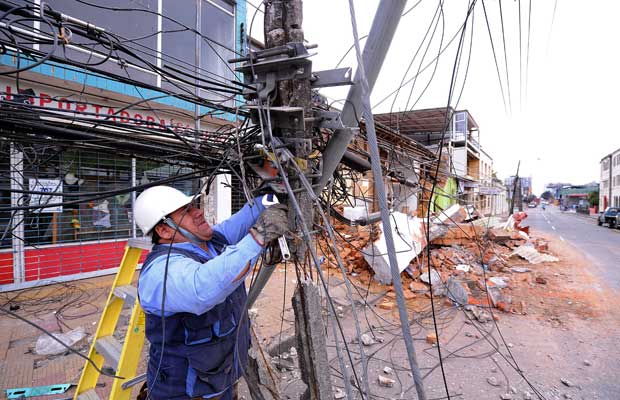
Resilience Performance is great for seeing how well a system can cope with sudden disasters. However, sometimes we will also need to analyze how effective its response is. This is where we can apply the metric of Resilience Outcomes. Common examples of Resilience Outcomes include reduced damage from disasters and resumed economic activity growth.

A New Guide For High-Performance Energy-Efficient Buildings in India

A New Guide For High-Performance Energy-Efficient Buildings in India

A New Guide For High-Performance Energy-Efficient Buildings in India

07/26/18

“Is there a new guide for energy efficient buildings in India?”


India is a massive country. With an area larger than the Arabian Peninsula and a population size equal to four times the United States, it definitely has something to say about size. And every single one of those people probably lives, works, and plays in some sort of building. That must be a lot of buildings. And to keep everyone cool and productive in the hot Indian Climate, a lot of energy is going to go towards HVAC and Lighting Systems. Combine this with a large population growth and intense economic development, and it looks like more and more people are going to be in these buildings.


So like any nation with these factors, India should be looking to see how it could supply this future growth in energy. After much studying into this issue, the nation of the Ganges has decided that one of its primary directives must be to vastly increase energy efficiency in the building sector. After working with Lawrence Berkeley National Laboratory, the same center that produced The Rosenfeld Effect, a new Guide For High-Performance Energy-Efficient Buildings in India has been produced. This series of documents delves into how India can achieve its climate change reduction goals with regards to the building sector by addressing its unique workforce, construction activity, culture, and climate.


Bottom line, I recommend that everyone in the energy space should take at least a few peaks at it right here!

Breeder Reactors

Breeder Reactors

Breeder Reactors

07/25/18

“How can we make nuclear reactors that produce more fissionable material then it consumes?”


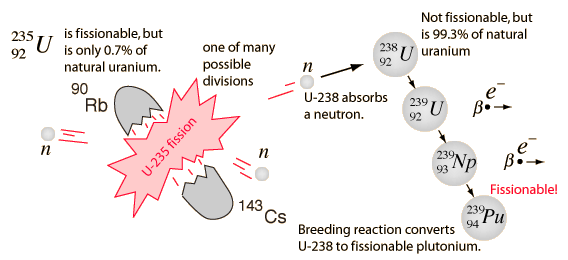
Nuclear reactors are commonly thought of as non-renewable resources. However, if we invest in technology the resight way, then we can do some very creative things. Since flying neutrons can be absorbed by non-fissionable Uranium 238 and be turned into fissionable Plutonium 239, placing these with Uranium 235 can allow for more fissionable material to be created over time. Reactors that use this process are called Breeder Reactors and have been developed in France.

Avedøre Power Station

Avedøre Power Station

Avedøre Power Station

07/09/18

“What is the most efficient power station in the world?”


Power stations are not usually known to be efficient. But some can break this boundary. The Avedøre Power Station in Denmark is a combined heat and power station which utilize as much as 94% of the energy in the fuel and convert 49% of the fuel energy into electricity.

How much energy does a person use in a year?

How much energy does a person use in a year?

How much energy does a person use in a year?

06/25/18

“So how much energy does the average person use in a year?”


Humans use energy around the world every day, whether it be in powering their house or driving the car. However, have you ever wondered how much energy is used in one year? Well, it all depends on where you live. Around the world, the average is around 77 gigajoules per capita, with the highest being Iceland at 786 gigajoules to Bangladesh at 9.05 gigajoules. The US sits at 290.47 gigajoules per capita, and California at 122.6 gigajoules per capita because of The Rosenfeld Effect.

Urgent Report: Humanity is not Investing Enough into Renewable Energy!

Urgent Report: Humanity is not Investing Enough into Renewable Energy!

Urgent Report: Humanity is not Investing Enough into Renewable Energy!

06/11/18

“How much more renewable energy do we exactly need to build?”


Humanity is in big trouble. Although we have been investing more in renewable energy than ever before, at our current rates it is still not enough. A paper by Ken Caldeira at the Carnegie Institute for Science has calculated that the entire world will need to 1.1 gigawatts of clean energy per day to limit climate change levels to be below 2 degrees Celsius. But against this monumental number, we are only adding around 15% of that! If we keep going at this pace, it will take four centuries to completely overhaul our energy system, which could lead to drastic consequences.