Category: Urban Systems

Why Climate-Exacerbated Heat Waves Will Melt Infrastructure in Cooler Climatic Regions

Why Climate-Exacerbated Heat Waves Will Melt Infrastructure in Cooler Climatic Regions

Why Climate-Exacerbated Heat Waves Will Melt Infrastructure in Cooler Climatic Regions

06/28/21

“Why will climate-exacerbated heat waves cause infrastructure to melt?”

Infrastructure in cooler climatic regions are usually designed for temperatures within a restricted range. However, the advent of climate change is causing heat waves to drive temperatures far above this region. Since the infrastructure is not designed for this range, it leads to problems such as melting. As of writing this effect can be seen right now in the Northwestern United States, where electricity cords powering Portland’s rail system have melted. This is Why Climate-Exacerbated Heat Waves Will Melt Infrastructure in Cooler Climatic Regions.

Image credit https://3gz8cg829c.execute-api.us-west-2.amazonaws.com/

Why Climate-Induced Heat Waves Can Be Especially Deadly for Cold Climatic Areas

Why Climate-Induced Heat Waves Can Be Especially Deadly for Cold Climatic Areas

Why Climate-Induced Heat Waves Can Be Especially Deadly for Cold Climatic Areas

06/26/21

“Why are climate-induced heat waves especially deadly for cold climatic areas?”

Temperatures in cold climatic areas often don’t get high enough to warrant the purchase of air conditioning. However, when a heat wave arrives, climatic levels can spike to the point where it can be dangerous to reside inside non-climatically controlled areas, leading to mass public health risks. This is Why Climate-Induced Heat Waves Can Be Especially Deadly for Cold Climatic Areas.

Why We Need to Build Affordable Housing in Light of Climate Change

Why We Need to Build Affordable Housing in Light of Climate Change

Why We Need to Build Affordable Housing in Light of Climate Change

06/24/21

“Why should we have affordable housing requirements in light of climate change?”

Climate change is going to displace a large number of people to seek housing and shelter elsewhere. Since many of these people come from socially marginalized backgrounds will incur losses from their tragic events, they will have to seek shelter at affordable locations. So how can we make this happen? Well, what if we were to create large amounts of affordable housing to ensure that proper shelter can be provided? This is one possible solution and is Why We Need to Build Affordable Housing in Light of Climate Change.

Using Analytics to Predict Urban Growth in Response to Climate Change

Using Analytics to Predict Urban Growth in Response to Climate Change

Using Analytics to Predict Urban Growth in Response to Climate Change

06/22/21

“How can we use analytics to predict urban growth in response to climate change?”

Cities and urban areas are going to change drastically in response to climate change in ways that we have never seen before. Certain areas are going to become less inhabitable, buildings will have to be redesigned with new hazard standards in mind, and we may even see full-scale retreat. So what can we do to look at how things might occur? Well, what if we were to use simulation software to take into account all of these factors to visualize how these changes might occur? Well, that’s called Using Analytics to Predict Urban Growth in Response to Climate Change and is one way we can peer into the new climate paradigm.

Why Adding More Grassy Space to Sidewalks Will Make Cities More Heat Resilient

Why Adding More Grassy Space to Sidewalks Will Make Cities More Heat Resilient

Why Adding More Grassy Space to Sidewalks Will Make Cities More Heat Resilient

06/19/21

“Why will adding more grassy space to sidewalks make cities more heat resilient?”

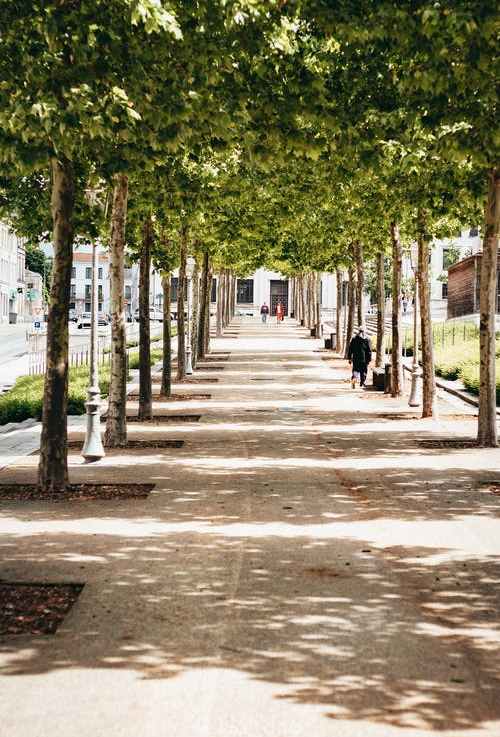
During heat waves, concrete becomes hot and makes cities less walkable and more unpleasant to stay in. But how can we use our problem-solving skills to change this? Well, we know that vegetation is able to do well in hot weather and not be too hot to touch. So what if we were to put in more grassy areas to sidewalks? That way, people can step on it during heatwaves and heat can be absorbed. This is a prime solution and is Why Adding More Grassy Space to Sidewalks Will Make Cities More Heat Resilient.

Why Global Warming Will Make Sidewalks Less Walkable

Why Global Warming Will Make Sidewalks Less Walkable

Why Global Warming Will Make Sidewalks Less Walkable

06/18/21

“Why will global warming make sidewalks less walkable?”

Sidewalks can become overheated and less walkable during heatwaves. The advent of global warming is going to make heat waves more frequent, and resultantly this is Why Global Warming Will Make Sidewalks Less Walkable. To fix this, urban planners and engineers are going to have to take these factors into consideration and redesign cities with adaptation in mind.

Why Legalizing Basement Dwellings in Apartments in Low Flood Risk Areas Could Assist With Climate Migration

Why Legalizing Basement Dwellings in Apartments in Low Flood Risk Areas Could Assist With Climate Migration

Why Legalizing Basement Dwellings in Apartments in Low Flood Risk Areas Could Assist With Climate Migration

06/06/21

“Why could legalizing basement dwellings in places with low flood risk be a boon for climate migration?”

Many cities ban basement dwellings in their zoning code. However, if legalized, the increased supply could vastly increase stock available for people to move in. While these are liabilities for places that are at risk for floods, places that are far from this will have no problem. This is Why Legalizing Basement Dwellings in Apartments in Low Flood Risk Areas Could Assist With Climate Migration.

Why Removing Car Roads Could Be a Smart Climate Resilience Strategy

Why Removing Car Roads Could Be a Smart Climate Resilience Strategy

Why Removing Car Roads Could Be a Smart Climate Resilience Strategy

06/04/21

“How can removing car roads be a smart climate resilience strategy?”

Car roads are made of non-porous cement that causes water to build up during floods. By removing car roads and converting it into nature-based material more suitable for walking, the water could be absorbed instead. This is Why Removing Car Roads Could Be a Smart Climate Resilience Strategy.

Bluelining

06/03/21

“How will the impact of increased flood risk on insurance further perpetuate segregation?”

In the middle of the 20th century, the U.S government forbade residents of certain neighborhoods (Specifically ones that Black Folk were forced to live in) to apply for a home mortgage. While this was later declared constitutionally illegal, the confluence of climate change and the private insurance markets may bring it back in an insidious new form. When updated floodmaps predict that new neighborhoods will become unsaveable, they may deny homeowners in those regions from receiving insurance coverage. This will turn the homes in this area into stranded assets that will be extremely difficult to sell and pose extreme financial liability. This new phenomena of Bluelining will only serve as a compounding factor for people living in flood-prone regions, which are already disproportionately made up of lower systemic caste communities. Flood risk prediction and insurance designers will need to take into consideration how their work will possibly harm the same people they should be seeking to serve.