Category: Policy

How Many Pieces of Paper Can a Single Solar Panel Produce in a Single Day?

How Many Pieces of Paper Can a Single Solar Panel Produce in a Single Day?

How Many Pieces of Paper Can a Single Solar Panel Produce in a Single Day?

02/10/19

“What is the amount of paper able to be produced by a single solar panel in a single day?”


Every industrial process in this world takes energy, and paper production is no different. According to calculations done by Stanford University, a single sheet of paper takes 138.0 kJ to produce. Since a typical solar panel can produce one kilowatt-hour (equivalent to 3600 kJ) in a single day, it can produce around 26 pieces of paper! Keep in mind that this is just a single solar panel, so a whole array will be able to produce much more. This is How Many Pieces of Paper Can a Single Solar Panel Produce in a Single Day.

Low Carbon Fuel Standards

Low Carbon Fuel Standards

Low Carbon Fuel Standards

02/07/19

“How can we ensure that our vehicles burn cleaner fuel?”


Vehicles gasoline is extremely pollutive. However, through a little bit of policy and technology, we can overcome this. If we were to mandate that all petroleum in vehicles only emit a certain amount of carbon per volumetric unit, it would force companies to innovate and invent/distribute cleaner fuel. This usually involves mixing or replacing petroleum in the vehicle with low-carbon alternatives such as biofuels. This is known as a Low Carbon Fuel Standard and is used in countries all over the world to control emissions.

Why Wind Turbines Can Provide Resiliency During Cold Waves

Why Wind Turbines Can Provide Resiliency During Cold Waves

Why Wind Turbines Can Provide Resiliency During Cold Waves

02/06/19

“How can wind turbines be useful for communities during extra cold times?”


During times of cold waves, traditional energy generation potential goes down. But this usually coincides with an increase of wind, which heightens the energy potential for wind turbines. This is Why Wind Turbines Can Provide Resiliency During Cold Waves.

Why Hydrogen Fuel Cells Work for Heavy Trucking

Why Hydrogen Fuel Cells Work for Heavy Trucking

Why Hydrogen Fuel Cells Work for Heavy Trucking

02/05/19

“Why might hydrogen fuels cells be the future of heavy trucking?”


In order to decarbonize heavy trucking freight transport, the replacement system needs to have high energy density and low weight so it doesn’t bog down the cars on their long rides. This way Hydrogen Fuel Cells would be perfect due to satisfying both of these. This is Why Hydrogen Fuel Cells Work for Heavy Trucking.

Recycling Rare Earth Minerals

Recycling Rare Earth Minerals

Recycling Rare Earth Minerals

01/28/19

“How can we reuse rare earth minerals?”


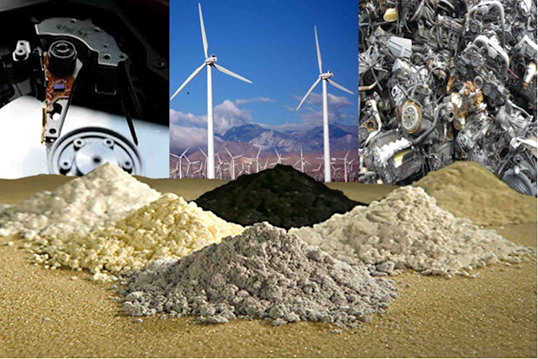
Rare Earth Minerals are vital for the operation of distributed energy technologies. But their extraction process is extremely pollutive and their supply is limited. But what if were to simply reuse them from old products? This way, we can increase the availability of their supply and help create a circular economy. As a result Recycling Rare Earth Minerals can be of great use to the world.

Image credit https://climate.nasa.gov

The Importance of Rare Earth Minerals to Renewable Energy

The Importance of Rare Earth Minerals to Renewable Energy

The Importance of Rare Earth Minerals to Renewable Energy

01/25/19

“Why are certain minerals so important for renewable energy?”


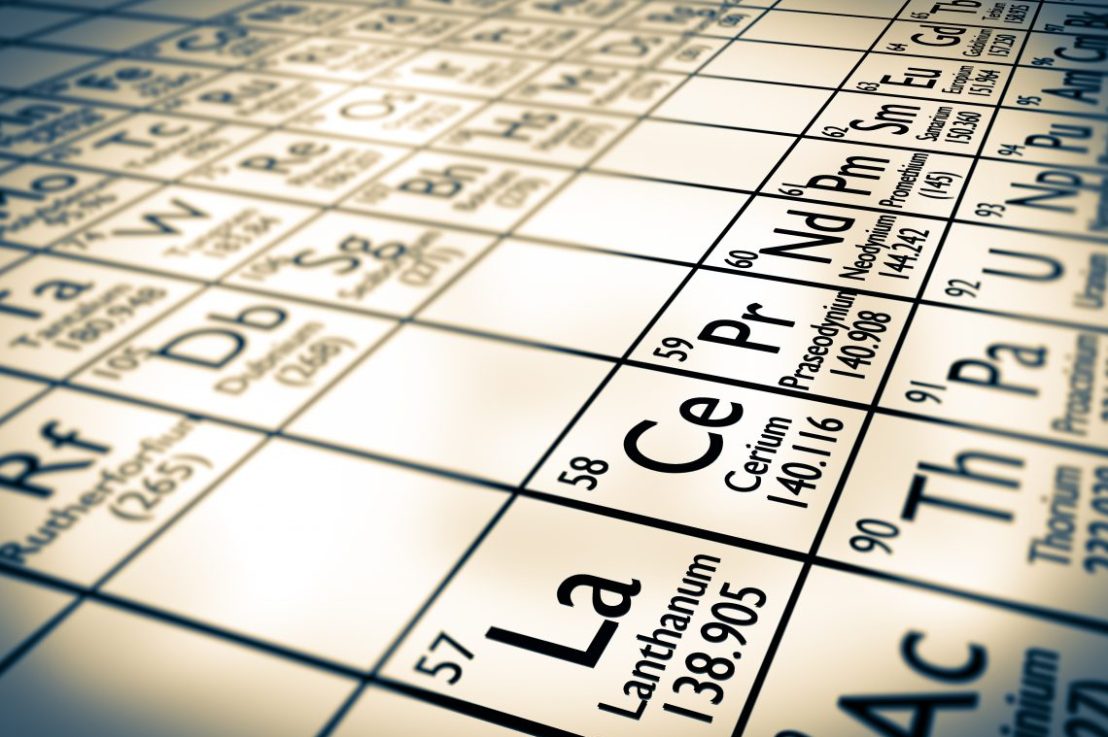
Renewable energy is one of the fastest growing technologies in the world. But like every manufactured product, they are heavily dependent on the minerals that compose them. One of the most important amongst these are Rare Earth Minerals. Rare Earth Minerals such as neodymium, terbium, indium, dysprosium, and praseodymium form vital components for solar panels, wind turbine motors, batteries, and electric vehicles. With such constricted supplies in the world, geopolitics will shift to favor countries with large amounts of these resources, underlying The Importance of Rare Earth Minerals to Renewable Energy.

Carbon Offsetting

Carbon Offsetting

Carbon Offsetting

01/22/19

“How can you offset your carbon emissions without changing your own operations?”


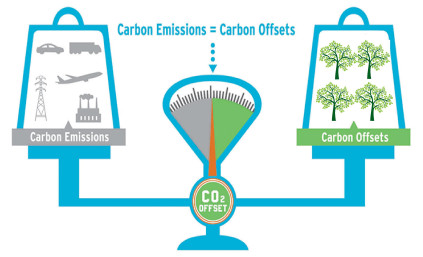
Some things are extraordinarily difficult to decarbonize. Whether it be air travel or going 100% renewable when the grid itself is based 100% off carbon-emitting resources. But a workaround can be found through Carbon Offsetting. This involves making a purchase of renewable energy or planting a tree that offsets the amount of carbon used. This can be useful for designing policies around technologies whose emissions-free alternatives are still too nascent for commercial use.


Image credit coedenfach.files.wordpress.com

A Simple Reason Why Humanity Needs to be Less Wasteful to Curb Climate Catastrophe

A Simple Reason Why Humanity Needs to be Less Wasteful to Curb Climate Catastrophe

A Simple Reason Why Humanity Needs to be Less Wasteful to Curb Climate Catastrophe

01/18/19

“What is one tough thing humanity needs to adopt to fight climate change?”


Right now humanity is on track to shoot past a rise of 2-degree centigrade from pre-industrialization by 2030. And one of the primary reasons behind this is because human energy consumption and population has been rising over the years. Much of the global focus to fight this has been increasing technological energy efficiency. But according to the equation I = PAT, if population and affluence rise then it would offset more efficient technology. If humanity does not want to quickly decrease its population then it must change its culture of affluence. This is A Simple Reason Why Humanity Needs to be Less Wasteful to Curb Climate Catastrophe.

I = PAT

I = PAT

I = PAT

01/17/19

“How can we represent environmental impact based on resource consumption?”


Every society has an environmental impact. But since each society has different levels of resource consumption and utilization, each one is different. So how can we quantify this? Well, we can measure impact based on the average of the amount used multiplied by its energy efficiency and the total population. This is known as the I = PAT equation where I is the Environmental Impact P is the Total Population A is the Level of Affluence (how many resources are used) and T is the Technological Efficiency.