Category: Policy

Recycling Rare Earth Minerals

Recycling Rare Earth Minerals

Recycling Rare Earth Minerals

01/28/19

“How can we reuse rare earth minerals?”


Rare Earth Minerals are vital for the operation of distributed energy technologies. But their extraction process is extremely pollutive and their supply is limited. But what if were to simply reuse them from old products? This way, we can increase the availability of their supply and help create a circular economy. As a result Recycling Rare Earth Minerals can be of great use to the world.

Image credit https://climate.nasa.gov

The Importance of Rare Earth Minerals to Renewable Energy

The Importance of Rare Earth Minerals to Renewable Energy

The Importance of Rare Earth Minerals to Renewable Energy

01/25/19

“Why are certain minerals so important for renewable energy?”


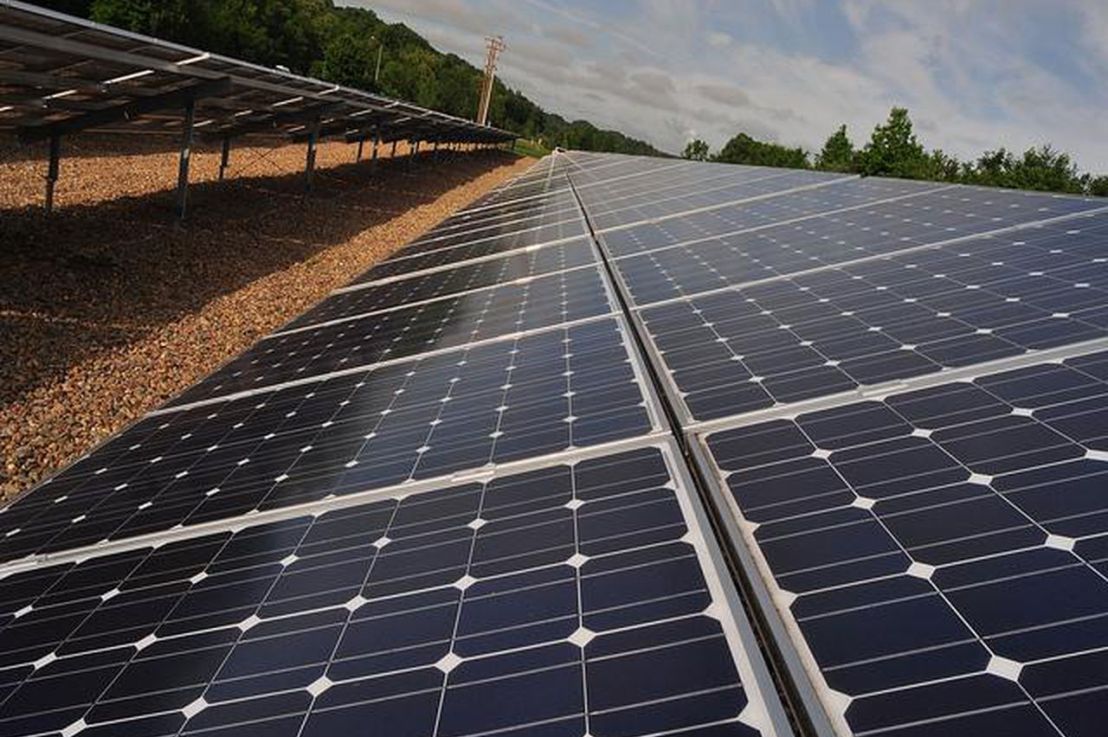
Renewable energy is one of the fastest growing technologies in the world. But like every manufactured product, they are heavily dependent on the minerals that compose them. One of the most important amongst these are Rare Earth Minerals. Rare Earth Minerals such as neodymium, terbium, indium, dysprosium, and praseodymium form vital components for solar panels, wind turbine motors, batteries, and electric vehicles. With such constricted supplies in the world, geopolitics will shift to favor countries with large amounts of these resources, underlying The Importance of Rare Earth Minerals to Renewable Energy.

Carbon Offsetting

Carbon Offsetting

Carbon Offsetting

01/22/19

“How can you offset your carbon emissions without changing your own operations?”


Some things are extraordinarily difficult to decarbonize. Whether it be air travel or going 100% renewable when the grid itself is based 100% off carbon-emitting resources. But a workaround can be found through Carbon Offsetting. This involves making a purchase of renewable energy or planting a tree that offsets the amount of carbon used. This can be useful for designing policies around technologies whose emissions-free alternatives are still too nascent for commercial use.


Image credit coedenfach.files.wordpress.com

A Simple Reason Why Humanity Needs to be Less Wasteful to Curb Climate Catastrophe

A Simple Reason Why Humanity Needs to be Less Wasteful to Curb Climate Catastrophe

A Simple Reason Why Humanity Needs to be Less Wasteful to Curb Climate Catastrophe

01/18/19

“What is one tough thing humanity needs to adopt to fight climate change?”


Right now humanity is on track to shoot past a rise of 2-degree centigrade from pre-industrialization by 2030. And one of the primary reasons behind this is because human energy consumption and population has been rising over the years. Much of the global focus to fight this has been increasing technological energy efficiency. But according to the equation I = PAT, if population and affluence rise then it would offset more efficient technology. If humanity does not want to quickly decrease its population then it must change its culture of affluence. This is A Simple Reason Why Humanity Needs to be Less Wasteful to Curb Climate Catastrophe.

I = PAT

I = PAT

I = PAT

01/17/19

“How can we represent environmental impact based on resource consumption?”


Every society has an environmental impact. But since each society has different levels of resource consumption and utilization, each one is different. So how can we quantify this? Well, we can measure impact based on the average of the amount used multiplied by its energy efficiency and the total population. This is known as the I = PAT equation where I is the Environmental Impact P is the Total Population A is the Level of Affluence (how many resources are used) and T is the Technological Efficiency.


The US Interconnections

The US Interconnections

The US Interconnections

01/15/19

“How is the US power grid divided up?”


The United States is a large country. Spanning between two major oceans, it is truly a wonder to behold. But this might be too large for a single interconnection. Instead, the US is divided up into multiple separate interconnections, which together make up The US Interconnections. It is mainly divided between the Western and Eastern Interconnections, with the Texas Interconnection being a small subset.


Image link https://www.eia.gov

The Circular Economy

The Circular Economy

The Circular Economy

01/13/19

“How do we need to rethink our approach to consumption?”


Widespread industrialization has lead economically developed societies to think of products of having a finite linear lifespan. However, with the advent of climate change, this needs to change drastically. Instead, manufactured products will need to be recycled and reutilized in a Circular Economy. This will ensure maximum resource utilization and minimize carbon emissions.


Image Credit http://www.wrap.org.uk

Dispersed Generation

Dispersed Generation

Dispersed Generation

01/06/18

“How can we have hyper distributed electricity generation?”


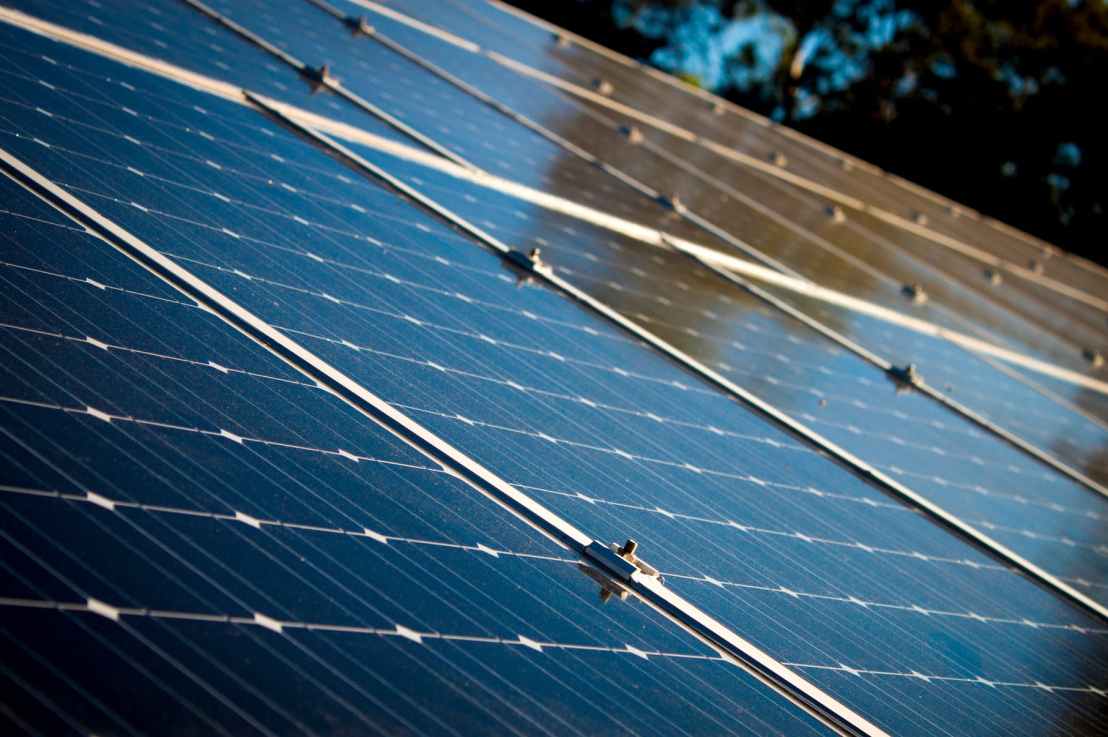
With the advent of climate change, distributed energy resources are proliferating at ever-expanding rates. However, sometimes this decentralized generation must be taken to the utmost levels to ensure infrastructure vitality. Anything of less than or equal to 500 kW of distributed energy generation is known as Dispersed Generation. An Example of dispersed generation includes rooftop photovoltaics.