Category: Physics

The Physics of a Fireworks Explosion

The Physics of a Fireworks Explosion

The Physics of a Fireworks Explosion

07/04/18

“What causes fireworks to explode?”


On 4th of July, Americans are used to seeing fireworks light up the night sky. However, have you ever wondered how exactly do they work? Well, let us use our scientific mindsets to find out. If we investigate, then we will find out that fireworks contain gunpowder in a container surrounded by a Launch Container. When a Lift Charge ignites and propels the container into the sky, there will be a time delay until it reaches its apex, at which it will explode and release a myriad of different colors!


Have a great 4th of July everyone with lots of V/I to the current regime!


Isenthalpic Processes

Isenthalpic Processes

Isenthalpic Processes

06/28/18

“Are there thermodynamic processes that take place without any change in enthalpy?”


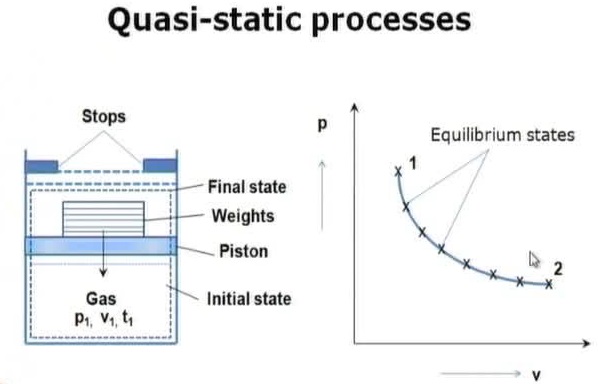
Isothermal, isobaric, and isovolumetric (constant volume) thermodynamic processes are very well known. But there are also Isenthalpic Processes which occur when there is no change in Enthalpy for the system. The throttling process is a common example of an Isenthalpic Process.

LIDAR

LIDAR

LIDAR Scanning

06/23/18

“What makes autonomous vehicles work?”


Autonomous vehicles, archeological scanning, soil imaging, and automated agriculture all rely on knowing real-time distance to work. However, how exactly can we accomplish this? Well, let’s use our engineering mindset to find out. We know that if we send a beam of light from a laser somewhere, then it can be reflected back. And since the speed of light is constant in a uniform medium, if we measure the time it took to return, we can obtain a measurement for distance. This system is known as LIDAR Scanning,  which stands for Light Detection and Ranging. LIDAR has caused a revolution in multiple fields of science and is moving every day closer and closer to mainstream adoption.

Electrical Reactance

Electrical Reactance

Electrical Reactance

06/22/18

“What opposes electric current flow?”


Resistors are commonly known to oppose electricity. However, how can other components such as capacitors and transducers oppose it as well? Well, it turns out that each of these components contribute to something called the Electrical Reactance of the system. Due to the time-varying nature of the components, reactance is typically used when dealing with AC signals.

Why Los Angeles is Painting its Streets White

Why Los Angeles is Painting its Streets White

Why Los Angeles is Painting its Streets White

06/20/18

“Why is the City of Angels painting its streets white?”


Something very exciting and innovative is happening right now in my hometown of Los Angeles. To combat climate change, the city is starting to paint some of its streets white. Since the lighter color will reflect more sunlight, less heat will be trapped on the streets, causing local temperature levels to drop up to 10 degrees Fahrenheit (5.5 degrees Celsius)  and lessening the need for energy-intensive HVAC systems!

The Reynolds Number

The Reynolds Number

The Reynolds Number

04/06/18

“How can we predict if a fluid flow will be laminar or turbulent?”


Fluids have a most remarkable form of movement with their flow. Some are laminar as a calm lake while others thrush around with the turbulence of a roaring river. But how can we predict if a fluid flow will be either turbulent or laminar? Well, let’s think about it using our engineering mindset. We know that two types of forces act on a moving fluid, inertial and viscous forces. The former are forces that tend to move an object, such as a pressure difference or momentum, while the latter are ones that tend to keep a fluid’s movement neutral, such as friction or momentum loss. It would be logical that if the former were stronger, then the fluid would be freer to move and therefore create turbulence while the latter would keep everything mellow and laminar. So what if we were to take the ratio of these forces and classify fluids based on it? Well, this is known as the Reynolds Number and is used to predict the flow type of a fluid. For simple fluids, the Reynolds Number can be expressed symbolically as Re = rho *v*L/mu, where Re is the Reynolds Number rho is the density of the fluid v is the velocity L is the characteristic linear dimension of the fluid and mu is the dynamic viscosity of the fluid.