Category: Mathematics

Linear programming

Linear programming

Linear programming

08/06/17

“How can we maximize or minimize a set of linear equations?”


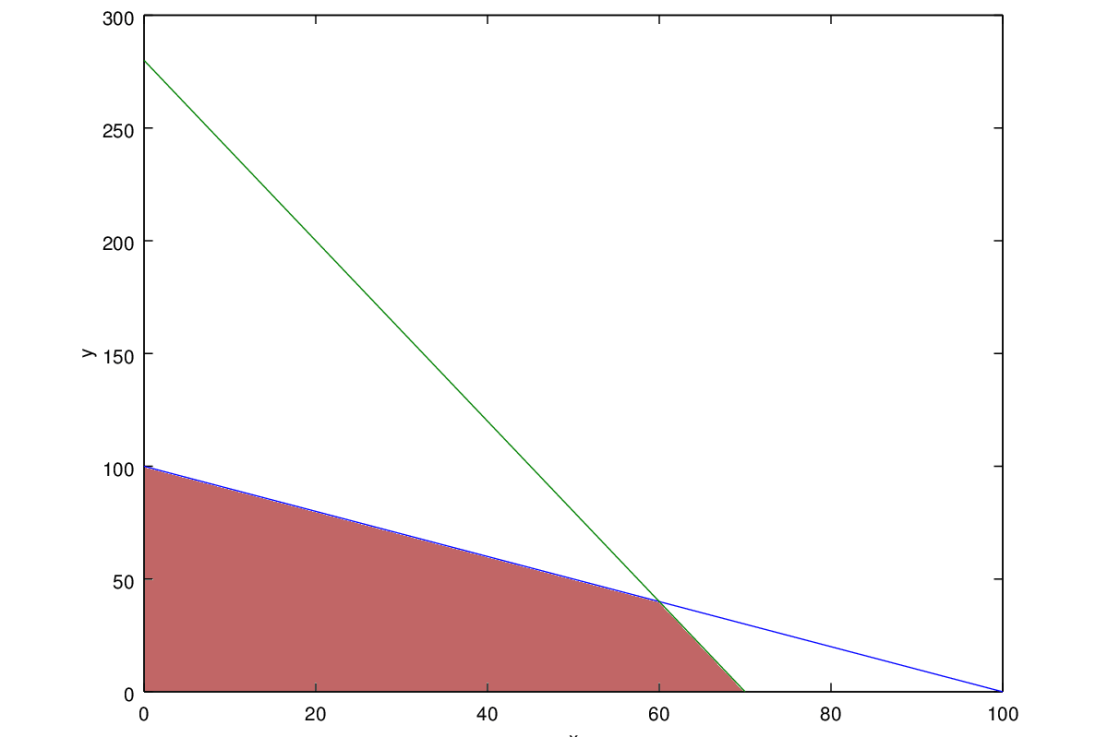
Often times, when working on problems, we have multiple variables related by multiple equations. For example, let’s start out with this situation. Let’s say we have two machine parts x and y that cost 2 dollars and 5 dollars to make respectively, symbolically p(x,y) = 2x + 5y. And let’s also say that we have to make a total of 100 machine parts respectively, or x + y = 100 (blue). And let’s also say that 202 times the number of part x and 5 times the number of part y must be equal to 1400, or 20x + 5y = 1400 (green). So how can we find the minimum price that meets all of our production needs? Well, let’s plot it on a graph (pictured), check all of the points of intersection (In this case (0,100), (60,40) and (100,0) ), and then see which of these points return the minimum desired quantity (In this case (0,100) –> $200). Linear programming can be applied to all forms of applications, ranging from engineering economic systems to control theory and even to general business!
Objective functions

Objective functions

Objective Functions

08/05/17

“What is a function that we want to maximize or minimize?”


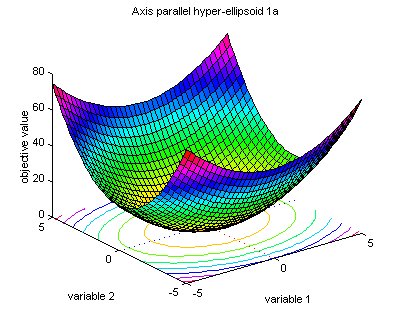
When working with systems of equations, we often have functions that we want to maximize. To illustrate, we might have a cost function f(x) = 18x + 15y which is dependent on two variables x and y. This function is known as the objective function and is used in mathematical operations everywhere.

Contour of model predictive control

Contour of model predictive control

Contour of model predictive control

08/04/17

“How can we predict how a system will react based on how it reacts right now?”
When working with control systems, we often have some desired output in our mind. However, frequently the actual performance of our systems diverges greatly from what we want. So how can we use our engineering mindset to correct this problem? Well, let’s think about it. We can tell a computer how we want a certain system to behave. And we can also create a log of its outputs. So what if every time we gave an output, we took its data, compare it to our desired, and try to minimize the difference with the next iteration? Well, this is the fundamental idea behind model predictive control and is used in industries spanning from building controls to renewable energy to intelligent transportation systems!

Control systems

Control systems

Control systems

07/08/17

“How are complex engineering systems controlled?”


In the modern world of engineering, devices and processes are no longer operated in a purely mechanical format. Instead, they now have a network of sensors and actuators that allow for programmable movement and operation. However, what exactly causes these systems to move? Well, after many years of incremental development, engineers have designed something known as control systems to manage all operations. Control systems are the programmable logic that allows engineering systems to operate. Engineers that work with control systems are known as control systems engineers.

Radius of gyration

Radius of gyration

Radius of gyration

02/13/17

“What would happen if we were to take the entirety of the object’s mass and concentrate it at a point?”
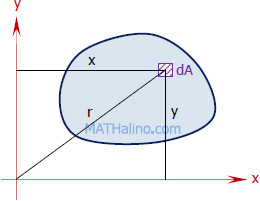
During one’s study of statics, one will have to work with the mass and moment of inertia for objects. However, could there be any ways in which we could simplify our calculations just a tad bit? Well, let’s think about it. Everything could be much simpler if we were to take the mass of the object and concentrate it at a single point away from the axis so that the resultant moment of inertia would be equivalent to original moment of inertia? This is the fundamental idea behind a concept known as the radius of gyration, and can be found with the equation k=Im, with k being the radius, I being the moment of inertia, and m being the mass.

Hypersphere

Hypersphere

Hypersphere

11/12/16

“What does a four-dimensional sphere look like?”


Let’s think about something. A circle can be classified as an object in 2-dimensional space whose boundary is composed of all of the points equidistant from a center point, where the radius is composed of two cartesian coordinates ( r=sqrt(x^2+y^2)) and the area is proportional to the square of the radius (A=pi*r^2). A sphere in turn is the 3-dimensional version of this, where all of the points equidistant from a center makes up the object, with the radius being composed three cartesian coordinates and the volume is proportional to the cube of the cube of the radius (V=4/3 * pi * r^3 ), and if were to take a two-dimensional cross-section, we would obtain a circle. .But what if we were to take this concept into higher dimensions? Well, let’s explore the concept. A four-dimensional sphere (termed a hypersphere by mathematicians) would have to be described with four cartesian coordinates, and the “hyper-volume” would be proportional to the fourth power of the radius (V= ½ * pi^2 * r^4),and if were to take a three dimensional cross section of a hypersphere, we would find a regular three-dimensional  sphere. 

The mathematics of gerrymandering

The mathematics of gerrymandering

The mathematics of gerrymandering

11/08/16

“What is political gerrymandering and how does it work?”

In honor of election here in the United States, I thought that it would be reasonable to do my part and use my scientific skills to explain the mathematics behind a political process known as gerrymandering.

First of all, for those of you unfamiliar with the American political system, the political map of the United States during elections is divided into “districts” of where around 500,000 people will live. People in this area vote for which political party they want, and at the end of the day whoever obtains the largest amount of votes will win the entire district! So in an ideal world, each district will be drawn so that it would fairly represent the population. In this way, political representation would be completely fair. However, individuals who are in power have the power to redraw these districts during times of census, allowing them to manipulate things in to a way that would represent their own interests. For example, let’s imagine a state with 2 million people, half of them voting for one party and half of them voting for another. If all of the districts were drawn to fairly represent this population, then the vote would be split evenly among 4 districts. However, if the districts were redrawn so that three of them would contain even a majority for one party and only one district would contain a majority for another, then the first party will win by a landslide! This issue is more than just a theory, it is a very real thing, and please take action as a citizen and do your part to make sure that the political system can be fair for everyone. And as always, a little bit of knowledge of mat can go a long way.

Surface area

Surface area

Surface area

10/30/16

“How can we quantize the exterior surfaces of geometric objects?”


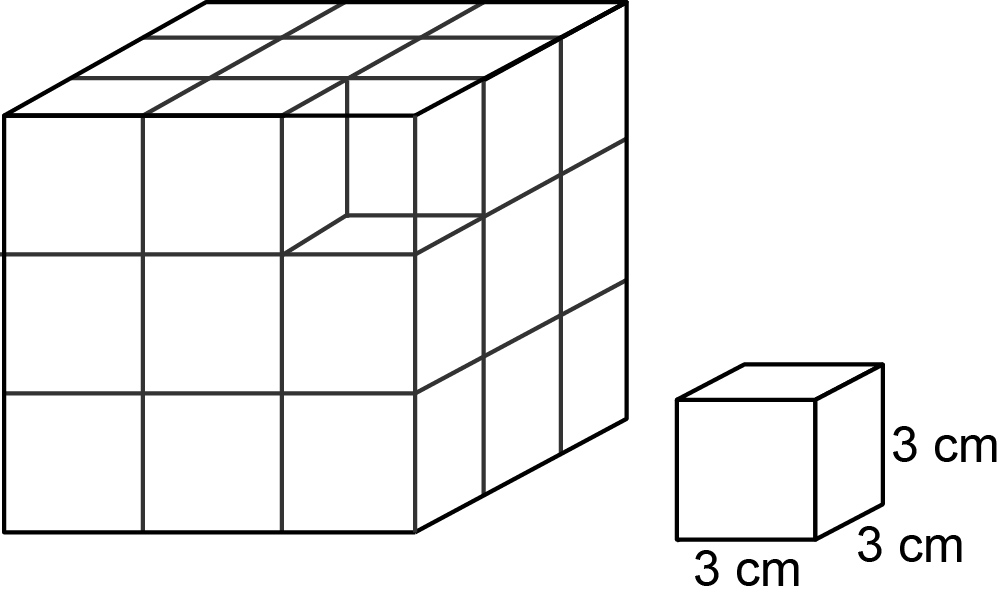
It is safe to say that almost every human individual can easily relate to three-dimensional objects. However, mathematicians do not feel suffice with just simple qualitative descriptions of space, but rather they seek to go deeper, into the quantitative realm. And as such, they will take processes and patterns that we see everyday and systematize them in a rigorous manner. One of the properties that mathematicians will analyze include the surface area of a three dimensional objects. To put it in simple terms, the surface area of an object is the outer layer that envelops it (think of something like skin on a human). Measuring the surface area has many practical applications in the natural sciences. For example, in physics we can use the surface area of a Gaussian surface to measure the electric field due in a certain area with Gauss law, and in biology by using the surface area to volume ratio of a cell membrane to quantize how rapidly a substance will spread from the interior the the outer coating. All in all, surface area is a fascinating concept with numerous applications to the real world.

Empirical formula

Empirical formula

Empirical formula

09/30/16

“How can we obtain the structure of a chemical just by knowing the percentage of it’s components?”
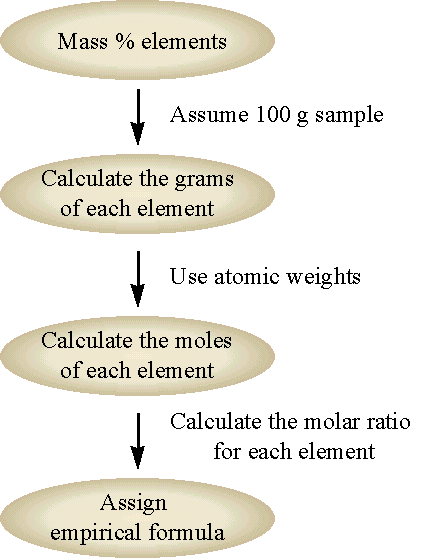
Wouldn’t it be really cool if just by knowing the percentage composition of the different atoms in a compound, you could obtain the chemical formula? Well, let’s figure out how to do it by completing an example. Let’s say that you obtain a chemical with percentage 58.64% Carbon [C], 8.16% Hydrogen [H], and 43.20% Oxygen [O]. The first step we must take is to change this percentage into something more realistic, such as mass. To make the math easy, let’s use a mass sample of 100g. This means that this compound will have 58.64 grams of carbon[C], 8.16 grams of hydrogen [H], and 43.20 g of oxygen [O]. The second step will be to take these masses and change it into moles. After doing the math, we will end up with 4.409 moles of carbon [C], 8.905 moles of hydrogen [H], and 2.7 moles of oxygen [O]. if you notice, all of the moles are in “messy” values, so we need to simplify this somehow. We can accomplish this by dividing the moles by the lowest number (In this case, the lowest number is 2.7). After we do the math, we will end up with 1.5 moles of carbon [C], 3 moles of hydrogen [H], and 1 mole of oxygen [O]. Now, we simply have to make everything a whole number. We could do this by multiplying all of mole values by 2, giving us 3 moles of carbon [C], 6 moles of hydrogen [H], and 2 moles of oxygen [O]. Our final compound formula will be C3H6O2, which just so happens to be the chemical formula for Acetate. Since this process will always give you the formula with the simplest amount of proportions, it is called the empirical formula.