Category: Mathematics

Thermal energy storage

Thermal energy storage

Thermal energy storage

08/12/17

“How can we optimize our cooling systems?”


We often run into problems when using air conditioning. Sometimes we don’t have enough refrigerant or we it might be too expensive to make some more.


But there is a simple solution to this!


What if we were to make the ice needed for HVAC systems overnight? This way, we will not have to worry about it being used and we can take advantage of the lower utility night rates. This strategy is known as thermal energy storage and is used for cooling systems worldwide

PID Control

PID Control

PID Control

08/12/17

“What is one model for a closed loop controller?”
Imagine a robot moving from one spot to another. If it was operating under a closed loop controller system, it would work by sensing the target location, comparing it to the current location and performing an error estimation. However, what is one way that we can implement this? Well, let’s begin with one idea; for every second we are not at our setpoint (destination) let’s take how far we are, take it as an error value, and put it on a graph. Then, let’s take the proportion (or magnitude of the error), integral (area under the graph) and derivative (current rate of change) and combine these values to estimate how far we are from our desired value. This type of control is known as proportional-integral-derivative control (or PID) and is implemented in control systems worldwide.

Bode plots

Bode plots

Bode plots

08/11/17

“How can we plot the gain and phase shift for a transfer function?”

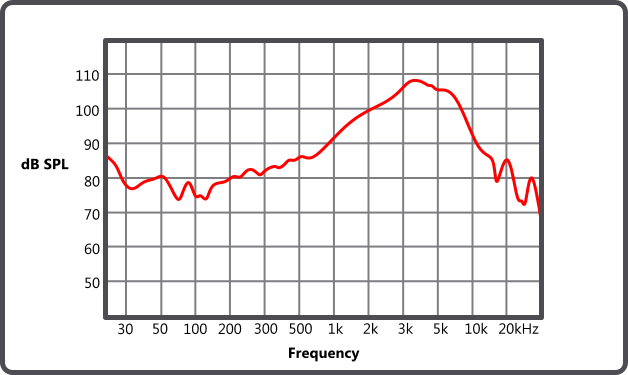
A transfer function will change the magnitude and phase of a sinusoid in some way. So wouldn’t it be logical if we could plot this out on a graph? Well, let’s think about how we could do this ourselves. First, since we have to plot two different outputs (gain and phase shift) let’s put make two separate graphs side by side. Then, let’s put the input (frequency) on the x axis and the output (gain or phase shift) on the y axis. Now, since our input variable will cover an extremely large range, let’s make it on a logarithmic scale. Specifically, let’s take a frequency as an input, plug it into the formula 20log10(omega)), and then graph. Since the units on the x axis are not normal numbers but rather ratios, let’s give them the unit decibels. This type of plot is called a bode plot and is used for analyzing control systems worldwide.
Transfer functions

Transfer functions

Transfer functions

08/10/17

“What causes controls systems to change input to output?”
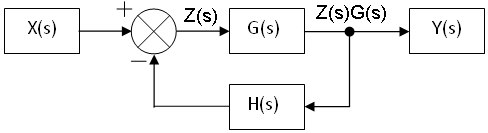
All controls systems have an input (usually some sinusoidal wave) and an output (the wave modified either through addition, multiplication, differentiation, or integration). However, what exactly causes this mathematical change? Well, the key behind this is something known as the transfer function. The transfer function H(s) is defined as the ratio of the output function Y(s) over the input function X(s) (H(s) = Y(s)/X(s)). If we rearrange this formula, then we can see that the input function multiplied by the transfer function is equal to the output function (H(s)*X(s) = Y(s)).

Poles and Zeros

Poles and Zeros

Poles and Zeros

08/10/17

“When does a transfer function go to zero or infinity?”


Transfer functions are usually made up of two polynomials, one in the numerator and one in the denominator. When the polynomial in the denominator (known as the pole) goes to zero, the transfer function will become infinitely large, while when the ones in the numerator go to zero, the function becomes a zero (hence the term zero for such functions). If a transfer function has more poles, then it becomes more unstable, while more zeros will make it more stable. Because of this, controls engineers try to maximize the pole-to-zero ratio.


Frequency domain

Frequency domain

Frequency domain

08/09/17

“How can we visualize the frequency of functions?”


Sinusoidal functions have a measurable frequency. However, it can be hard to distinguish them when multiple of them with different frequencies are added together. So wouldn’t it be logical if we could make some way to visualize all of the different frequencies together? Well, let’s think about this. First, let’s isolate each sinusoidal wave from one another. Then, let’s take its frequency and plot it on an axis. Then, let’s take the amplitude of each sinusoid, and place it on another axis. We can then connect these, and make a graph from it. This construction is known as the frequency domain and is frequently used in control theory and electronics to pick out all of the different sinusoids present