Category: Engineering

Suspension bridges

Suspension bridges

Suspension bridges

12/16/16

“How can we create a bridge using the phenomena of tension and compression?”


As the scope of humanity’s ambitions and technology grow, so must it’s fundamental infrastructure such as bridges. So if we would like to create bridges that can cross wide spans without faltering, how can we use our own ingenuity to do so? Well, let’s think about it. We know that we can use tension to keep solid objects up. Furthermore, if we experiment, then we can find out that if we attach a beam-like object with tensile supports on both ends to two heavy vertical beams, it would be kept stable. Now let’s apply this system to build ourselves a bridge. First, let’s take a basic, horizontal beam and put in on two end supports. Then, to balance things out, let’s put in two vertical beams, attach them to the horizontal beam, each not too far away from the supports. Now let’s fashion onto these vertical members a long cable that not only connects each support to each other but also contains supporting cables coming out vertically that will hold up the bridge deck, keeping it level in tension, while transmitting the rest force into the members. This is framework is termed a suspension bridge and is one of the most effective bridge designs ever fabricated. Perhaps the most example of a suspension bridge is the monumental Golden Gate Bridge, a 746-meter long piece of metal whose salient engineering has led it to become the most iconic emblem of the San Francisco Bay Area
Burettes

Burettes

Burettes

10/09/16

“How can we  save headaches with precise pouring in chemistry labs?”


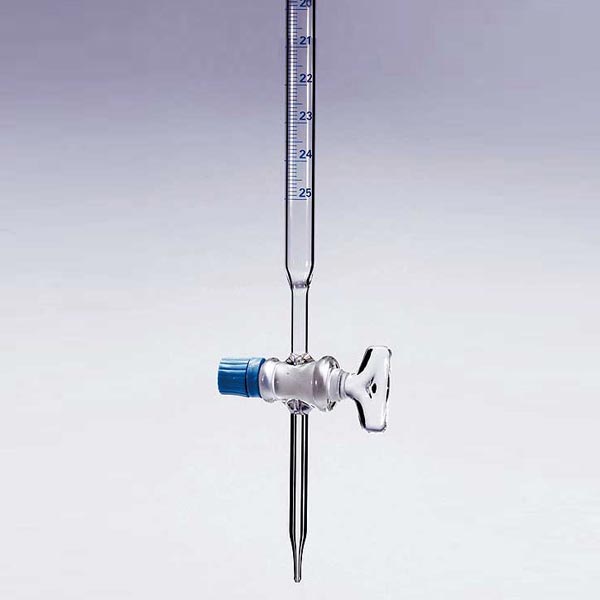
Doing labwork in chemistry can be very taxing on one’s patience. For example, we might have to pour a solution up with a high decimal value of precision, and even a slight spill can lead to disaster in an experiment! But how can we simplify this? Well, let’s use our engineering mindset to solve this scientific problem. What if we were to create a hyper-accurate glass tube that had a cork on the bottom, which when pulled, would release all of the solution? Wouldn’t this allow for a complete transfer of the liquid that we are working with?  This is the operating principle behind a Burette. Burettes are used widely in chemistry labs for their dual accuracy in measurement and safety.

Engineering tolerancing

Engineering tolerancing

Engineering tolerancing

12/07/16

“How do engineers specify the accuracy of their measurements?”


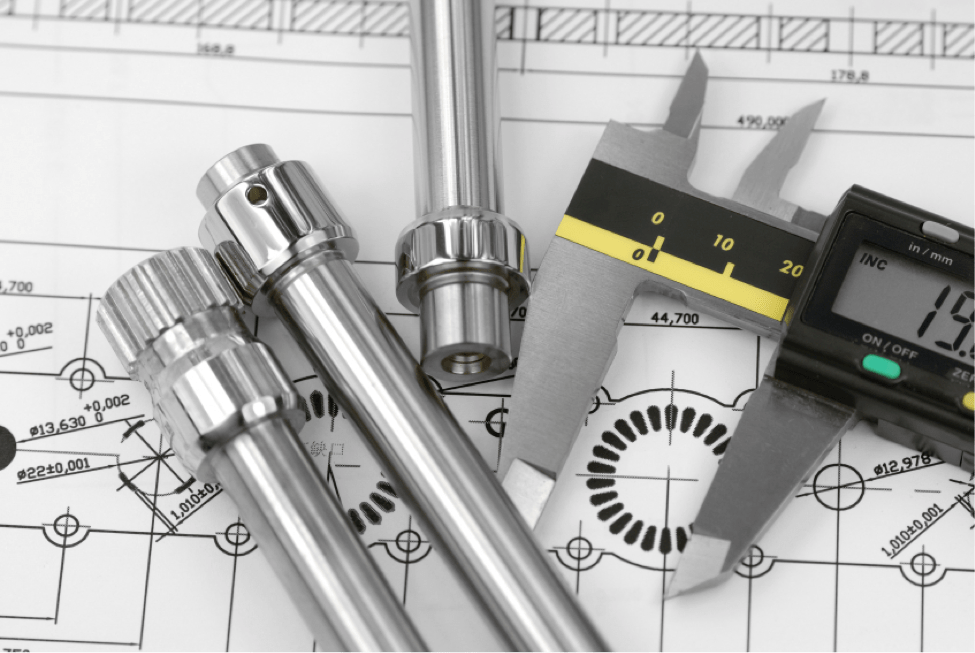
One of the most unfortunate aspects of the real world is that there will always be inefficiency, weather it be with the amount of energy available in a system or the weight distribution. One of the inefficiencies include the physical dimensions of an object. Specifically, material parts have small fluctuations in their sizes as a result of the manufacturing process so parts that should measure 5.1 meters in length can come out to be 5.143 or 5.102 meters. For a mass-produced machine, this could be an opprobrium, as the differences in physical size could lead to malfunctioning, which would causally prove disastrous. Luckily, engineers tend to be a very clever people, and they have invented something called engineering tolerancing to solve this issue. When giving off designs to a machinist, engineers will use significant figures to specify the tolerance that part can have. To illustrate a machine such as a cheap toy would not require a high precision, while something like a jet engine will!

Energy density and it’s importance

Energy density and it’s importance

Energy density and it’s importance

12/02/16

“How do scientists and engineers measure the density of energy within a system and why is it important?”

Energy is a quantity that is used omnipresently for calculations in all branches of science and engineering. However, energy is more than a theoretical abstraction, and since it is tied to the material universe, it must be stored somewhere in reality, such as in objects. And since objects of the same size can have different abilities to hold energy , we will need some conceptual way to understand this. As a result, scientists and engineers have developed the concept of energy density to represent the amount of energy stored within in object. Energy density is an important concept because when analyzing energy storage mechanisms such as batteries and capacitors, once must take in to consideration the volume vs power limitations that a project might have. To illustrate, let’s say that you want to build an autonomous boat. Since this boat will have no people on board, it will need a mechanism to power it’s systems. However, the boat can not uphold too much weight, or else it will sync. Therefore, when designing such a contraption, engineers will have to choose an energy storage technology with a high energy density.

Offshore windpower

Offshore windpower

Offshore windpower

11/30/16

“How can we use coastal winds to enhance wind power?”

One of the primary criticisms launched against sustainable energy advocates is the systems for extrapolating such energy forms are too limited in geography, time of day, and energy density. However, thanks to the strong willpower of renewable energy engineers, we could have a new technology that could fundamentally upset this paradigm. In the past, wind turbines were only built on solid terrain. Even though this was the simpler way of doing things, it had a major drawback due to the fact that wind is not omnipresent. However, thanks to the flat and low friction nature of water, winds currents are much stronger and consistent over the ocean. And since higher wind current means higher wind power, wouldn’t it be logical to have wind turbines placed in the ocean? This is the exact behind offshore wind power. Offshore wind turbines only have 2 percent of the energy payback time as regular onshore turbines, are less noticeable to the common public, and can be located near a high number of population centers. However, like with everything in engineering, there are always drawbacks with offshore windpower, such as the fact that it takes much more materials to construct such turbines, and the technology is only nascent, requiring further development. But even with this, the future of offshore windpower looks bright, and many countries have already begun investing in to it, such as the gargantuan 630MW London array in the United Kingdom, the 600 MW Viking wind farm in Scotland, and the 400 MW Anholt windfarm in Denmark.

Ohm-meter

Ohm-meter

Ohm-meter

11/27/16

“How can we measure the resistance in an electronic component?”


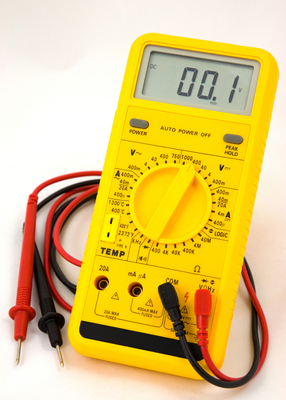
Electronic structures such as resistors play a vital part in the workings of electrical devices through the use of resistance. However, how can we measure such a phenomena empirically? Well, let’s use our engineering mindset to figure it out. Firstly, we should be aware that it is possible to experimentally measure both the voltage and current between two points, and that the resistors of a circuit is equal to the voltage divided by the resistance (R = V/I). Therefore, it would be most rational to combine these two facts, and synthesize a most useful device known as the ohm-meter.

Why do rechargeable batteries wear out?

Why do rechargeable batteries wear out?

Why do rechargeable batteries wear out?

11/23/16

“So why do they?”

Rechargeable batteries can be a very worthwhile investment. For just a small amount of money, one can save not only save the environment but also much pain irritation from having to unceasingly find new batteries . However, something one very vexatious impinging factor on their worthwhileness is the fact that rechargeable batteries tend to wear out. Specifically, the more one recharges a battery, the less charge the battery will be able to hold. But why does this happen? Well, it all comes down to a the way that it works. Rechargeable batteries charge by using a transfer of ions through an anode and a cathode to convert active energy into potential energy  . However, this process will wear down the anodes and cathodes over time, leading to a degradation of internal materials which in turn leads to increased inefficiency. Therefore, the more time one charges a battery, the less productive it will be.

Schmidt hammers

Schmidt hammers

Schmidt hammers

11/21/16

“How can we learn about the compressive strength of a material without destroying it?”


In engineering, knowing the compressive strength of the materials that you are working with is vital for all forms of analysis work. However, many testing methods are very expensive, and involve actually deforming some of the material. So what if we were to have a material that is both expensive and irreplaceable? Well, luckily for us, engineers are a very clever people, and have invented a device known as a Schmidt hammer to solve this problem. The schmidt hammer is comprised of three main parts, a solid chassis, a cylinder going through the center of, and a spring in the inside of the cylinder. When held vertical and pressed against a solid surface, the cylinder will stand in place, causing the chassis to move downwards, compressing the spring. When the cylinder moves all the way down, the user can press a button on the chassis, which in turn will release the compressed spring, and the resulting rebound will give a reading on the body of the chassis which corresponds to compressive strength.

Operating temperature

Operating temperature

Operating temperature

Isaac Gendler

“In what temperatures can a machine operate?”


As a modern civilization, we operate and use machinery everyday. Whether it be something as simple using an alarm to wake us up in the morning or something as exciting taking as plane to another continent, technology has firmly integrated itself into the nuances of human life. However, as engineers, we must realize that such machines have constraints to them. One such constraint is the temperature that the system can operate in, also known as the operating temperature. Since objects and materials have different properties at different temperatures, a system will change depending on the temperature input. And since machines, (both mechanical and electrical) require all parts to work in a highly precise manner, such perturbations in properties could cause drastic failures. To illustrate, let’s analyze a device very familiar to us, the computer. If the internal temperature of a computer exceeds the operating temperature, then component failures will ensue, causing a shutdown. As a result, when designing as an engineer, one must always take into account the operating temperature.