Category: Engineering

Stirling engines

Stirling engines

Stirling engines

06/10/17

“What is the alternative to the internal combustion engine?”


Internal combustion engines are infamous for their loud and emissive nature. However, would it be possible to have a different type of engine that fixes most of the problems of ICEs? Well, let’s think about with our scientific mindset. First, let’s take two pistons and enclose them on two sides of a chamber. Then, let’s heat up one side of the chamber. This extra heat will cause the volume to expand against the first piston, doing work, cooling the gas, and pulling the second piston up. Eventually, it will expand so much that the first cylinder will be able to compress it, shoving the cooled gas into the second piston’s chamber. Soon enough, the second piston will reach its threshold and the direction will be able to reverse. This engine is known as a Stirling engine and can reach efficiencies of up to 50% while remaining quiet, making them an ideal candidate for use in high specialty applications.

Printed Circuit Boards

Printed Circuit Boards

Printed Circuit Boards

06/09/17

“What is the casing for modern electrical systems?”


Primitive electrical systems are connected through a dangerous process of point to point wiring. However, how could we improve and replace this framework? Well, let’s start with the basics. First, let’s obtain a base material called a substrate to act as the base unit. Then, let’s put copper wiring on both sides of the substrate. Afterward, let’s apply a solder mask to prevent the substrate from interacting with other electrically conductive parts. Finally, let’s imprint a silkscreen so people can easily identify all of the components of the system. This device is known as a printed circuit board, and is the fundamental framework for all modern electrical systems!

How materials in a composite bond

How materials in a composite bond

How materials in a composite bond

06/06/17

“How do materials in a composite bond with one another?”


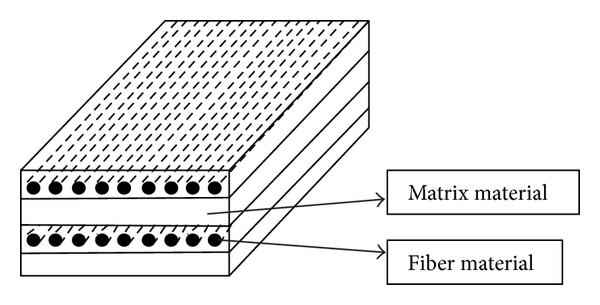
In all composites, there are two bonding materials. However, have you ever wondered how exactly do they bond with another without merging? Well, let’s use our engineering mindset to find out. If we look closely, then we will notice that one material (known as the “matrix” or “continuous” material will serve as a medium that surrounds the other material (known as the “discontinuous” or “fiber” material), therefore creating the composites that we know and love!

Solar ponds

Solar ponds

Solar ponds

06/04/17

“How can we generate solar energy using ponds?”


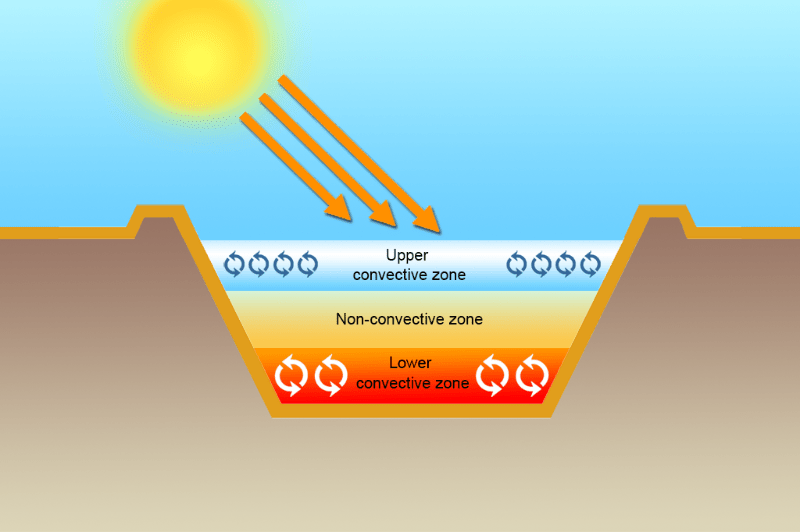
It is well known that we can generate solar energy using photovoltaics and concentrated solar thermal, but is there another way? Well, let’s use our scientific mindset to find out. First, let’s collect a pool of salt water. Because of the salinity gradient between the top and bottom layer, there will be a noticeable temperature gradient (usually of around 30 degrees at the top and 90 degrees at the bottom). This temperature gradient can then be exploited with a thermocouple to produce an electrical current, thereby inducing electrical power! This system is known as a solar pond and is popular in developing countries for its low cost

Bomb calorimeters

Bomb calorimeters

Bomb calorimeters

06/02/17

“How can we measure the calories present in food?”


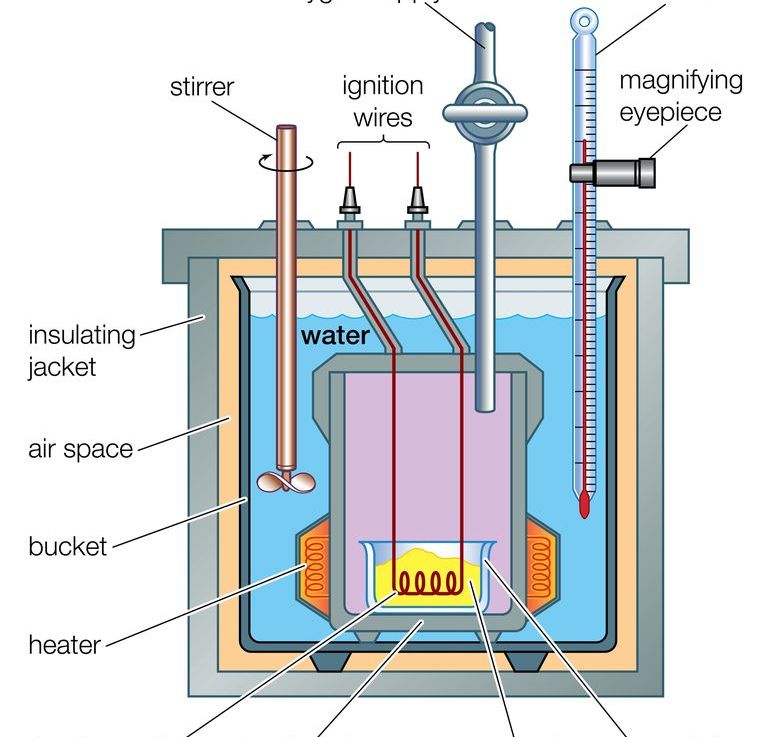
In our modern health obsessed world, we would like to know the calories contained in all foods. However, how can this even be determined in the first place? Well, let’s think back to a bit of prior knowledge. We know that calories are another way of saying energy and that we can measure the energy content of fuels using calorimeters. So what if we were to make a special type of calorimeter to find the energy contained in foods? Well, let’s put our engineering mind to the test.


First, let’s get a big tub of water. Then, let’s take a sample of our food, place it in an insulating case with some oxygen, attach it to an ignition coil, and place everything in the water. When we activate the ignition unit, the ignition coil will cause our sample to explode and raise the temperature of the water. From the measured temperature change, we will be able to measure the calories contained in the sample! This device is known as a bomb calorimeter and is used in food labs all over the world.

Calorimeters

Calorimeters

Calorimeters

06/01/17

“How can we determine the energy composition of a fuel?”


Fuels are one of the most vital pieces of operation for modern transportation. However, how do scientists determine the amount of energy contained in them in the first place? Well, let’s think about it. We know that if we ignite fuel, then we can get a fire. And we also know that this fire can heat objects such a cup of water. And we also know that if we measure the change in temperature of this water, then we can obtain the amount of heat added. So what if we were to combine all of the processes to make an energy measuring device? Well, this is the fundamental idea behind a calorimeter and is used in industrial operations all over this planet.

Refractory materials

Refractory materials

Refractory materials

05/31/17

“Are there materials that retain their strength at exceedingly high temperatures?”


For processes such as nuclear power generation or incinerators, materials must be able to withstand heavy loads. However, the high temperatures that they operate at often destroy the useful properties of most materials. So are there materials that can withstand high temperatures? Well, after many years of hard work spent in research, Materials Engineers and Scientists have been able to classify such materials as refractory materials. Refractory materials can be divided into two types, acidic refractories with SiO2 content more than 93% used for their erosion resistance, and basic refractories for higher thermal resistance

Electro-hydraulic actuators

Electro-hydraulic actuators

Electro-hydraulic actuators

05/29/17

“Can we optimize hydraulic actuators using electricity?”


Hydraulic actuators are ever so useful in their ability to move heavy machinery and can found in areas ranging from construction equipment to manufacturing machinery. However, these machines often suffer from a burdensome design, being forced to integrate numerous disparate components into one coherent system.


So how can we simplify the operation of these actuators?


Well, what if we were to replace the hydraulic pumps and tubing with electrical power? Not only will this simplify the system complexity but also increase the internal safety and reliability. These machines are known as electro-hydraulic actuators and can be found in applications ranging from aerospace vehicles to automobiles.

Fractional distillation

Fractional distillation

Fractional distillation

05/28/17

“How can we have distillation for materials with more than two substances?”


Distillation is the process of separating two substances using the science of evaporation and condensation in regard to different boiling points. However, how can we make this process happen for materials such as crude oil which are composed of many different substances? Well, let’s use our engineering mindset to find out. Let’s start out with a simple test tube. In this test tube, let’s also have another smaller tube at the midsection leading to a stationary beaker. Now let have the bottom portion of the main tube be immersed in a hot fluid. When we dispose a material into the tube, the hot fluid will heat the material until one of the substances evaporates. The gas from the evaporated substance will rise and move through the tube, eventually reaching the midsection tube, cooling and condensing into a liquid form in the beaker. Once all of this substance has been removed, we can swap out the old stationary beaker for a new one, replace the hot liquid with a bunsen burner, and repeat the process. This procedure is known as fractional distillation and is commonly employed for separating substances with numerous hydrocarbons.