Category: Engineering

Pumped hydrogen storage

Pumped hydrogen storage

Pumped hydrogen storage

06/24/17

“How can we use a gravitational potential to store energy?”


If you have ever taken an introductory physics class, then you know that anything with a mass at some distance from the Earth has an energy potential associated with it given by the equation P.E = mgh, with m being the mass g being gravity and h being the height. So logically speaking, if we were to vastly increase the mass then we would also vastly increase the potential energy. So if we have a large enough mass, we can store enough energy for an electric grid!


This is the exact idea behind a technology known as pumped hydrogen storage. Pumped hydrogen storage takes two water reservoirs at a height gradient, and discharges energy to the grid by moving the water through a turbine and stores more energy by using a grid powered pump increase the level of water on the top layer

Solar Communications Security System

Solar Communications Security System

Solar Communications Security System

06/22/17

Isaac Gendler

“Can solar powered grid systems have security systems in place?”


Solar power is often fused to the surrounding energy community through the use of smart grids. However, such systems are prone to cyber attacks. After realizing the potential consequences of such actions,  researchers at the University of Illinois Urbana Champaign, United Technologies Research Center, and Pacific Northwestern National Laboratory have joined forces (with a hefty 900,000 USD grant from the U.S Department of Energy) to develop a generic cybersecurity system for monitoring communications between distributed resource energy generators (such as solar). This would ensure the safety of customers when using such systems, and can galvanize electric utility providers to switch to clean and sustainable energy!

Low-cost air pollution sensors

Low-cost air pollution sensors

Low-cost air pollution sensors

Isaac Gendler

06/18/17

“How can we produce low-cost air pollution sensors?”


Air pollution sensors are absolutely necessary for policy making. But for many developing countries, such technology is often too expensive. So how can we make the costs less prohibitive? Well, let’s use our engineering mindset to figure this out. We know that the main cost of monitoring air pollution comes from deploying sensors. But humans all over the world are already carrying advanced sensors with them, smartphones! A team at the University of California San Diego have developed a series of sensors that can communicate with a user’s smartphone using an app called CitiSense to perform real-time pollution monitoring. The goal of this project is to eventually to create a system in which entire communities can use to gather pollution data

Air pollution sensors

Air pollution sensors

Air pollution sensors

06/17/17

“How can we monitor air pollution?”


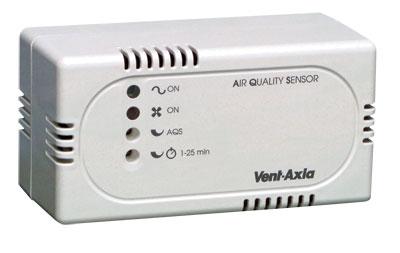
With the advent of industrialization, air pollution has become a significant issue in many parts of the world, inducing grievous health issues and productivity impairments. As such, governments and independent organizations are taking action to reduce this nefarious trend. However, before we can take steps to eliminate pollution, we must first know how much needs to be eliminated. To do this, engineers have developed air pollution sensors which can analyze the atmosphere for certain elements (ozone, particulate matter, carbon monoxide, sulfur dioxide, and nitrous oxide) for human analysis

Circuit Soldering

Circuit Soldering

Circuit Soldering

06/16/17

“How can we attach two conductive wires together?”


Engineers commonly run into a problem. When working with circuits, we may need to extend our wire. However, it is physically impossible to do such a thing


Or is it?


Luckily for us, engineers can do the impossible. Let’s start with a few basic principles. We know that wires can conduct electricity. We also know that metal can also conduct electricity. And we also know that if we were to solidify a liquid that was between two objects it would connect the objects. So what if we were to take two circuits, expose their conductive centers, and then quickly melt some conductive metal between them to cause an attachment? Well, this is the process of soldering, which just so happens to be one of the most vital skills that any engineer needs to know.

How to make faucets more sustainable

How to make faucets more sustainable

How to make faucets more sustainable

Isaac Gendler

06/15/17

“How can we make our faucets more sustainable?”


I want you to think about something. What exactly do you use to clean yourself after you have used the restroom? Well, if you live in a developed country, then you probably immediately think of faucets. Quite simply, without faucets, we would be unable to function in our daily lives! However, as engineers, we must always think more critically not just about the outputs of a system but the inputs as well. Specifically, faucets use water for their operation. And since water is an increasingly finite resource (especially in dry areas such as California), how can we modify these mechanisms to be more sustainable? Well, believe it or not, there is a very simple solution for this, having the faucets use less pressure! When less pressure is used, a smaller volume of water will be transported, thereby using less water!

Meat thermometers

Meat thermometers

Meat thermometers

06/14/17

“How do meat thermometers work?”


Meat thermometers are used every day to measure the temperature of meats. However, how exactly do they work? Well, let’s use our engineering mindset to find out. If we were to deconstruct one of these machines, then we would find out that inside the thermometer are two strips of metal with different heat coefficients. Upon the application of heat, both of these will expand at different rates, inducing twisting and therefore changing the dial at a constant rate!

How cement is made

How cement is made

How cement is made

06/12/17

“How is cement made?”


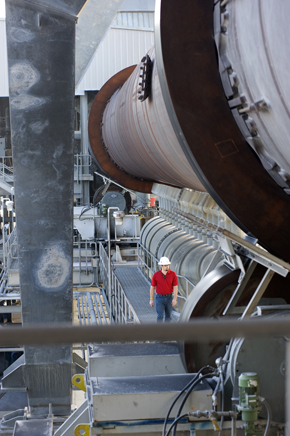
Cement is one of the most versatile materials on the planet. However, how exactly is it made? Well, let’s use our engineering mindset to find out. First, we must gather up its primal ingredients: limestone, clay, and others. Then, we must crush these rocks. Then we must combine this crushed material with other ingredients such as iron ore and feed it into a cement kiln. The kiln will then heat all of these ingredients, burning away some, and producing a red-hot compound known as clinker. This clinker must then be ejected into a cooling plant, and be mixed with gypsum and limestone to eventually form the cement that we know and love.

Microturbines

Microturbines

Microturbines

06/11/17

“Is it possible to have turbines the size of refrigerators?”


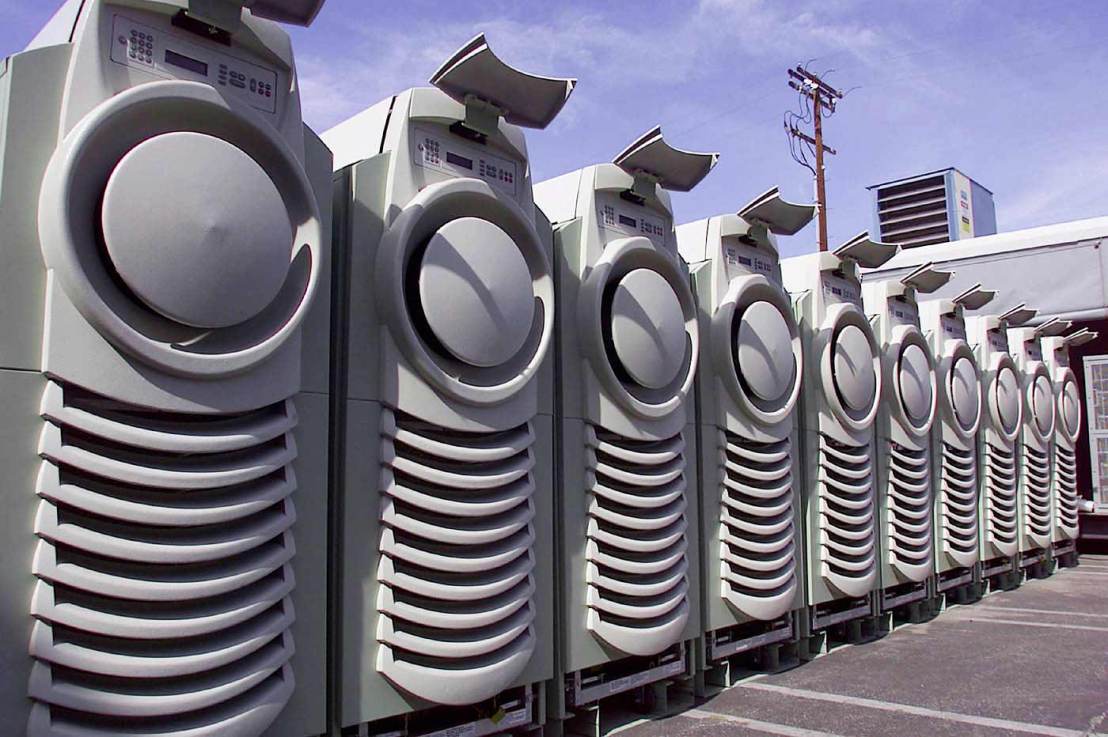
Turbines are the most prevalent means of generating electricity. However, they are often very large, and can’t be used for smaller applications. But what if we were to somehow make them smaller in size? Well, this turns out to be the operating principle behind a device known as a microturbine. Microturbines are the size of refrigerators, can generate between 25 to 500 KW of energy, (enough to power 250-5000 100kw light bulbs!) and can have up to an 80% efficiency of energy! standby power, power quality and reliability, peak shaving, and cogeneration applications, and have the potential to capture a large portion of the turbine market.