How if Restaurants Used Less Ice it Would be Good for Climate Neutrality
11/21/18
“Why should restaurants use less ice?”
In the United States, it is customary for restaurants to serve ice with water. Although it may seem benign, having to store extra ice uses energy and water which contribute to climate change. Therefore, if Restaurants Used Less Ice it Would be Good for Climate Neutrality.
“How can load shedding be beneficial for the planet?”
When power grids receive a demand overload, they often go into load-shedding to prevent a blackout. Not only does the reduced load prevent a blackout but also emit less carbon dioxide! Without having to worry about an infrastructure recovery or extra emissions, the grid’s impact on climate change will be reduced.
“How can we filter away harmful particles with a mask?”
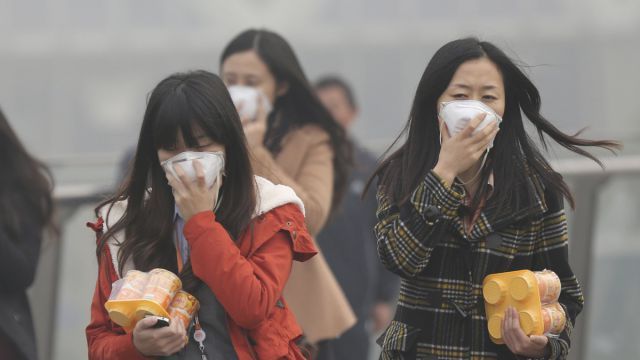
In many parts of the world, dealing with heavy air pollution is a daily issue. As a result, people will need to have some form of protection. This is commonly found in the form of N95 Respirators, which are designed to block at least 95 percent of very fine particulate matter. However, caution will need to be taken with these masks, as they are not designed for small children or people with facial hair.
Air pollution is one of the greatest dangers to human public health. As such, we here at Isaac’s Science Blog would like to give a few safety tips for staying safe.
Stay inside in an insulated environment as much as possible
Why Air Quality is an Important Part of Resilience
11/11/18
“Why is air quality an important component for resilience?”
In order to build truly sustainable and resilient communities, we must look at all factors, and air quality is no exception. By making living areas more breathable, we can ensure solid public health and cut down on medical infrastructure strain. As a result, Air Quality is an Important Part of Resilience.
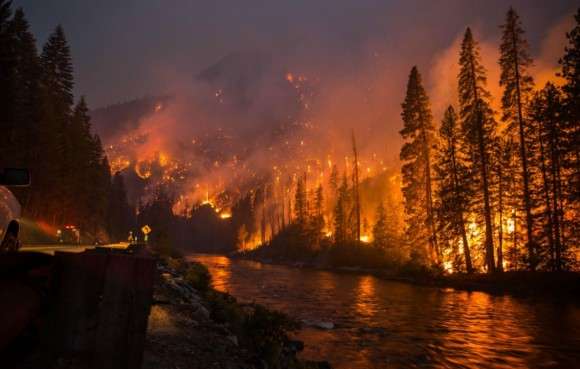
Right now in a fire unmatched in recorded Northern California history is raging. The smoke from this fire has suffused the Bay Area, making it worse to breathe here than Bejing! This is all because of a recent forest fire. When fires engulf forests, smoke containing fine particulate matter is released into the atmosphere. This material can penetrate the lungs and cause a whole range of potential problems. This is how forest fires cause air pollution.
How More Extreme Coldwaves will Harm Transportation Infrastructure
10/25/18
“How will Transportation Infrastructure be harmed by more extreme coldwaves?”
Transportation infrastructure will definitely be impacted by the changing weather. But climate change is doing much more than rising temperatures. More extreme coldwaves in certain parts of the earth are resulting from changing polar vortex. The behemoth damage brought onto transportation systems includes more delays in train/plane schedules, heavier icing of streets, and more stress on structures. This is How More Extreme Coldwaves will Harm Transportation Infrastructure.
How Extreme Weather Events Can Cause Energy Prices to Skyrocket
10/22/18
“How can extreme weather events cause energy prices to go out of whack?”
When the weather gets too hot or too cold, people will turn on HVAC systems to compensate. This will cause greater demand on the electricity system, which in turn will lead to more constraints and therefore higher costs for everyone. This is How Extreme Weather Events Can Cause Energy Prices to Skyrocket. The advent of climate change will only exacerbate this, as extreme weather events will become far more frequent. So in the end, it will pay in the long term to upgrade critical infrastructure systems to more resilient standards.
Image credit Bigerna, S. (2018). Estimating temperature effects on the Italian electricity market. Energy Policy, 118, 257-269.
How Climate-Induced Coastal Flooding Will Harm Power Generation
10/20/18
“How will coastal floods make worse by climate change harm power generation?”
As the average temperature of the Earth rises, so will its sea-levels. This will spell major trouble for areas with large amounts of coastal power generation, as they may soon become flooded. As many as 100 of such facilities in the US are at risk for this phenomenon. Passive sea level rises will not be the only problem facing generation facilities, but also climate exacerbated storms could rip apart infrastructure in the same way as Fukushima. This is How Climate-Induced Coastal Flooding Will Harm Power Generation.