Author: Isaac Gendler

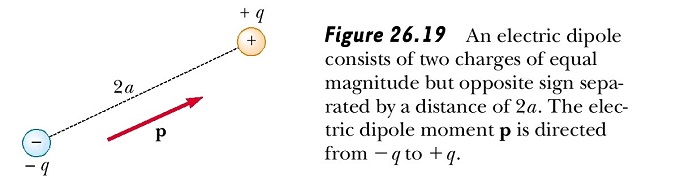
Avogadro’s law

Avogadro’s law

Avogadro’s law              06/09/16

“Do gases of the same volume, temperature, and pressure have the same amount of molecules?”

Through thorough experimental observation, it has been shown that Gasses of the same volume, temperature, and pressure have the same amount of molecules. This can be neatly summarized as Avogadro’s law, which symbolically states that Vn=k, with Vbeing the volume of the gas nbeing the number of molecules and kbeing some constant.

Charle’s law

Charle’s law

Charle’s law                  06/08/16

“ What is the relationship between a gas’ volume and temperature?”

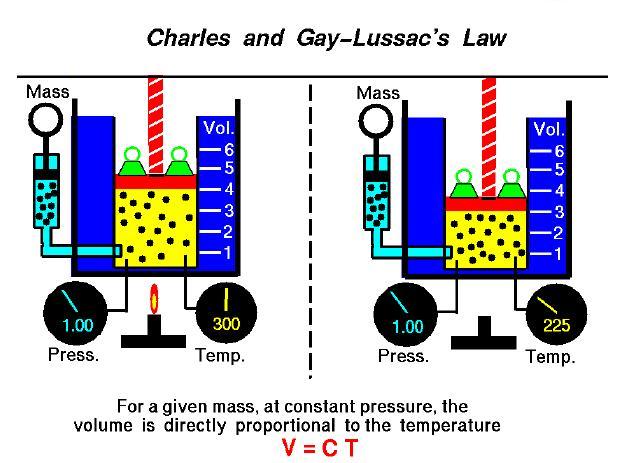
For a gas, the relationship between it’s volume and temperature is very simple. As a gas’s temperature increase, it’s volume will increase proportionally. This is because the molecules of a gas are relatively unbounded to one another, and when their temperature increases, their average speed will increase, and the volume encapsulating the gas will increase as a result. This can be symbolically summarized in Charle’s law, in which VT=k, with Vbeing the volume, T being the temperature, and k being a constant.

Boyle’s law

Boyle’s law

   Boyle’s law          06/07/16

“What is the relationship between Pressure and Volume in a gas?”

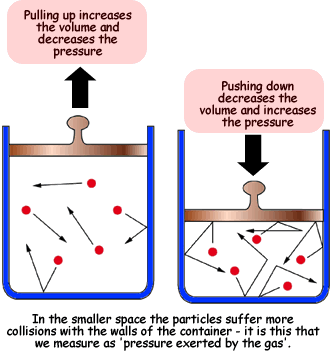
The relationship between Pressure and volume can be neatly summarized in a simple concept known as Boyle’s law. Boyle’s law states that for a gas the pressure multiplied by the gas is simply equal to some constant k. To put this numerically, P*V=k. We can expand upon this by the fact that if the pressure and volume change, their product will be equal to the same multiple, so P1*V1=P2*V2.

Ideal gas

Ideal gas

Ideal gas                06/06/16

“What model can we use to describe a gas?”

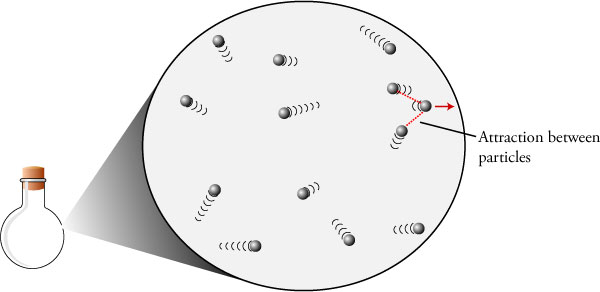
Let us visualize all of the particles in a gas in their pure intricateness. Think of all of those individuals particles bumping around in semi-random number. There are numerous factors that affect this gas, such as temperature T (how quickly each of these particles are moving around) pressure P(the density of each of the gas particles bouncing against the tank), Volume V (the amount of geometric space the gas takes up), The amount of gas . All of these facets are fundamentally related to each other with something known as the ideal gas law P*V=n*R*T, with R being a constant. This equation is insurmountably amazing because it means we can find out so many properties of a gas by just knowing a few factors!

Solar maximizer

Solar maximizer

Solar maximizer           06/05/16

“How can we maximize the effects of a solar panel?”

This a pertinent question for any renewable energy engineer. Let us illustrate one potential problems with solar panels. When a solar cells are in series, they are all linked together. Since they often cover a long distance, external effects such as temperature and dust will vary. Consequently, each solar panel will have a different temperature, and the higher the temperature, the less efficient it is. Since a series of solar cells are only as efficient as the hottest one, then we run into a major problem.

Luckily, humanity had the ingenuity to invent the solar maximizer. The Solar maximizer optimizes the solar cells to mitigate the impinging effects of solar cells in series.  

Power inverters

Power inverters

Power inverters            06/04/16

“Is it possible to change a DC current into an AC one?”

If you need to solve such a problem, then you can look to the help of a device known as a power inverter. Power inverters take DC current as an input current, and then transform it into an AC current using the magic of electronics. Furthermore, these currents can either be sinusoidal or in square form. Inverters can be used for a multitude of purposes such as taser technology and public transportation.

Diodes

Diodes

       Diodes           06/03/16

“Is it possible to limit AC current to only one direction?”

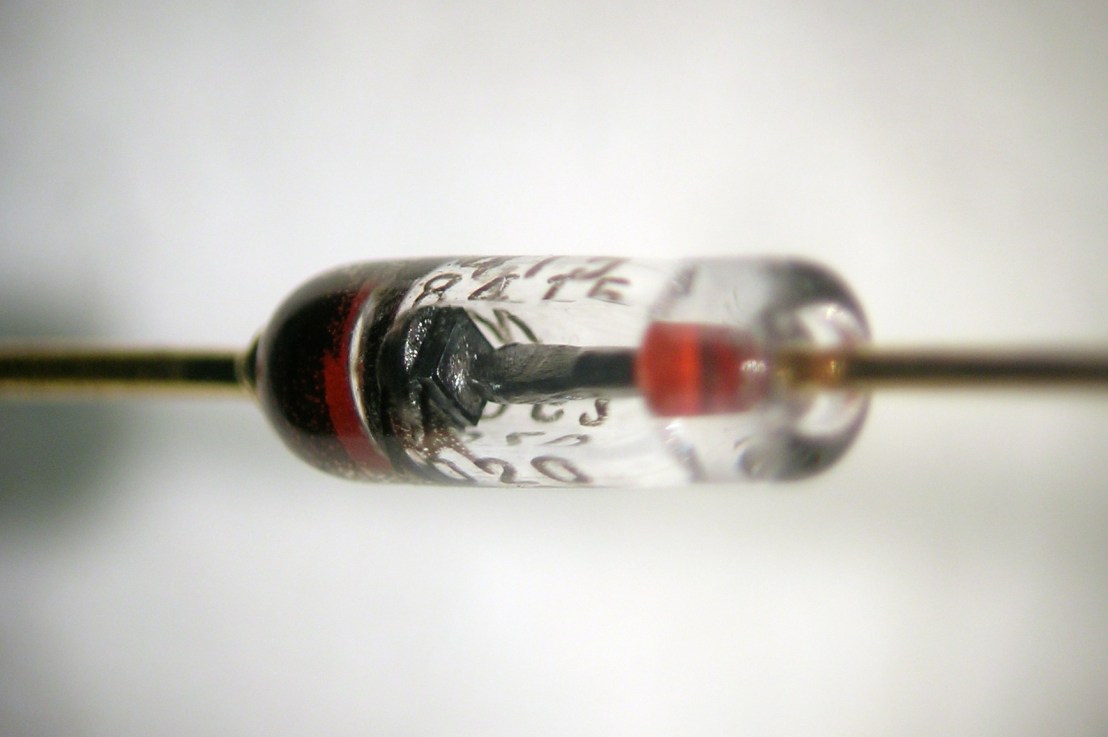
Why yes we can: With the use of a little machine known as a diode, we can accomplish precisely this task. A diode takes in a sinusoidal Alternating current and cuts off the half that is not wanted. This is very useful and can be used in a multitude of applications such as solar electricity

Why Jet Engines are getting bigger

Why Jet Engines are getting bigger

Why Jet Engines are getting bigger          06/02/16

“Why are jet engines getting bigger?”

This is a very good question for any young engineer out there. If you ever look at a historical chart, then you will see that Jet engines have gotten larger over the past. The reason for this is that larger jet engines are simply more efficent. A jet engine receives more air the larger it’s engine diameter is and since a jet engine runs off heated air, the more air it receives, the more power it has. However, the laws of physics gives this effect some limits. Because of a combination of effects such as wind drag and structural weight, their an optimal limit for the size of jet engines. When one does the math, the optimal diameter comes down to around 4 meters, and since current jet engines are around 3.85 diameters in length, expect the growth of jet engines for the short time being. In summation, jet engines are one of the most interesting facets of engineering.  
Electric Dipole

Electric Dipole

          Electric dipole           Isaac Gendler

        06/01/16

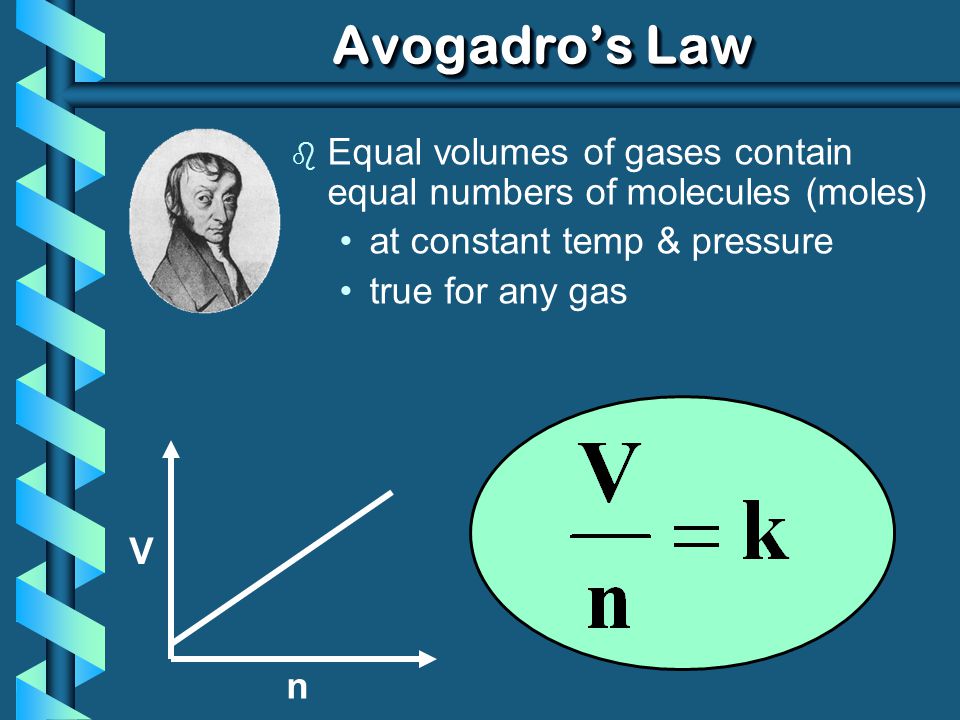
“What happens when you have a separation of equal and opposite charge?”

The answer to this interesting little question is that you would end up with an electric dipole. And electric dipole is the separation of an equal amount of opposite charges. Dipoles are characterized by their dipole moment, which is a vector quantity. The dipole moment points from the negative to the positive charge.