Author: Isaac Gendler

Rotary actuators

Rotary actuators

Rotary actuators

06/18/16

“Can we use actuators to produce rotational motion?”

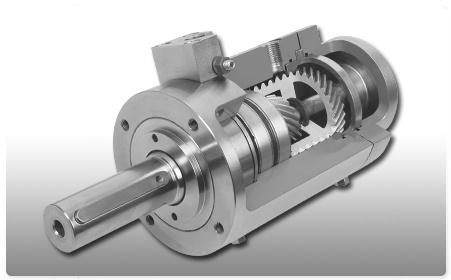
If Linear actuators can create linear motion, wouldn’t it be logical that we could have a machine that produces rotational motion? This is the basic principle behind rotary actuators. As the name implies, rotary actuators use electric power to produce rotational motion. The motion may be continuous or discrete. Many different machines can be classified as rotary motors, such as stepper motors and servomechanisms.

Friction braking

Friction braking

Friction braking

06/17/16

“How do cars stop moving?”

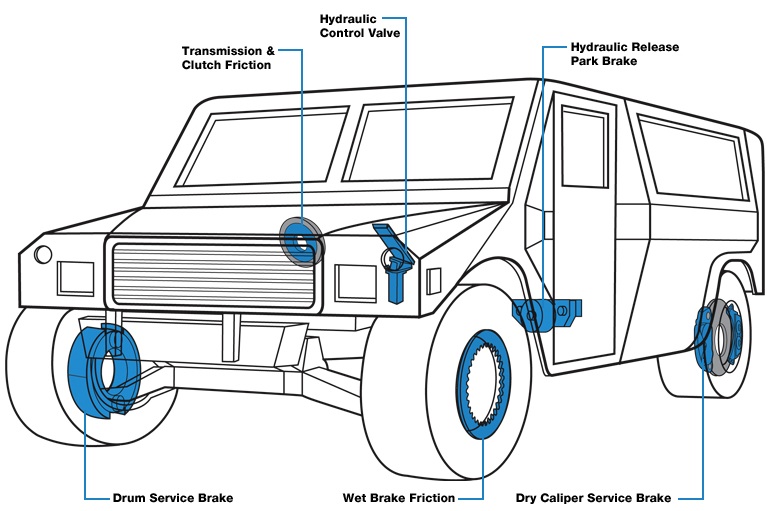
One of the most necessary aspects of transportation is the need to stop the object from moving. Mechanical Engineers have devised a simple yet useful solution for wheel based systems known as friction braking. In friction braking, when a wheel needs to stop, two clamps will come down and force the wheel to stop moving, and since the car will keep on moving as a result of the conservation of momentum, friction from the ground combined with air resistance will wear down the velocity, effectively stopping the vehicle.

Regenerative braking

Regenerative braking

Regenerative braking

06/16/16

“Is it possible to convert the energy used by the breaks of the car into something useful?”

Motorized transportation manufacturers have always had to deal with braking systems. One annoying aspect of friction-based technologies is that all of the kinetic energy leaves the system once the motion has to come to a stop. However, wouldn’t be really practical if we transfer this energy somewhere else?  This is the basic idea behind regenerative braking.

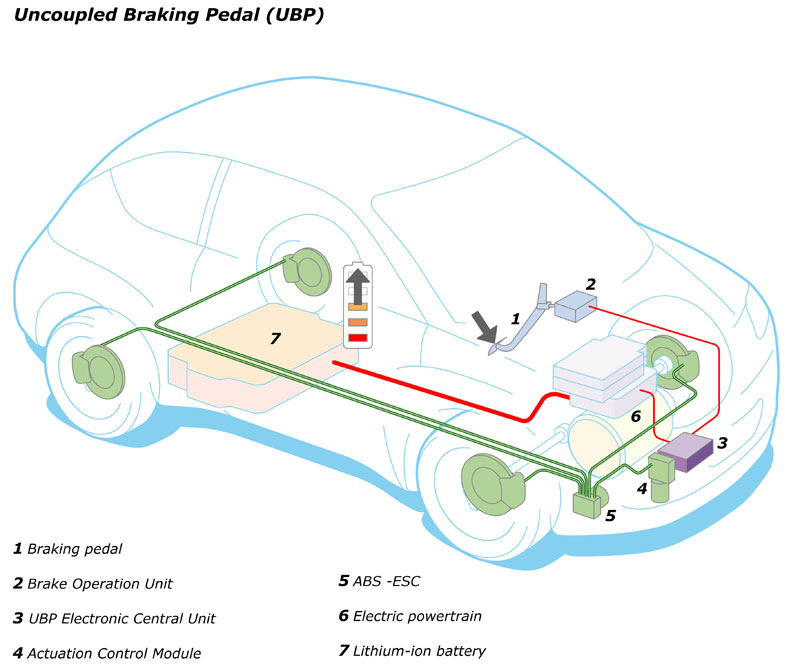
In automobile systems, an AC motor is used to transfer energy from the car’s battery into the motion of the wheels. However, once the brakes are activated, the motion of the car’s wheel will reverse. This effectively transform the systems from a motor into a generator, with the new motion causing the current the flow in the opposite direction, therefore charging the battery! Even with an efficiency of only around 20%, the extra energy can be used to allow hybrid engines to have better mileage or allow electric cars to go farther

Regenerative braking systems are controlled by regenerative braking controllers. The regenerative braking controllers monitor how fast the vehicle is moving and how much torque is able to generate electricity to be fed back into the batteries. This information allows the controller to decide to if the speed is to high for the regenerative braking system to handle (in which case the old-fashioned friction braking system will take over).

In summation, regenerative breaking is an ingenious technology that uses creative ways to recover power. In fact, these machines have been found powerful enough to convince companies and organizations such as Tesla and the New Dehli metro to implement them in their products!

Fuses

Fuses

Fuses Isaac Gendler

06/15/16

“How can we make sure that too much electrical current does not overwhelm a wire? ”

One of the most devices aspects in modern electronic is that of the Fuse. A circuit breaker fuse ensures that too much current does not flow through a wire. The design of a fuse is very intuitive. First of all, the fuse is in the middle of a conducting wire. The fuse made out of a material that breaks up if a certain amount of current overwhelms the threshold. In case of such an event does happen, the circuit breaker will self-destruct and thereby disconnect the circuit and stop the current. An analogy for circuit breakers would be like a person who witnesses the outflow of spending money from an organization, and immediately stops all transactions if the money flow becomes too high.  Circuit fuses are found all over the world in nearly every environment, as they are a necessity to modern safety systems.

AC electricity

AC electricity

AC electricity     06/14/16

“What is AC electricity?”

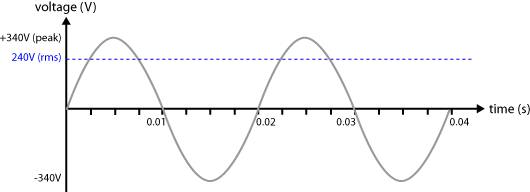
When one first starts to learn about the basic concepts of electricity and circuitry, they are first introduced to the conceptually easier and more primitive DC electricity.However, the most commonly used form of electricity for power transmissions in the modern age is known as AC electricity.

A generator for AC electricity works as follows. A shaft that contains magnetic materials is encass in series of windings. When the generator turns, the electromagnetic interactions between all of the materials will induce a voltage that alternates with time (hence the name Alternating current).

However, what makes AC power vital for long distance transportation is the transformer. Before AC, there was a problem, households require a lower voltage for safety  purposes, but transferring low voltage over a long distance is inefficient due to the IR power loss, or the fact that the higher the current, the more energy will be dissipated over a long distance. But with the introduction of a transformer, this dilemma can be solved. Since AC currents are constantly changing, they produce magnetic fields around their paths. If one is to place a ring of loops near this magnetic field connected to a different circuit, then another current can be induced. What is particularly fascinating about transformers is that both circuits can have different voltages! The way that this works is that the value for magnetic flux will be different depending on the number of loops, so if the “receiving” side has more loops, the transformer will be a step up transformer and the other side will have a higher voltage, while the reverse is true for one with less wires (“step down” transformers). Therefore, the voltage for power transmission can be extremely high and can “step down” once it becomes close to a user’s home.

Pressure volume diagrams

Pressure volume diagrams

Pressure volume diagrams              06/13/16

“How can we empirically model the change in pressure and volume of a gas?”

In order to model the change in pressure and volume of a gas, Scientists and Engineers have created a framework known as Pressure volume diagrams. P-V diagrams are very simple, the Pressure and volume of an object will be represented by a cartesian coordinate system with the Pressure on the vertical axis and the Volume on the horizontal. When work is added to the system, the change in volume and pressure is recorded along an arc length. The volume under this curve represents the change in work in the system. The return process does not have to be symmetric, so often a P-V diagram could possibly have a different return curve.
Let us illustrate with the following example. Imagine gas with a piston in a machine.The state of the gas gas starts at point 1 on the graph. Heat is then added, which the increase the pressure. The normalization process then starts, which decreases the pressure and increases the volume, causing the state to go to poin 2. Heat is then extracted, which causes the state to go to point 4, and the reverse normalization process starts, which causes everything to go back to the begining at point 1.

Internal combustion engine

Internal combustion engine

Internal combustion engine               06/12/16

“What powers most automotive technology?”

One of the most important inventions ever derived by humanity is that of the Internal Combustion engine. In abstract, the ICE is a method of using diesel fuel to create useable power by having an atomized version of the fuel come into contact with high temperature and high pressure air.

To start off, let us look at the basic parts of an ICE and how they make the machine. First, a piston is connected to a connecting rod,, while a crank will go through the bottom hole of the connecting rod. The top half of the fastening rod, and the piston will be encapsulated in a cylinder. The sub-machine made from these parts is called a slider-crank mechanism. The linear motion of the piston is transformed into a rotary motion at the crank. This mechanism will be housed in an engine block. A cylinder head, valves, and fuel injectors are fitted above the engine black. The cylinder is curved so that all of the gases will move around on it during the operation

Now that we have described the base parts of the machine, it would only be logical to describe how these parts work together. The first part of the process is called the intake stroke. When the Piston moves downwards, inlet valves will open and fresh air from outside will be sucked in (one can think of the engine as “breathing” at this point). During the exhaust stroke, the inlet and exhaust valves are closed, and the air inside the cylinder will be compressed by the upwards motion of the piston. During this phase, the piston will perform work on the air, so the temperature and pressure will consequently rise to a level higher than the self-ignition value of the diesel. An atomized form of diesel will be injected into this compressed air. The fuel will get evaporated, and an uncontrolled explosion will happen as a result. This starts the process of the power stroke. The temperature of the gas will rise to high level values as a consequence of this explosion. The high energy fluid will push the piston downwards, and the hot air will do work on the piston, and the energy in the fluid will be converted into the mechanical energy in the piston. The final part of the process is known as the exhaust stage. The exhaust valves will open and the exhaust from the explosion will be ejected, causing the piston to move back up. This cycle (which consists of 4 strokes) causes power production

Finally, let us discuss the design of diesel engines. Diesel engines require a sturdy structure due to the volatility of it’s operations. Since power is only generated during one of the strokes (the power stroke), ICEs are often linked in series of four machines, each one at a different stage so that at any time power is being generated. These are called four cylinder engines, due to the fact that there are four cylinders present. The four cylinder has a power order of 1-3-4-2 (corresponding to the different stages, in order of the four individual cylinders). Furthermore, a flywheel is usually attached to the shaft of the cylinders in order to regulate power creation. There are also counterweights to balance out any unnecessary weights. The valves are controlled by camshafts that rotate at half the speed of crankshafts.
Material recovery facility

Material recovery facility

Material recovery facility          06/11/16

“How are recyclable materials sorted?”

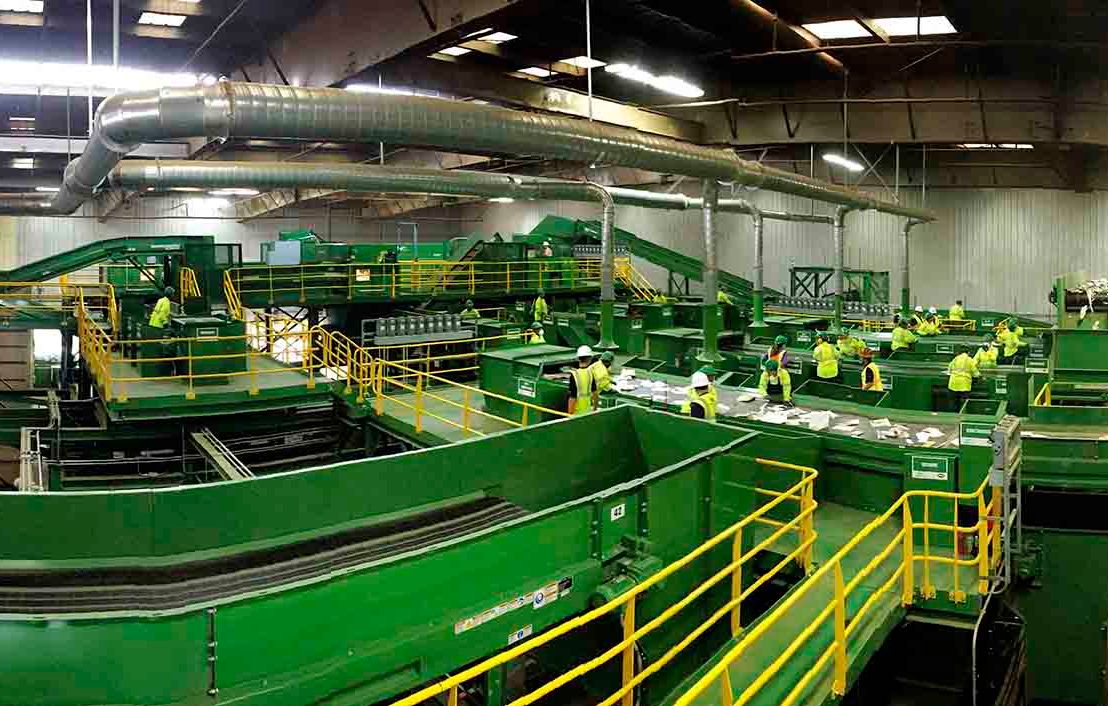
With the advent of mass recycling, there has to be some sort of way that recyclable material is properly sorted to ensure that everything goes in it’s place. The solution is called a Material recovery facility, or MRF. MRFs are specialized plants dedicated to taking in recyclable material and making them reusable. There are two types of MRFs, clean and dirty. Clean MRFs take in purely recyclable waste and turn it into usable material, while dirty MRFs accepts “mixed” waste (i.e partially reusable and partially corrosive) and separates the recyclable material from the non-recyclable.

How do Fans work?

How do Fans work?

How do Fans work?         06/10/16

“How do the fans in our everyday lives work?”

Have you ever wondered how does a fan work? You might be surprised to find out that the operation is surprisingly very simple. A fan is primarily powered by an electrical motor. Attached to this motor are rotors. When the motor spins, the rotors will create a pressure difference in the air which in turn creates wind. Fans often have casing around them to simultaneously protect the rotors from exterior damage and to direct the wind flow. You can think of a fan almost like the reverse wind turbine, with a motor using energy creating wind in the air instead of wind creating energy in a generator.