Author: Isaac Gendler

Carbon capture and storage

Carbon capture and storage

Carbon capture and storage

“Could we fight climate change by taking CO2 out of the atmosphere and putting it into the ground?”
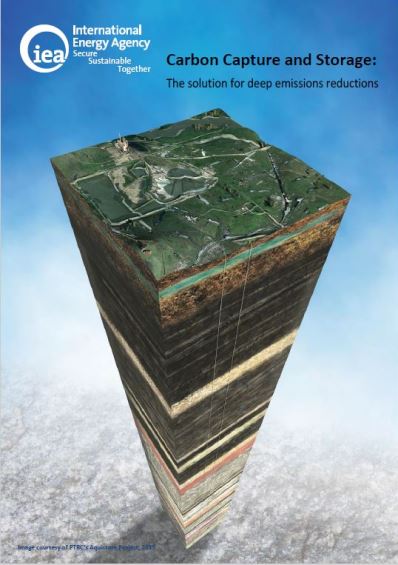
It is a well-known fact that there is an overabundance of carbon dioxide in the atmosphere as a result of human activity. So are there any creative ways in which we could reduce this amount? Well, This, how about if we were to take the carbon dioxide during an energy generation process, and then funnel it into the ground? This seems like a good (yet crazy) concept, but as engineers, we can’t just make ideas, we have to implement them as well. The first step is to capture the CO2 during energy generation. This can be accomplished through one of two methods, post-combustion (which takes in the extra flue gas released during the burning of fossil fuels and uses a filter to separate out the CO2) and pre-combustion (which traps the CO2 gas before it is burned). This gas will then be transported through a pipe towards a deep rock formation, where it will finally be ejected and stored for a longer period of time. Carbon capture and storage has the potential to save much CO2 from entering the atmosphere (upwards of 14% of energy-related CO2 reductions by 2050). A stalwart example of a Carbon capture and storage plant is the Canadian Boundary Dam plant, which has the potential to save up to 90% of CO2 related emissions.
Green rooftops

Green rooftops

Green rooftops

01/01/16

“How can we fix the problems of conventional rooftops while simultaneously making them friendlier for the environment?”
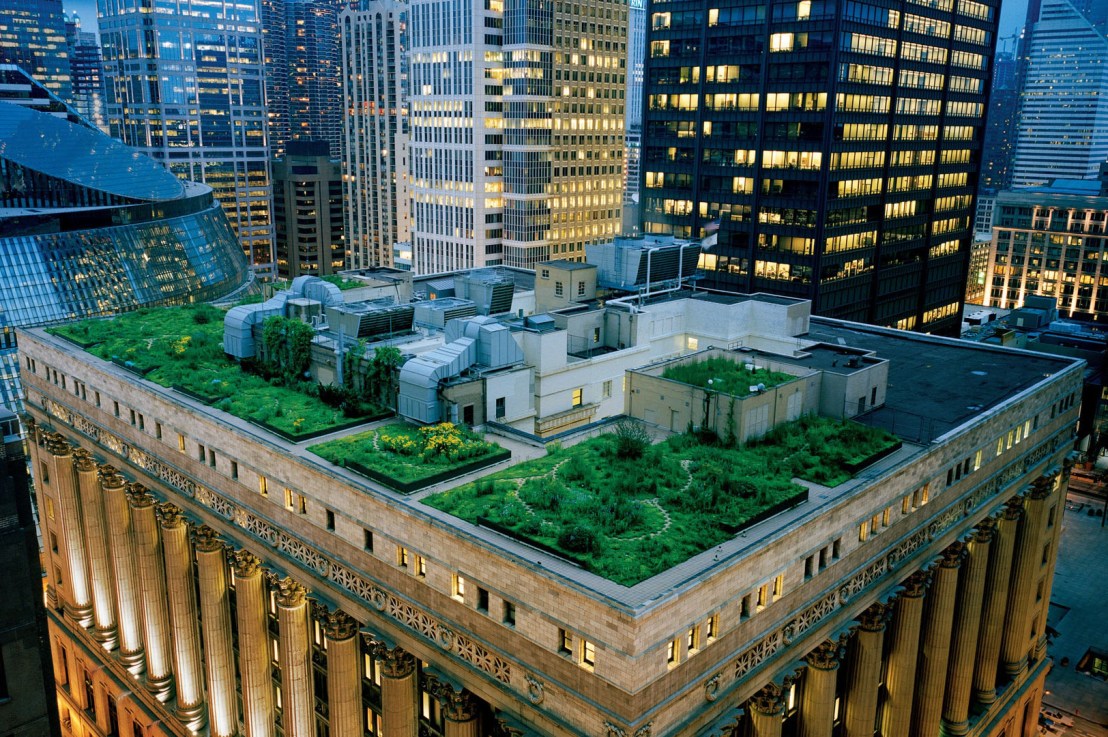
Traditional rooftops, while useful for insulating us against the hazardous external world, have many drawbacks associated with them. They can get hot in the summer, get moist during the rainy season, and can sometimes be unpleasant to look at. These grievances look like the perfect sort of job for an engineer to solve. To start, we should address the primal causes of the heating and water runoff. What sort of material would be capable of countering these effects? Well, if we look hard enough, then we would be able to discover that plant matter itself would be a perfect substitute. Think about it, they can absorb water, heat and are rather aesthetic. Now, let’s go a step further, and create a green rooftop by covering the surface of our roof with plant matter. Green rooftops can twice as long as traditional rooftops, absorb harmful UV radiation, and provide far superior cooling for hot summer days. There are two types of green rooftops: intensive and extensive. Intensive roofs contain far more developed vegetation, while extensive units are lighter and less complex. A most stalwart example of a green rooftop is the Chicago City Hall (pictured), which combines both types of roofing

Orbiting solar panels

Orbiting solar panels

Orbiting solar panels

12/31/16

“Could we increase the efficiency of solar panels by placing them in Earth’s orbit?”
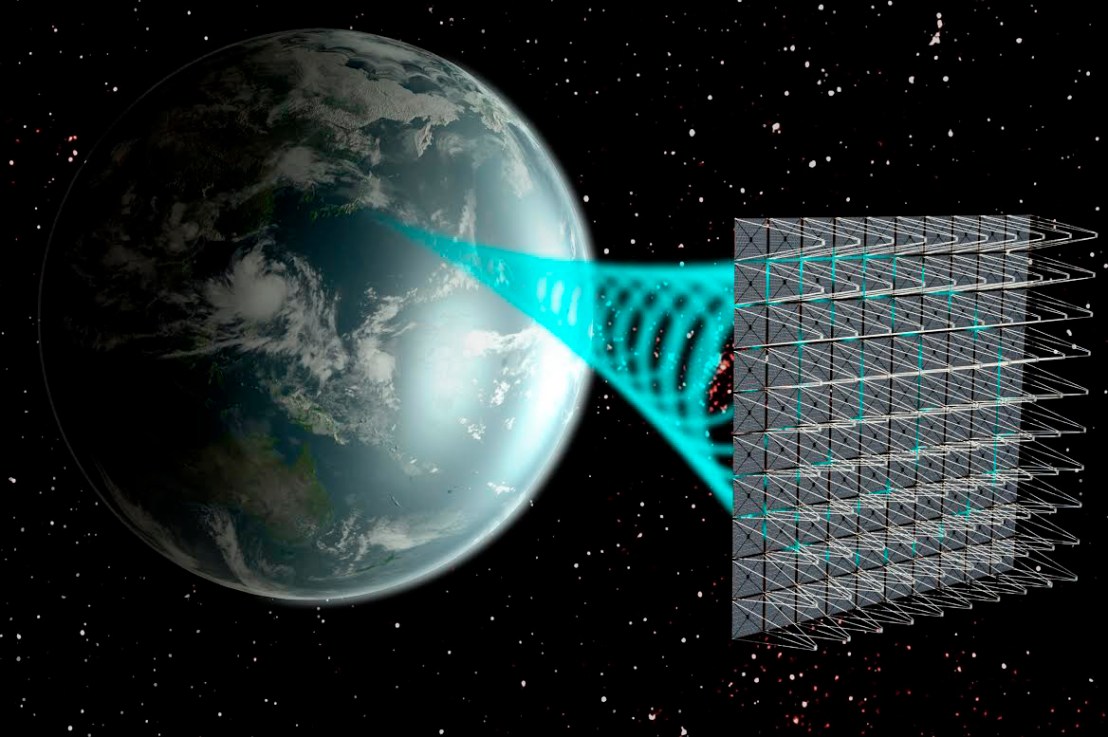
Our sun is an undoubtedly powerful object, on any given day, the Earth will receive 1.74*10^17 watts every second from it! However, much of this energy will be dispersed through the atmosphere of the Earth, limiting the potential of solar panels. So how could we work around this impinging phenomena? Well, let’s use our engineering mindsets to think outside of the box. Since the power of the sun is only mitigated after it enters the Earth’s atmosphere, wouldn’t it be logical if we were to place solar panels outside of the Earth? This most creative idea is being pursued by the Japanese Space Agency JAXA, where they plan to be able to create wireless power transmission units for orbiting solar panels by the year 2030.

Solar fuels

Solar fuels

Solar fuels

12/30/16

“How can we turn solar energy into fuel?”


If humanity wants to survive in the not too distant future, then it must become more reliant on renewable technologies such as solar energy. However, one serious drawback to solar energy when compared to traditional fuel sources is what I like to call its nature-dependent nature, or the fact we can not generate solar power at our will, we need an extraneous phenomenon (the sun being present) to do so. This has lead researchers all over the world to dedicate their careers to building new ways of storing solar energy for later use. One new method of doing so has the potential to seriously challenge traditional fuel source by imitating photosynthesis. This method works by using simple chemistry. Hydrogen gas [H2] and carbon monoxide [CO] can be combined together to create fuel sources. The sun can also be used to change water[H2O] and carbon dioxide [CO2] into hydrogen gas and carbon monoxide. Now let’s put this knowledge into practice. First, let’s build a space containing water and carbon dioxide. Then, let’s use concentrated sunlight to heat up these compounds until they lose their oxygen atoms and become hydrogen gas and carbon monoxide. We can then combine these two chemicals to create a new fuel, solar fuels. Solar fuels relieve stress from the grid and allow for simple integration and consumption any sort of machine, whether it be a small motorcycle or a titanic aircraft carrier.

Microgrids

Microgrids

Microgrids

12/29/16

“Is it possible to have your own autonomous grid?”
Electrical grids usually have a leviathan-like size to them. This immense magnitude often comes with numerous drawbacks, such as lack of autonomy for local stations in case of a power outage. So what if were to develop our own grid that would connect and disconnect at will to the larger grid? This is the fundamental idea behind a technology that engineers term a microgrid. Microgrids are self-sustaining structures that can be separated from the larger grid through the use of a switch. Because of their autonomous nature, microgrids can be used to create stable islanding areas with renewable energies. These islanded microgrids are often used for high-security areas, such as the Alameda County Santa Rita Jail in Dublin, California.

Smart grid

Smart grid

Smart grid

12/28/16

“How can we advance the grid into the 21st century?”


The grid as we known it is heavily outdated. When the grid was first conceived of a century ago, the users lived in heavily localized areas, and often only had a few electrical needs, often all electrical appliances could be counted on one hand. However, as just as how electrical technology has matured in an exponential fashion, so has the complexity of the systems, resulting in a strained communication with the grid. We now have dozens if not hundreds of vastly more complicated items being used, each carrying different power requirements, with more being added at a superfluous rate. This is causing grave impingements on our grid, which could lead to pure devastation. So how can we apply our engineering mindset to take our aging electrical infrastructure into the 21st century? Well, why not just implement a two way grid communication system, also known as a smart grid? The fundamental idea is that all electrical signals from this new grid will be monitored and regulated by computer technology. To illustrate, a smart grid will be able to analytically distribute the voltage of electricity to units that require more of it, while supplying less to less intensive units. A smart grid will also be able to integrate more efficiently the sinusoidal nature of renewable energy sources like wind and solar through this monitoring technology. Smart grids are a foresightful investment, and will truly be the technology of the future.

The electrical grid

The electrical grid

The electrical grid

12/27/16

“How exactly do we obtain our electricity from power plants?”


It is very well known that humanity generates large amounts of electricity using power plants, and then consumes it for their appliances, whether it be residential or industrial. But how does this raw power get transferred? Well, it turns out that this system is in fact the largest machine our civilization has ever built, the electrical grid. The electrical grid is the summation of all of the power transmissions systems which take in energy from a generation source and transport it to our appliances. The electrical grid primarily uses high voltage transmission lines and step-up transformers to accomplish this task.

Solar cells

Solar cells

Solar cells

12/26/16

“How do solar panels produce energy?”


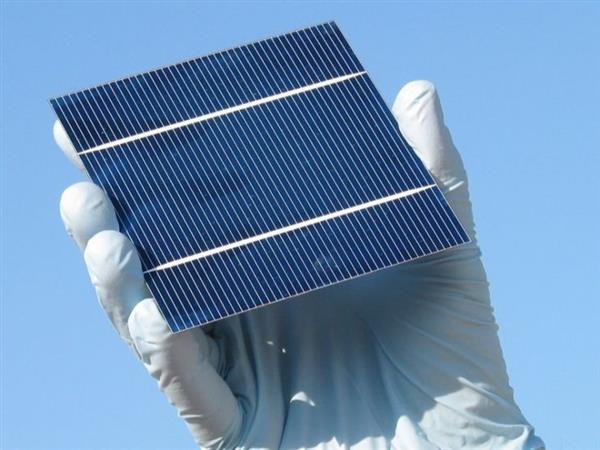
If you live in a sunny part of the world (such as California) then you probably have seen solar panels installed for all sorts of purposes. However, have you ever wondered what exactly causes them to work? Well, let’s explore. If we look closely, then it turns out that solar panels are composed of small solar cells stacked in arrays. These solar cells have semiconductors embedded in their build, so any photons that hit the solar panel will be absorbed. These photons will excite the electrons of this semiconductor to move, inducing a current. This current can then be used to power electrical devices, therefore enabling solar power generation!

Thin film solar cells

Thin film solar cells

Thin film solar cells

12/25/16

“How can we make solar cells that are 350 times smaller than average?”


Most traditional solar panels rely on crystalline technologies for their embedded framework. However, is there a different way to manufacture solar cells altogether, and what are the side effects? Well, let’s use our engineering mindset to build this new technology. We know, that the beating heart of every solar panel is the semi-conductor technology that converts light into energy. So what if we were to take a thin layer of small semi-conductors (such as cadmium-telluride[CdTe], and then deposit it onto a transparent substrate material such as metal, plastic, or glass? This is the operating principle behind thin film solar cells, whose manufacturing process results in a cheaper, smaller (around 350 times smaller in thickness) and flexible build but less efficient and heat resistant as well.