Author: Isaac Gendler

Vapor Compression Cycle

Vapor Compression Cycle

Vapor Compression Cycle

11/27/17

“How do most AC systems work?”


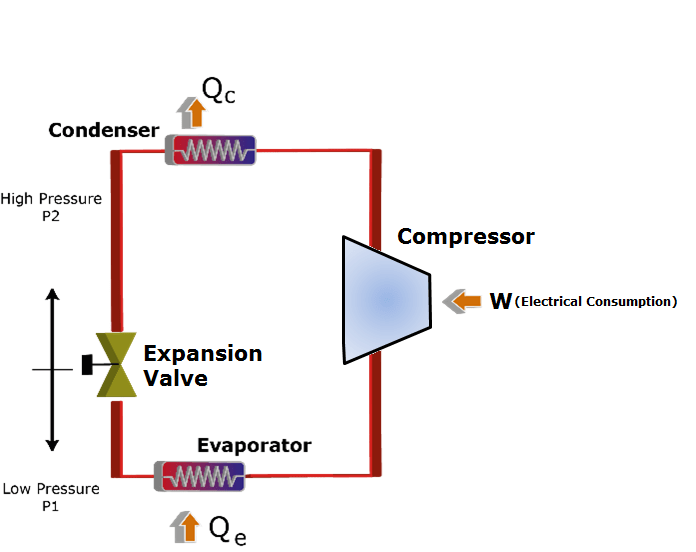
While absorption refrigeration systems are great for many applications, sometimes we just want a more traditional technology for our cooling needs. So how exactly do most AC systems actually work? Well, let’s use our engineering mindset to find out.


Let’s start with the basics. Our goal is to take heat from one space and transport it to another. One very common way to do this is to use a heat exchanger. But to ensure continuous cooling, we must ensure that we have a constant supply of fluid at a temperature we desire. To build this system, let’s start with four components: a compressor, a condenser, an expansion valve, and an evaporator. Then, let’s have a refrigerant enter the compressor at a low temperature in a gaseous state, and do work on it to increase its temperature and pressure. Then, let’s have it enter the condenser, where heat is transferred into a nearby medium. Afterwards, let’s run it through an expansion valve to cool it and release pressure while turning some of the gas into a liquid. Finally, let’s pull it through an evaporator, which is basically a heat exchanger that allows the cold fluid to absorb heat from the surrounding medium (and therefore cool it) and gasify it. Once the fluid leaves the evaporator, it enters the compressor and the process (known as the vapor compression cycle) will start again.
Nonintrusive Load Monitoring

Nonintrusive Load Monitoring

Nonintrusive Load Monitoring

11/26/17

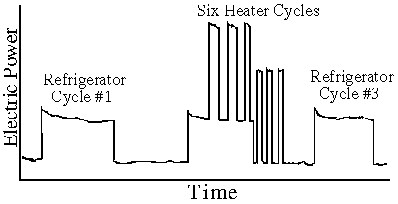
“How can we determine the appliances in a building just from its energy consumption?”


As Engineers, it would be very useful to analyze the types of appliances within a building. However, doing so requires a heavy upfront investment in a large multitude of sensors.


Or does it?


After many years of research, Engineers and Scientists have developed a method known as Nonintrusive Load Monitoring, which takes in data from a building’s energy uses, parses out all of the patterns, and recognizes which appliances are in the unit. Although novel and affordable, one serious drawback with this technology is privacy concerns, since large organizations will be able to snoop in on the appliances that an individual possesses.

Fault Detection and Diagnosis

Fault Detection and Diagnosis

Fault Detection and Diagnosis

11/25/17

“How can we monitor a facility for component breakdowns?”


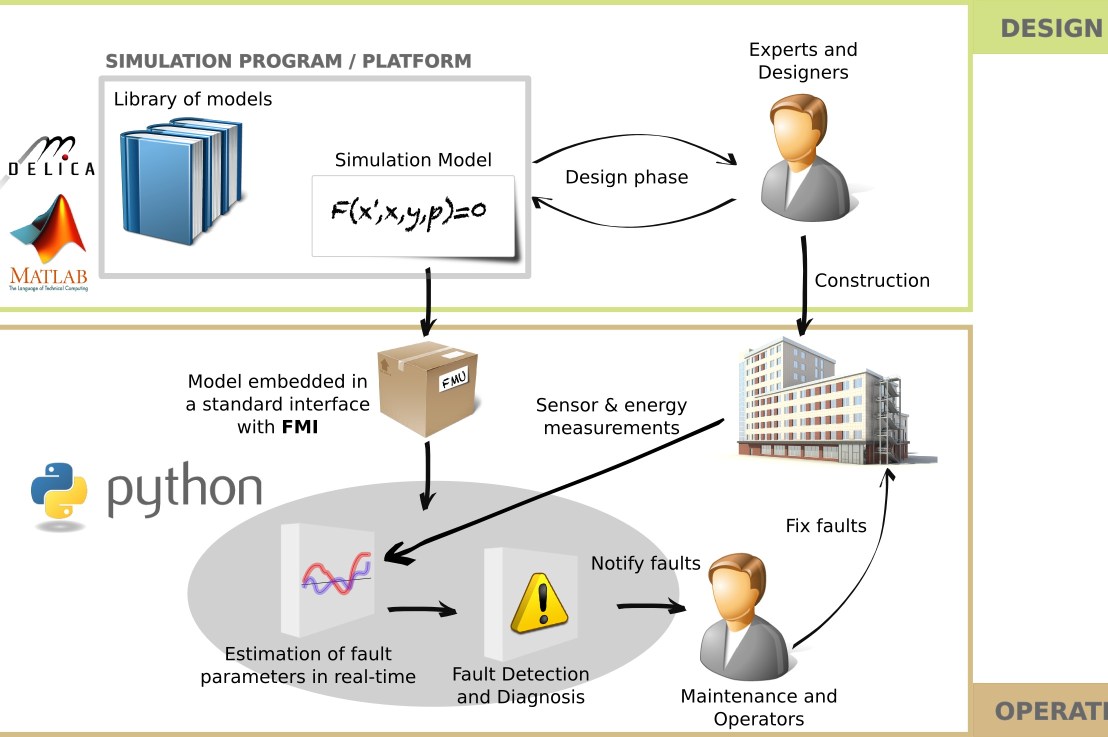
When running industrial facilities, components are very prone to failure, which can cause large amounts of money and energy to be wasted. So how can we make sure that these facilities are protected from such failures? Well, what if we were to implement a network of sensors that would collect data from a facility, which would then be parsed through algorithms. If any of this data finds any strange patterns, it can sort out the underlying cause and solve any issues. This technology is known as Fault Detection and Diagnosis and is one of the most fascinating facets of industrial operations management.

Absorption Refrigeration

Absorption Refrigeration

Absorption Refrigeration

11/25/17

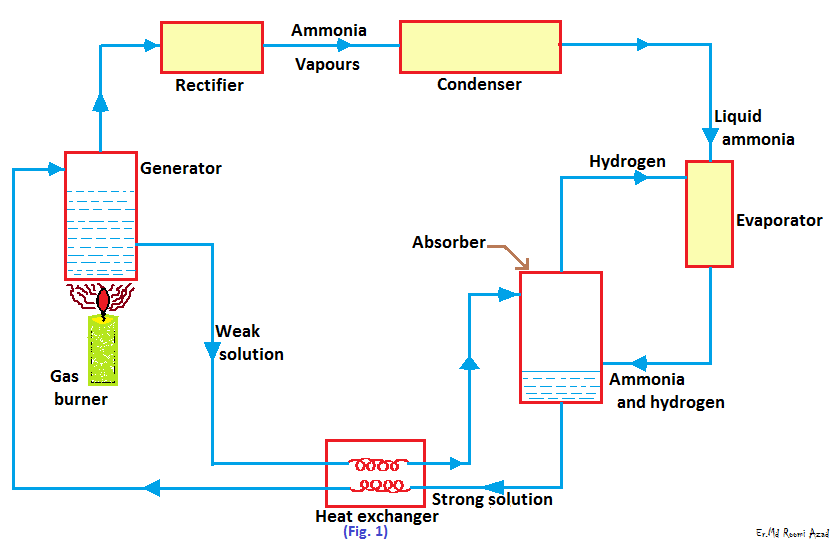
“How do can we apply the laws of physics and chemistry to make a refrigerator?”


Refrigerators allow us to survive in the modern world, whether it be in keeping our buildings cool or our food fresh. However, how exactly do these systems work? Well, let’s look at one such approach.


First, let’s start with a solution of hydrogen and ammonia in a boiler. Then, let’s apply heat to separate out these two substances, leading the ammonia gas to a higher pipe and the hydrogen to a lower pipe to be mixed later. Once this is complete, let’s send the ammonia gas through a heat exchanger to condense it into a liquid. Afterwards, let’s shove this new liquid with the hydrogen gas in a freezer (evaporator). The highly reactive chemical reaction will absorb a large amount of heat from the surroundings. The ammonia gas will then be evaporated with a second heat exchanger and sent back to the original boiler, starting the process all over again!

Absorption Refrigeration is commonly implemented in food storage in commercial vehicles and in buildings for waste heat recovery.

The Effect of Refrigeration on Food

The Effect of Refrigeration on Food

The Effect of Refrigeration on Food


11/23/17

“What effect does refrigeration have upon food products?”


Right here in my family’s home in Los Angeles, California, temperatures have broke 33 degrees Celsius (92 in Fahrenheit) this Thanksgiving. Because of this, I have been inspired to write about some of my favorite topics, refrigeration and food.


Before the ascent of electrical HVAC systems, Perishables such as dairy and meat products had to be consumed rapidly. However, with modern day refrigeration technology, we have been able to surmount this barrier and artificially extend the life of our potential meals. It works in a very simple manner. When food is left out in the open, bacteria form and cause it decompose. But if temperatures are low enough, then this bacterial activity will stop, and the food will be able to continue to be fresh unabated. This potential to preserve food without altering its physical or chemical has made it clear why we must be thankful for the effect of refrigeration on food!

Embodied Energy

Embodied Energy

Embodied Energy

11/22/17

“What if we quantified all of the energy used to create an item?”


In order to create a product, energy is required whether it be in the manufacturing process or in transportation logistics. One commonly used way to quantify this is through Life-cycle assessment. But what if we simply want to obtain a direct measurement of all of the energy used in a product? Well, this would simply entail summing up each part to create what engineers call the total embodied energy!

Muscular Hydrostats

Muscular Hydrostats

Muscular Hydrostats

11/21/17

“Why do tongues work?”


One of the most fascinating facets of the human body is the tongue. Its ability to move food around in one’s mouth without any bone structure is quite marvelous. However, how exactly can it do this? Well, let’s use our scientific mindsets to find out. If we analyze our tongues further, we should see that these appendages are in fact in fact constructed of muscular material. Because of this, they have an inherent flexibility where any region of the tongue can lengthen, shorten, twist, or bend at any time, allowing for a wide arrange of movement. These Muscular Hydrostats can be found in many other animals, such as the tentacles of octopi and the Trunks of elephants. Because of their diverse applications in the animal world, engineers are researching how to implement similar materials into robotics systems

Psychrometric Charts

Psychrometric Charts

Psychrometric Charts

11/20/17

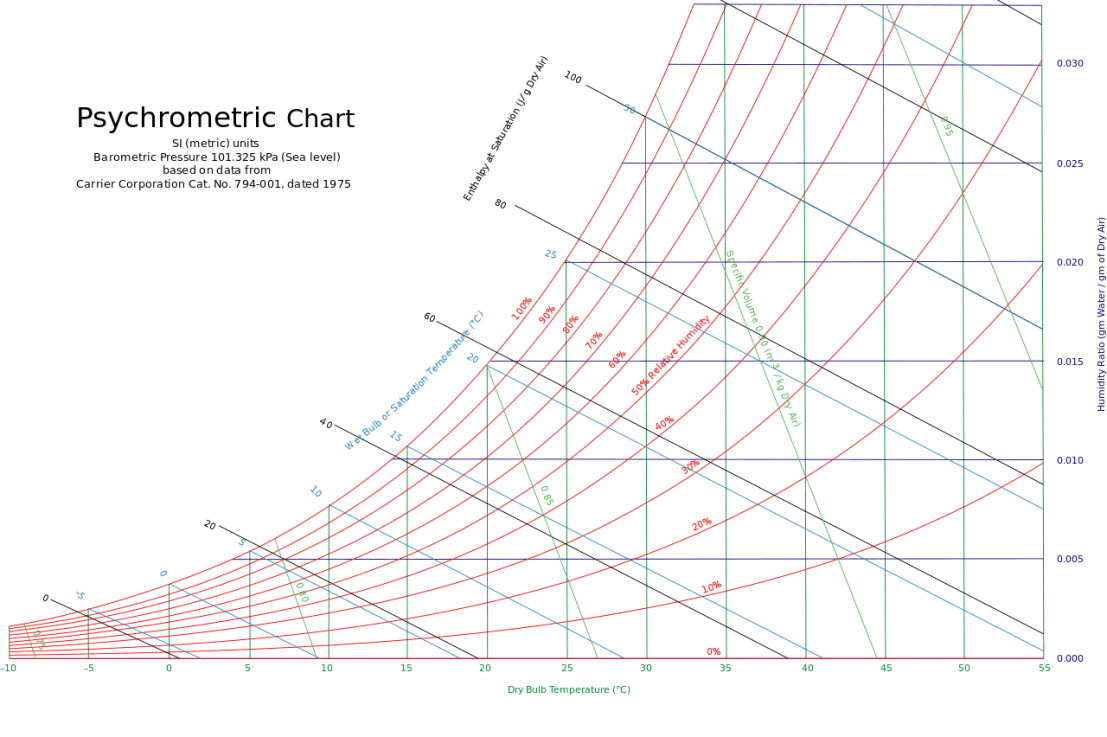
“How can we create a chart of a temperature comfort range?”


We all know that many different external factors can affect one’s temperature comfort zone. For example, 28 degrees centigrade can feel either pleasant or horrific depending on the relative humidity. So how can we relate all of these complex variables together in a coherent way? Well, many good Engineers, Architects, and Scientists took on this challenge, and decided to create a chart that takes in Dry-bulb (or absolute) temperature, Wet-bulb, Dew Point, Relative Humidity, Humidity Ratio, Specific Enthalpy, and Specific Volume of the local atmosphere to produce a visualization of a temperature comfort range. This is known as a psychometric chart and is one of the most important foundations of modern HVAC engineering.

The Dew Point

The Dew Point

The Dew Point

11/19/17

“How can we measure the point in which saturation occurs?”


When it gets humid outside, it’s very easy for moisture to appear on surfaces. However, why does that happen? Well, the answer lies in a most interesting property called the Dew Point. The dew point is the temperature at which the gas in a given area will condense into a liquid. If an object cooler than this point comes in contact with air, then it is possible for dew to form. HVAC system engineers must keep this value in mind when designing dehumidifier equipment.