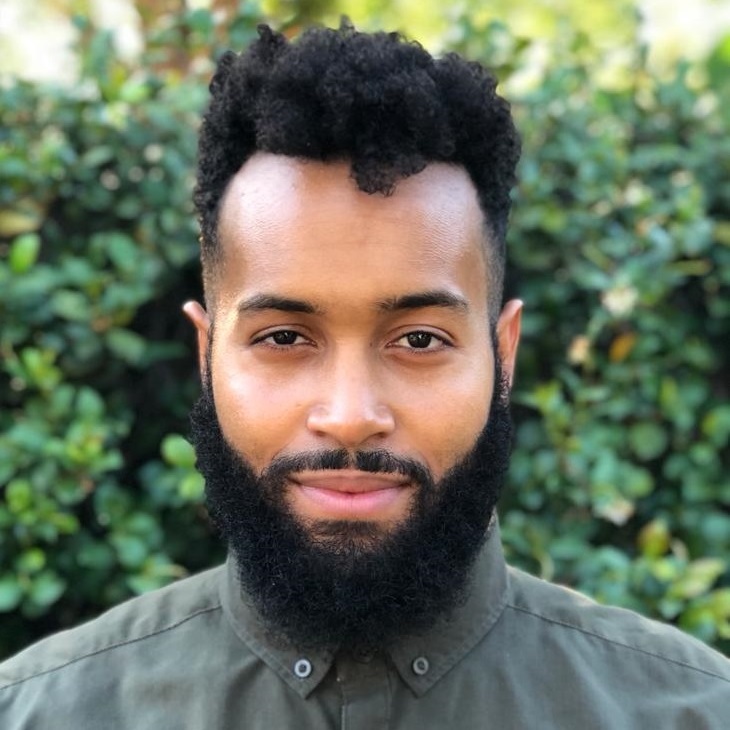
Pierce Gordon, Innovation Catalyst and Design Researcher in Botswana
We here at Isaac’s Science Blog are pleased to be hosting our fifth interview with the one and only Pierce Gordon! Pierce is currently working in international development assisting the nation of Botswana. Pierce holds a PhD in Energy and Resources from the University of California Berkeley, a bachelor’s degree in Aerospace Engineering from the University of Michigan, and a bachelor’s degree in Applied Physics from Morehouse College. He is currently in the Southern African Nation of Botswana working in International Development.
1. Tell us about yourself.
I consider myself a person who is trying to do good to the world. I have been extremely lucky to have worked and received the accolades that I have to make the connections that I am apart of to have the experiences that I have had and in doing so I am trying to find the best opportunities to spread love and do interesting things.
I guess I can start of my childhood. I have been through a life of constant transition in many different places and many different disciplines because with what I have been offered I wanted to make sure that I can gain the experience to work on the problems that truly matter to me. I initially started with studying Aerospace Engineering to become an astronaut and obtain a PhD. I was first at Morehouse College under the dual degree engineering plan, and later transferred to the University of Michigan to complete my undergraduate studies. Although I was grateful to learn how engineers think, I knew it wasn’t for me. I decided instead to learn about the politics of International Development and Global Poverty since those topics resonated with me at the time. I wanted something that was historically informed and involved people who I aimed to help.
2. What inspired you to work in Development?
It started with a lack of inspiration in Aerospace Engineering. I was sitting in propulsion class and learning how jet engines increase the pressure of incoming air and I just realized I really didn’t care. I went on a dark and lonely path to find out what I did care about. I especially knew that in order to get a PhD you needed to work on something that fascinates you.
I watched the daily show when Jon Stewart was on and it was 9 months out in the Haiti Earthquake and 1.2 billion dollars which was supposed to go to the nation was diverted. I then realized I needed to do something. I partnered with a colleague and realized that I needed to help folks that needed to be helped. I then applied for a program that applied this interdisciplinarity to issues that mattered, and actively searched for projects that were not just novel or rigorously studied, but could represent tangible impact in the communities that I wanted to assist. I worked with a lot of communities but the one with Botswana happened to be my dissertation which is why I am here right now.
3. Tell us about your professional background
Well, I have never taken a break from school. Over 12 years, I acquired four degrees. While in school I have actively looked for many opportunities. 5 research internships at NIST, MIT, NASA Glenn, Morehouse College, and the University of Michigan. Also, my final internship was with GM where I worked in the Corvette plant. During graduate school, I knew that I had the time to research design innovation in the Bay Area. I founded an organization called Reflex Design Collective to worked on Equity Design in the Bay, and we found some other folks and turned into a loose collective of equity designers all over the US that share, understand, and navigate to put tools of design, systems thinking to fight systemic oppression of all forms and ensure that people from these marginalized communities are empowered to use the design tools available.
4. What did you do for your PhD research?
My PhD work on investigating innovation practice which was about creating the world to be better and applying it for international development.
Dissertations usually have three separated research contributions. Mine were:
- Systematic Literature Review of Human Centered Design for Development
- Ethnographic Evaluation Study of Botswana Innovation Community (how Botswana research institutions are they trying to shift the economy of the nation and how do they define success)
- A reflection of ethics institutions in supporting practicing innovators in Botswana.
6. What inspires you about your field?
It is filled with practical dreamers.
The purpose of design as a field is to try to understand our world and what it is. The point behind design work is trying to understand who we are and how do we shape the world that we live in. It is a trans-discipline that takes from all disciplines to create the world we are in today. It is inspiring to see so many people in this space to understand the problems in this world and trying to develop tangible ways forward.
7. Why did you pick UC Berkeley?
My program offered freedom. When you are trying to go to a PhD, you should not look for the school, but the program. Specifically, for a PhD, you should look for specific individuals that you will learn from and build upon. The Energy and Resources Group is a program that focuses on interdisciplinarity in its best form. It was founded by individuals in the Early 70s that realized global problems are transdisciplinary. This program gave me the ability to learn about International Development and Design when I had no experience and combine fields in unique ways that other PhDs could not. I think it is critical to find people to work within disciplines and to brings people together.
8. What are some fellowships you’ve received during graduate studies?
Many. Since I became an adult I have always applied for funding, upwards of 300 individual scholarships. I started with the NSF GRFP, the Ford Predoctoral Fellowship, and the Berkeley Chancellor’s Award. I also obtained the INFWS fellowship which allowed me to travel and present at different places. The reality is that I was able to obtain a large amount of funding from being a really good students and being an engineer but later on it became more difficult as my work became more narrow, interdisciplinary, and not conventionally defined. Unfortunately, funding does not take into account people who have not had continual success and the concept of “failing-forward” and a lot of times the funding is used to support the mission of the organizations which sponsor it.
9. What caused you to shift from engineering to development?
I needed work with a soul. The work that I was doing in Aerospace so far separated from people that I couldn’t stand it.
10. New sites/podcasts you listen to?
Podcasts:
99% invisible
The Bodega Boys
The Read
I also read a lot of Design sites, especially newsletters on Medium.
11. Favorite thing about working in International Development?
People at many stages of Int. Development have chosen a job that requires them to make them perpetually empathetic with everyone they are in contact with and how to address this systematic and historical problems of poverty.
12. Least favorite things about this space or would like to see improved?
People in these fields need to understand their limits and understand where their limits lie. A lot of people who work here believe in silver bullets. There are no perfect methods or solutions or people or understanding the limits of what we can do and what we need to do is see what people can accomplish with limited resources.
13. What should someone do to work in this space?
Find some mentors that you want to connect with and try to work with them. If you’re in international development I would say you learn about the history of the field. A lot of people don’t and just want “to do good” but make large mistakes. These people need to learn the value of doing good work locally. Find people who have worked in this field at whatever school you’re at and really try to learn from them.
14. What are the benefits of a Ph.D. over a Masters?
The point of a PhD is to learn research and trying to generate new knowledge. When I got my final signature, my advisor told me that a PhD is a passport. It is to be an expert in a very small piece of the world of knowledge. Noone can take it away from you.
Though it depends on the program, a Master’s likely will most likely allow people to make more money and get into the workforce faster.
15. If you were to go back and change one thing in your career what would you do?
I would not change anything. I have made every career decision I made and anything people consider a mistake I am happy to say that I have learned from them.
16. What is your five-year plan?
I don’t have one right now and keep blooming where I’m planted and learn and bloom as much as I can outside of academia and use it where I sit.
Conclusion
So there you have it! Pierce, it was a great pleasure to learn about your story, and we wish you the best of luck with your future endeavors. Your work and personal background is one of a kind and we’ll make sure to keep an eye on you. If you would like to connect with Pierce, you can find his LinkedIn right here.