Month: April 2018

Prandtl Number

Prandtl Number

Prandtl Number

04/12/18

“How can we quantify the ratio between momentum and thermal diffusivity?”


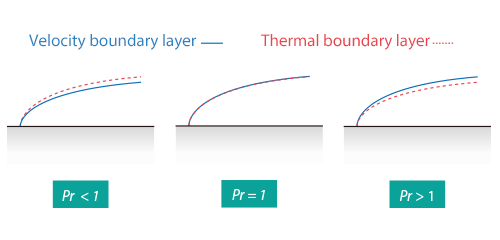
For fluids flowing over an object’s surface, momentum and heat will be transferred, oftentimes at different rates. How quickly one changes with respect to the other will completely affect its properties. As a result, engineers have devised something known as the Prandtl Number, which compares the diffusivity of momentum and heat as a ratio, symbolized as pr = c_p*Mu/k with C_p being the specific heat capacity of a gas at constant pressure, Mu being the dynamic viscosity and k the thermal conductivity.

Non-Inverting Op Amp

Non-Inverting Op Amp

Non-Inverting Op Amp

04/11/18

“How can we make an Op-Amp amplifier without inverting the output?”


Inverting Op-Amps are great for changing the sign of a signal, However, sometimes we would like to simply amplify instead of invert. So how can we accomplish this using our engineering mindset? Well, What if we were to simply reverse the inputs to the op-amp? That way, we can create a Non-Inverting Op Amp, whose gain is represented by 1+R2/R1, with R2 being the second resistor and R1 being the first.

Solar Ramp Rate Control

Solar Ramp Rate Control

Solar Ramp Rate Control

04/10/18

“How can people control the ramp rate of solar?”


Solar energy is growing at a rate that makes the adoption of computer technology look feeble. However, with this increased adoption comes increased instabilities, such as extreme variability in power generation. So how can we use our engineering mindset to solve this problem? Well, we know that if we were to add something to dampen the sudden influx of energy, we can smoothen out operations. So what if we were to add a form of Ramp Rate Control through techniques such as batteries and control strategies? Well, it turns out that this is the exact idea behind many modern grid control strategies.


Electronic Comparator

Electronic Comparator

Electronic Comparator

04/09/18

“How can we compare two different voltage levels using an Op-Amp?”


Machines often have a multitude of sensors. And sometimes we would like to compare different values from these inputs to see which is larger. So how can we do this on the circuit itself? Well, we know that Op-Amps can handle two inputs at a time. And we also know that the type of values provided into the input will affect the output of the Op-Amp. So what if we were to use an Op-Amp that would output a voltage level to compare the two inputs? Well, this is known as an electronic comparator and is a fundamental of mechatronic systems.

Inverting Op-Amps

Inverting Op-Amps

Inverting Op-Amps

04/08/18

“How can we invert a voltage using an Op-Amp?”


A circuit’s operations are dictated by its voltage levels. However, sometimes we may just want to invert the sign. So how can we accomplish this using our engineering mindset? Well, what if we were to attach our circuit to the inverting input of an op-amp, attach the other input to the ground, and fasten another resistor after the first input? That way, the voltage in between the two resistors be grounded, and the voltage at the output of the next resistor would have its sign reversed. Well, this is the fundamentals behind something known as an inverting op-amp and is used in low-noise amplification.

Op-Amp Feedback

Op-Amp Feedback

Op-Amp Feedback

04/07/18

“How can we control voltage levels using an Op-Amp?”


Op-Amps are great for modifying voltage levels in a circuit. But sometimes things happen during the lifespan of an Op-Amp that can affect how it performs. So how can we design these components to self-regulate? Well, what if we were to connect part of the output circuit to the Op-Amp input. Therefore, the voltage levels would be the same as the input, and any change on one side would affect the other. This technique is known as Op-Amp Feedback and is one of the fundamental concepts of modern circuitry.

The Reynolds Number

The Reynolds Number

The Reynolds Number

04/06/18

“How can we predict if a fluid flow will be laminar or turbulent?”


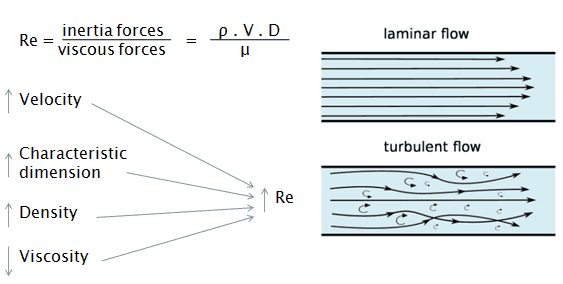
Fluids have a most remarkable form of movement with their flow. Some are laminar as a calm lake while others thrush around with the turbulence of a roaring river. But how can we predict if a fluid flow will be either turbulent or laminar? Well, let’s think about it using our engineering mindset. We know that two types of forces act on a moving fluid, inertial and viscous forces. The former are forces that tend to move an object, such as a pressure difference or momentum, while the latter are ones that tend to keep a fluid’s movement neutral, such as friction or momentum loss. It would be logical that if the former were stronger, then the fluid would be freer to move and therefore create turbulence while the latter would keep everything mellow and laminar. So what if we were to take the ratio of these forces and classify fluids based on it? Well, this is known as the Reynolds Number and is used to predict the flow type of a fluid. For simple fluids, the Reynolds Number can be expressed symbolically as Re = rho *v*L/mu, where Re is the Reynolds Number rho is the density of the fluid v is the velocity L is the characteristic linear dimension of the fluid and mu is the dynamic viscosity of the fluid.
Contour of How Op-Amps Works

Contour of How Op-Amps Works

Contour of How Op-Amps Works

04/05/18

“How exactly do Op-Amps work?”


Op-Amps are vital for signal processing. However, how exactly do they work? Well, it turns out that they work as follows. The circuit will be connected to an input and an output at the left-side. These will allow for their voltage levels to be near equipotential. There will also be a voltage gain associated and a supply voltage. This is the contour of how op-amps work.

Operational Amplifiers

Operational Amplifiers

Operational Amplifiers

04/04/18

“How can we modify a circuit voltage signal?”


Circuit components such as sensors have all sorts of voltages. However, sometimes we want to modify them in some way. So how can we use our engineering mindset to accomplish this? Well, what if we were to simply use an extra component to do this? These are known as Operational Amplifiers and are a vital part of mechatronic systems.