Month: July 2017

Surveying triangulation

Surveying triangulation

Surveying triangulation

07/03/17

“How can we measure real world triangles accurately?”


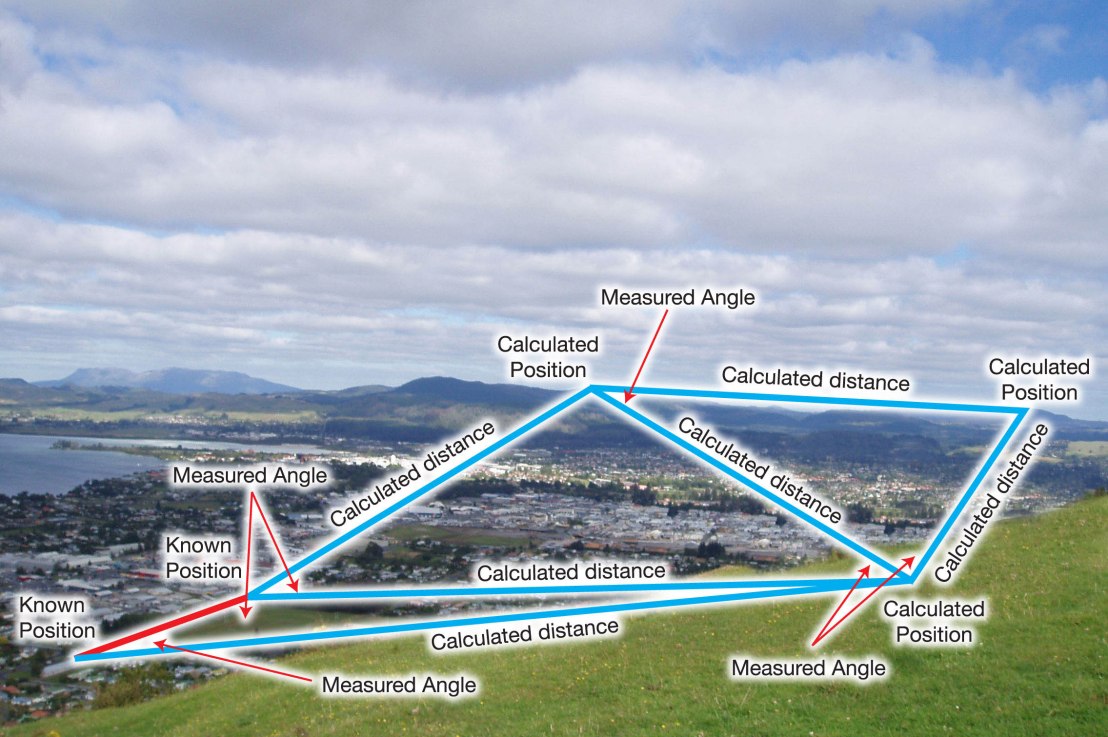
In surveying, it is often useful to measure triangular areas. However, how exactly is this accomplished? Well, let’s use our engineering mindset to find out. We know from high school trigonometry that if we can find the length and angle of one side of a triangle then we can find out the rest with ease. So how what if we were to apply this idea in reality successive lengths of rods whose length were accurately known? Well, this is the fundamental idea behind surveying triangulation and was the main surveying technique before the 1950s

Engineering surveying

Engineering surveying

Engineering surveying

07/03/17

“How do Engineers determine an accurate topology of an area?”


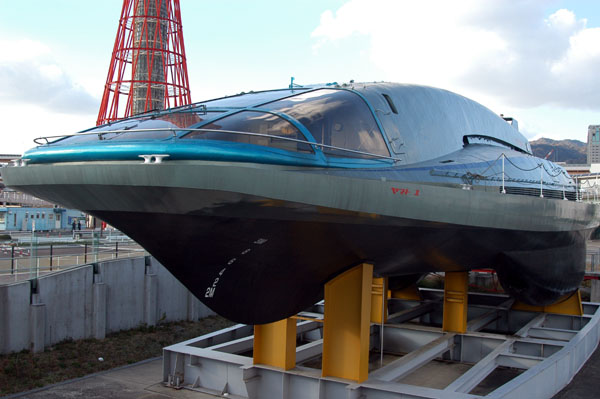
Civil engineering projects often involve large projects. And these large projects will often take up a large area. And in many parts of the world, this area might consist of uneven terrain. So how can we accurately find out the topology of an area? Well, let’s use our engineering mindset to find out. We know that with mechanical devices, we can easily gather information about irregularities in terrain. And by using computer technology, we can analyze this information to obtain a better view of the area. So what if we were to apply this concept to reality, and create an interconnected network of equipment to survey the land? Well, this is the fundamental idea behind engineering surveying, and it’s one of the most fundamental aspects of Civil Engineering.

Electromagnetic propulsion

Electromagnetic propulsion

Electromagnetic propulsion

07/02/17

“How can we make propulsion without fuel?”


As it stands, the vast majority of propulsion machines are based upon fuel combustion technologies. However, this approach is costly, wasteful, and dangerous. So how could we make a new propulsion approach that requires no fuel? Well, let’s use our scientific mindset to find out. We know that when an electric current passed through a conductive material immersed in a magnetic field, it will experience a Lorentz force. So what if we were to use this force to cause objects to move? This is the fundamental idea behind electromagnetic propulsion, and can be used to power machines ranging from linear motors to the astronomical electromagnetic propulsion drives!

Solar paint

Solar paint

Solar paint

07/01/17

“Can we use paint to make energy?”


Paint is usually seen as just a covering used to keep mold away or for making art. However, is it possible to do more with this material? Well, let’s analyze this using our scientific mindset. If we were to mix in titanium oxide into paint, then it would be capable of absorbing sunlight to convert the moisture into hydrogen and oxygen, therefore allowing for the consumption of hydrogen energy. This tecnology is currently being developed by a team at RMIT in Australia and could revolutionize sustainable energy generation, allowing for easy residential level consumption!