Month: July 2017

Microgeneration

Microgeneration

Microgeneration

07/22/17

“Can everyday people generate their own energy?”
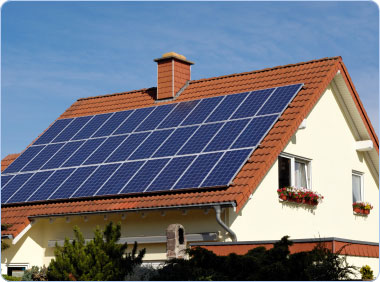
When people talk about generating electricity, they usually mean things like giant power plants or solar panel arrays. However, electricity generation does not need to be that large. In fact, it can be done in your very own home! This activity is called microgeneration, and can be accomplished through a variety of means, whether it be by installing solar PV or through recycling waste heat

Homogeneous and heterogeneous systems

Homogeneous and heterogeneous systems

Homogeneous and heterogeneous systems

07/21/17

“How do we classify thermodynamic systems?”


Engineering thermodynamics looks at heat, energy, and matter from a macroscopic, or non-atomic perspective. Because of this, objects and materials such as air appear to be uniform in composition. As a result, systems such as these are classified as homogeneous systems. Homogeneous systems stand in direct contract with heterogeneous systems such as a human body (which is composed of many different macroscopic layers). When working out thermodynamics problems, it is extremely important to know if your system is homogeneous or heterogeneous.

Fan heaters

Fan heaters

Fan heaters

07/20/17

“How can we use a heating element to heat up a room?”


During winter time we often need to heat up space. But making a fully built HVAC system can take a lot of time to warm a space. So what could we do to modify this? Well, let’s think of it from a systems perspective. We know that a heating element can be used to heat up a surrounding medium. And we know that fans can transfer one medium to another. So what if we were to combine both to take heat up and transfer air? This setup is known as a fan heater and is quicker but more expensive (due to the higher cost of electricity) than gas heaters.

Heating element

Heating element

Heating element

07/19/17

“How can we convert electricity into heat using a machine?”


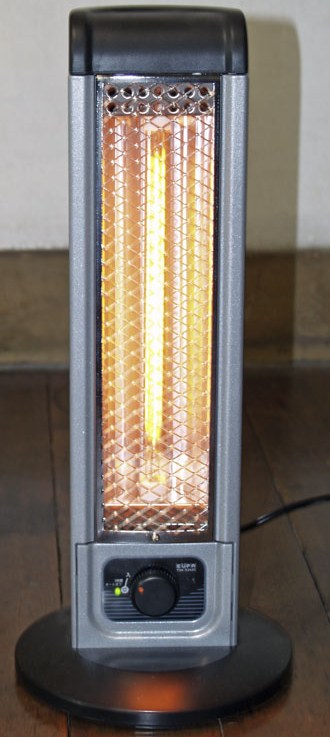
When designing heating systems, we often need a quick, efficient, and non-pollutive way to generate heat. So how can we use our engineering mindset to accomplish this? Well, let’s first think back to our scientific knowledge. We know that we can make heat from electricity by passing it through a resistive element. So what if we were to implement this in a mechanical system using real life technology? Well, this type of object is known as a heating element and is used for thermal appliances such as radiative heaters.

Pathogens

Pathogens

Pathogens

07/18/17

“What do we term the activator of a disease?”
Disease is one of the most important studies in Biology. And diseases are caused when a vector carries the disease with it. However, what exactly do we term the activator that is carried? Well, after much debate, Biologists have settled with the definition of a pathogen to describe such organisms. Viruses, bacteria, protozoa, prions, and fungus are commonly pathogens, as well as other micro-organisms

Radiative heaters

Radiative heaters

Radiative heaters

07/17/17

“How can we make heaters that do not require a surrounding medium?”


Heating is a common need everywhere. However, sometimes our surrounding medium might not be a good heat conductor or we may not have a medium at all! So how can we make a  heater which is not affected by the surrounding environment? Well, let’s think back to basic physics. We know that infrared is a form of light, and light is able to pass through anything. So what if we were to take some metallic wires, wire them around an element, and then apply electricity to heat the element to emit infrared? Well, it turns out that this invention is a little device known as an infrared heater. Infrared heaters are classified by the wavelengths they emit (ranging from 760 nm down to a minuscule 1 nm!) and are used everywhere from cooking kebab to warming outer space missions.

What can walking can do for you?

What can walking can do for you?

What can walking can do for you?

07/16/17

“So what can walking do for you?”


  • Do you ever feel a bit gloomy or sad? Well, maybe all you need is a nice brisk walk. Studies have shown that taking time for a nice brisk walk can activate the release of chemicals which work to boost your mood and make you happier. (Rosenberg, Yael 2016)
  • Would you like to feel smarter? According to research by the Beth Israel Deaconess Medical Center, individuals that commit to a regular workout stimulate the growth of nerve development. (Goldstein, Lev 2016)
  • Want to prevent or reduce the risk of developing heart disease? Since walking is an anaerobic exercise, your heart will be strengthened by it. And with a stronger heart, you will be able to better resist the development of heart issues such as heart disease (Rosenberg, Yael 2016)
  • Want to lose weight? Nearly any type of exercise will cause you to lose weight. Through walking, you can burn off those calories that you have been holding in for a long time, allowing for a healthier weight range. (Goldstein, Lev 2016)
  • Do you ever just want to relieve yourself of some stress? Walking is cardiovascular in nature and can commence stress reducing endorphins to develop and takes your mind off the harmful things in life. (Rosenberg, Yael 2016)


References


Goldstein, Lev. “The Benefits of Walking.” Beth Israel Deaconess Medical Center. Beth Israel Deaconess Medical Center, 29 June 2016. Web. 22 June 2017.


Rosenberg, Yael. “Improve Your Mood: Walking Helps Beat the Blues.” Beth Israel Deaconess Medical Center. Beth Israel Deaconess Medical Center, 21 Apr. 2016. Web. 22 June 2017.

Pseudoscience in health marketing

Pseudoscience in health marketing

Pseudoscience in health marketing

07/15/17

“How can we identify pseudoscience in health marketing?”


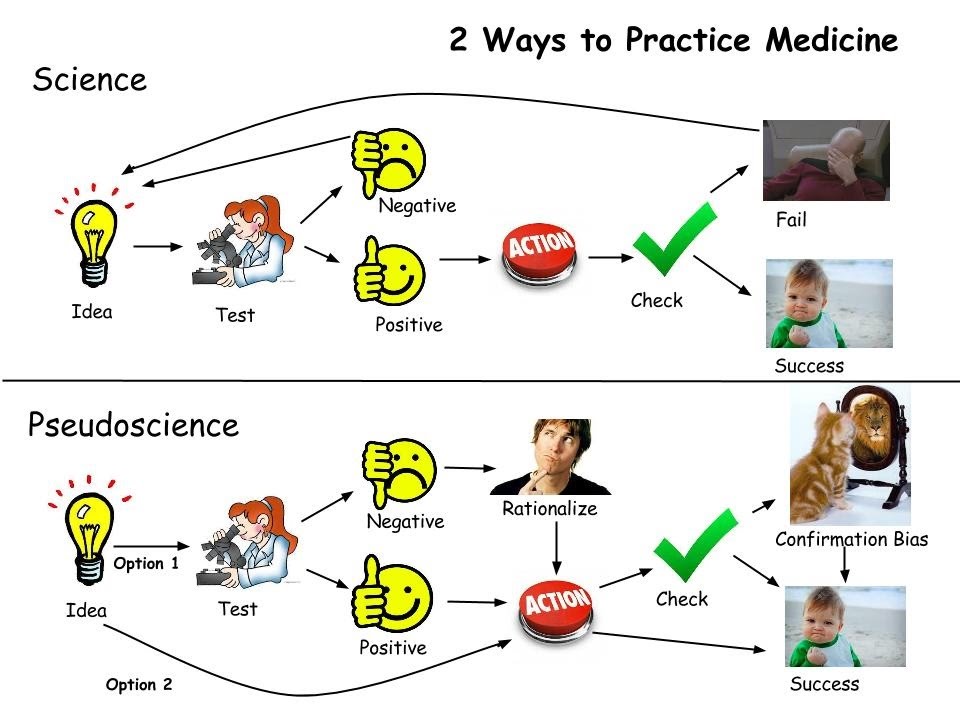
People become sick from time to time. And when people become sick with an unknown illness, they often become desperate for anything that sounds like a cure. And as such, malignant individuals will try to take advantage of people’s confusion and lack of knowledge. So to save your health, time, and money, here are some warning signs for pseudoscience in health marketing


  • Claims of being “natural”


Many pseudoscientific health products try to justify their existence with the claim of being “natural”. (Senapathy, Kavin 2017) Supposedly, being composed of natural ingredients means that this product is safe and healthy for use and works better than the “artificial” industrial alternatives. However, just because something is natural or comes from a plant does not mean that it has any useful qualities. Uranium and parasitic fungi are natural but don’t offer anything good for us


  1. Claims of being based on “ancient knowledge”

Since pseudoscience marketers are often unable to explain their products using modern scientific theories, they will often retort that their material is based on “ancient” or “forgotten” knowledge/wisdom (Ernst, Edzard 2013). However, previous generation’s knowledge of the natural and social world was often flawed (see geocentric universe, flat earth, and racial “science”) and are not a substitute for the fruits of current empirical endeavors.


  1. Claims of being “untestable”

Testability of a hypothesis is one of the most important aspects of the scientific method. (Thompson, Bruce 1997) If something can not be tested, then it can not be accepted as a scientific phenomenon and must be avoided until such procedures are possible


  1.   Claims of being a wide ranging cure

Since pseudoscience plays on the fears of ordinary people, vendors will often make bold claims about the healing powers of their product. However, such claims are usually unfounded, and if one logically thinks about it, if these items were so useful wouldn’t they be selling like hot cakes? For more info, look up “too good to be true” (Gauch, Hugh G. 2003)


  1. Claims of conspiracy

When pressed to explain their lack of widespread success, alternative health marketers will often retort that there is a “conspiracy” to keep them down. These are usually a desperate attempt to rationalize their product’s niche nature, and never based on reality. (Gauch, Hugh G. 2003)


References


Ernst, Edzard. “Thirteen Follies and Fallacies about Alternative Medicine.” EMBO Reports 14.12 (2013): 1025-026. Web.


Gauch, Hugh G. (2003). Scientific Method in Practice. Cambridge University Press. ISBN 9780521017084. LCCN 2002022271.


Senapathy, Kavin. “Your Logical Fallacy Is Appeal To Nature: These 5 Natural Toxins In Food Have Caused Real Harm.” Forbes. Forbes Magazine, 30 Apr. 2017. Web. 22 June 2017.


Thompson, Bruce. “Appeal to Mystery.” Ad Hominem – Abusive. Palomar College, 08 Nov. 1997. Web. 22 June 2017.
Vectors (epidemiology)

Vectors (epidemiology)

Vectors (Epidemiology)

07/14/17


“What organisms carry diseases to others?”
Diseases are everywhere, whether it be in plants, animals, or fungi. However, what is the term for organisms that transmit diseases? Well, after many years of study, Epidemiologists have termed organisms that transmit diseases vectors (Kind of like the mathematical construction found in physical and engineering sciences). Any organisms can be a vector, including humans!