Month: June 2017

Ferns

Ferns

Ferns

06/21/17

“Are there plants that do not use seeds to reproduce?”


Plants are famous for their use of seeds in reproduction. However, are there some plants species that do not use seeds? Well, let’s use our scientific mindset to find out. If we look closely enough into nature, then we will find out that there are actually a group of plants that use spores to reproduce called Ferns! Because Ferns do not use seeds for reproduction, they do not contain any flowers! Ferns are typically found in tropical countries, and can range from 2 mm to 25 m in height!  

Spores

Spores

Spores

06/20/17

“How do fungi and ferns reproduce?”


There are many forms of asexual reproduction. One form commonly employed by fungi and ferns are known as spores. Spores are analogous to seeds in plants, in the fact that they are a self-contained environment for reproduction. What makes spores so special is that they are often unicellular. When spores are released into the wild, all they need is a suitable environment to grow and thrive!

Why you get sick from reading in a car

Why you get sick from reading in a car

Why you get sick from reading in a car

06/19/17

“Why do you get sick while reading in a car?”


Have you ever noticed how you get sick when you read in a car? Well, you have nothing but your own body’s physiology to blame. To estimate your location, your body receives some of its spatial information from its inner ear and eyes. When you are concentrating on a book, all you see is the stationary tome, but your ears will be listening to cracks, bumps, and changes in velocity. This incongruity of perceptual information will cause your brain to become disoriented and induce motion sickness. To avoid such an issue, try looking out of the window from time to time during the vehicular voyage.

Low-cost air pollution sensors

Low-cost air pollution sensors

Low-cost air pollution sensors

Isaac Gendler

06/18/17

“How can we produce low-cost air pollution sensors?”


Air pollution sensors are absolutely necessary for policy making. But for many developing countries, such technology is often too expensive. So how can we make the costs less prohibitive? Well, let’s use our engineering mindset to figure this out. We know that the main cost of monitoring air pollution comes from deploying sensors. But humans all over the world are already carrying advanced sensors with them, smartphones! A team at the University of California San Diego have developed a series of sensors that can communicate with a user’s smartphone using an app called CitiSense to perform real-time pollution monitoring. The goal of this project is to eventually to create a system in which entire communities can use to gather pollution data

Air pollution sensors

Air pollution sensors

Air pollution sensors

06/17/17

“How can we monitor air pollution?”


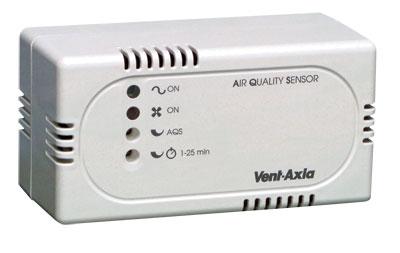
With the advent of industrialization, air pollution has become a significant issue in many parts of the world, inducing grievous health issues and productivity impairments. As such, governments and independent organizations are taking action to reduce this nefarious trend. However, before we can take steps to eliminate pollution, we must first know how much needs to be eliminated. To do this, engineers have developed air pollution sensors which can analyze the atmosphere for certain elements (ozone, particulate matter, carbon monoxide, sulfur dioxide, and nitrous oxide) for human analysis

Circuit Soldering

Circuit Soldering

Circuit Soldering

06/16/17

“How can we attach two conductive wires together?”


Engineers commonly run into a problem. When working with circuits, we may need to extend our wire. However, it is physically impossible to do such a thing


Or is it?


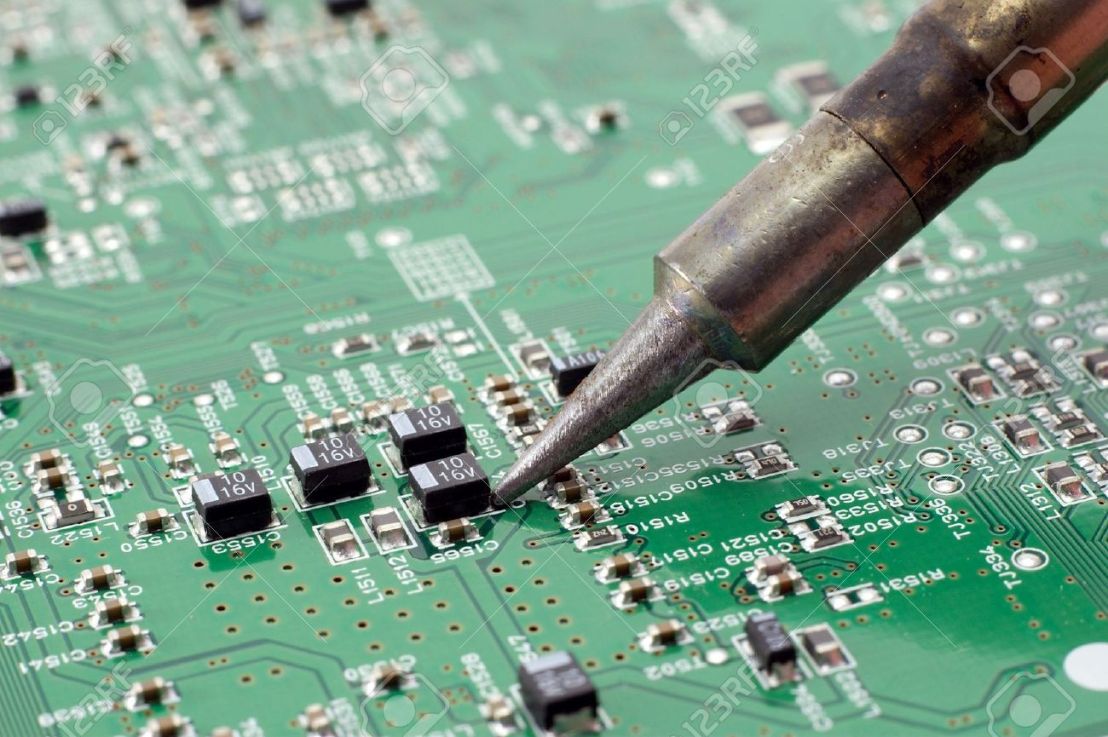
Luckily for us, engineers can do the impossible. Let’s start with a few basic principles. We know that wires can conduct electricity. We also know that metal can also conduct electricity. And we also know that if we were to solidify a liquid that was between two objects it would connect the objects. So what if we were to take two circuits, expose their conductive centers, and then quickly melt some conductive metal between them to cause an attachment? Well, this is the process of soldering, which just so happens to be one of the most vital skills that any engineer needs to know.

How to make faucets more sustainable

How to make faucets more sustainable

How to make faucets more sustainable

Isaac Gendler

06/15/17

“How can we make our faucets more sustainable?”


I want you to think about something. What exactly do you use to clean yourself after you have used the restroom? Well, if you live in a developed country, then you probably immediately think of faucets. Quite simply, without faucets, we would be unable to function in our daily lives! However, as engineers, we must always think more critically not just about the outputs of a system but the inputs as well. Specifically, faucets use water for their operation. And since water is an increasingly finite resource (especially in dry areas such as California), how can we modify these mechanisms to be more sustainable? Well, believe it or not, there is a very simple solution for this, having the faucets use less pressure! When less pressure is used, a smaller volume of water will be transported, thereby using less water!

Meat thermometers

Meat thermometers

Meat thermometers

06/14/17

“How do meat thermometers work?”


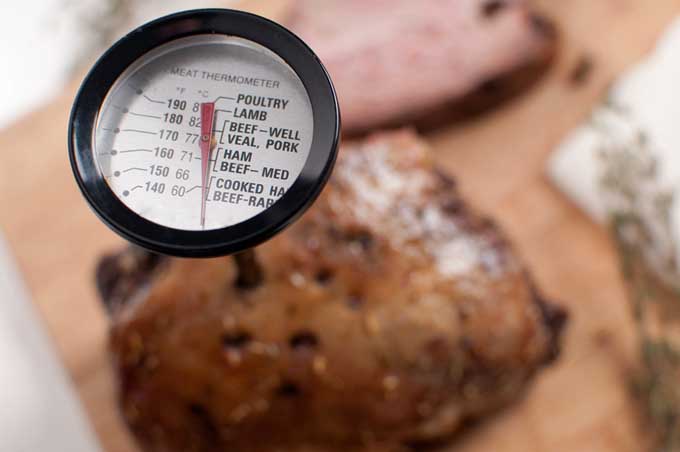
Meat thermometers are used every day to measure the temperature of meats. However, how exactly do they work? Well, let’s use our engineering mindset to find out. If we were to deconstruct one of these machines, then we would find out that inside the thermometer are two strips of metal with different heat coefficients. Upon the application of heat, both of these will expand at different rates, inducing twisting and therefore changing the dial at a constant rate!

Chemical activity series

Chemical activity series

Chemical activity series

06/13/17

“How can we predict if an atom will react with another atom or not?”


If you ever decide to take a chemistry class, you will probably have to solve a lot of chemical reactions sets. However, have you ever wondered whether or not if these sets can be achieved or not? Well, in the natural world, it has been empirically investigated that some elements are more reactive with others. And in fact, this has found to be a linear correlation. To illustrate, let’s say that elements x is more reactive than element y which is more reactive than element z, then element x will also be more reactive with element z. If you put together an entire list of all of the reactivities of the periodic table of elements, you would build something that is called a reactivity series. The most reactive element is fluorine [F], and the least reactive metal is neon[Ne]