Month: April 2017

Desalination plants

Desalination plants

Desalination plants

04/21/17

“How can we make saltwater drinkable for humans?”


Humanity is running into a problem. With each year our water supplies are getting lower and lower. Soon enough, we may not be able to provide ourselves with one of the most basic components of life.


But does it have to be this way?
If we apply our engineering mindsets, then we can devise a method for water purification to sustain our livelihoods. To begin, let’s start out with some simple chemistry. 96% of the water on this planet is stored in oceans as salinated water. And because of its salty nature, by default, it is unsafe for human consumption. However, we must take one more fact into consideration, that the evaporation point of liquid water is lower than that of salt. So what if we used some simple logic and create a device that would heat salt water up until the point of evaporation, move it over into another container, and then condense it into drinkable water? Well, this is the fundamental idea behind a system which engineers have termed desalination plants, and are used to treat saltwater around the world. One downside of traditional desalination plants is the vast amount of energy required to heat up the water, taking around 5 kWh for a cubic meter of just fresh water!

Aeroponics

Aeroponics

Aeroponics

04/20/17

“How does NASA grow plants suspended in the air?”


With the advent of hydroponics, the roots of plants have been liberated from the soil, allowing for far more sustainable agricultural systems to develop. One of these methods actually involves suspending the roots of the plant in the air and then filling the environment with a nutrient mist. Scientists have termed this process aeroponics, and allows for a higher density yield and allow for the roots to more efficiently absorb oxygen. However, one drawback is that this system must be constantly sprayed with a 35% hydrogen peroxide to prevent the spread of impinging fungi and bacteria. NASA uses aeroponic systems to grow food for astronauts on year long missions.

Hydroponics

Hydroponics

Hydroponics

04/19/17

“Can we grow plants without soil?”
For the vast majority of human civilization, human agriculture has relied on the soil it rested upon to grow plants. However, with the ascent of global urbanization, global warming, and soil acidification, we must find novel ways to generate agriculture in order to survive. So what is one way we can achieve this? Well, let’s use our engineering mindset to find out. One of our major roadblocks is that we need to rely on soil material to grow our plants, so what if we were to create a way to grow such lifeforms without the use of soil? Well, a fascinating technology known as hydroponics accomplishes this using a technique in which minerals in a water solute are directly substituted for soil, therefore enabling sufficient nutrition for plant growth. Hydroponics is being used all over the world to create urban agricultural systems, and might become a major agricultural powerhouse in their own right one day!

Heat exchangers

Heat exchangers

Heat exchangers

04/18/17


“How can we transfer heat from one fluid to another without them being in contact?”
Fluids are often used as materials to heat other materials. However, sometimes fluids themselves need to be heated. So wouldn’t it be logical if we could use one fluid to heat another? However, there is one problem with this. If we have two fluids come into physical contact with one another, they will usually merge and mix with one another. So how could we prevent such a phenomena from happening? Well, let’s use our engineering mindset to figure this problem out. We know that pipes are a very efficient way to transport fluid phenomena. And we also know that heat can be transferred from inside the pipe to the outside. So what if we were to create a machine that would take on one fluid, extract the heat from it using piping and other mechanisms, and pass it onto a separate fluid? Well, this is the fundamental idea behind a device known as a heat exchanger, and it can be found in a vast multitude of devices, ranging from refrigerators to power plants to diesel engines.

Liquid fluoride thorium reactors

Liquid fluoride thorium reactors

Liquid fluoride thorium reactors

04/17/17

“How can we actually make thorium energy a reality?”
Thorium energy is definitely not like your grandparent’s form of nuclear energy. Because of this, the engineering design for its reactors must be significantly different. First, instead of using liquid water to power this system, why not use liquid fluoride? This element is chemically stable, strong against radiation damage, have a high volumetric heat capacity, and can operate at high temperatures while remaining at normal pressures. Next, let’s think about how to implement this. First, let’s feed the salt into the reactor core. The fission from the thorium/uranium decomposition will heat this salt, which can then be transferred through a pipe to heat up a gas which drives a turbine which created electricity. We can then use the excess salt to flow back into the core to be recycled, and the waste heat from the gas can then be used to desalinate water

Magnetic repulsion bearings

Magnetic repulsion bearings

Magnetic repulsion bearings

04/16/17

“Can we use magnetism to improve bearings?”


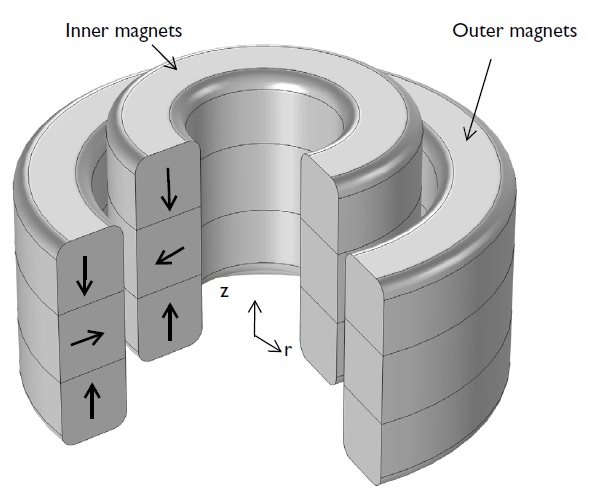
Normal bearings use mechanical forces to lock onto a rotor. However, this method can be made highly inefficient due to heat and frictional losses resulting from contact. However, can we use our engineering mindset to improve this system? Well, to start, let’s look at the root of the problem, the mechanical contact. If we remove this feature, then our system can work with much fewer impingements. One way to create a non-contact grip is to use a magnetic force. So what if we made bearings that make use of magnetic levitation technology to keep in contact? Well, this is the exact idea behind magnetic repulsion bearings, which use a repulsive force to achieve passive levitation. Not only does the repulsion effect keep the bearing afloat, but it also introduces a self-centering mechanism, so if one part becomes to close it will be repelled away.

Thorium energy

Thorium energy

Thorium energy

04/15/17

“Wait, there’s another way to make nuclear energy?”
Traditional nuclear power plants use the decomposition of uranium 235 through fission to generate energy. However, This process is unstable and dangerous. But is there another way that we can generate nuclear energy? Well, let’s use our engineering mindset to find out. If look into fundamental chemistry, we will run into a most peculiar atom known as thorium. When Thorium is hit by an extra neutron, it will begin a decay process that ends with a transformation into uranium 233, which will produce energy when the object itself is hit by a neutron.  One of the primary benefits of thorium energy is that it does not produce Uranium 238, therefore being much less pollutive on a 10,000-year scale, as well as being more plentiful. Many countries (notably India and China) are looking in to develop their own Thorium energy systems, and it might prove to be the nuclear power of the future.

Pipeline transport

Pipeline transport

Pipeline transport

04/14/17

“How can we move fuel over long distances?”


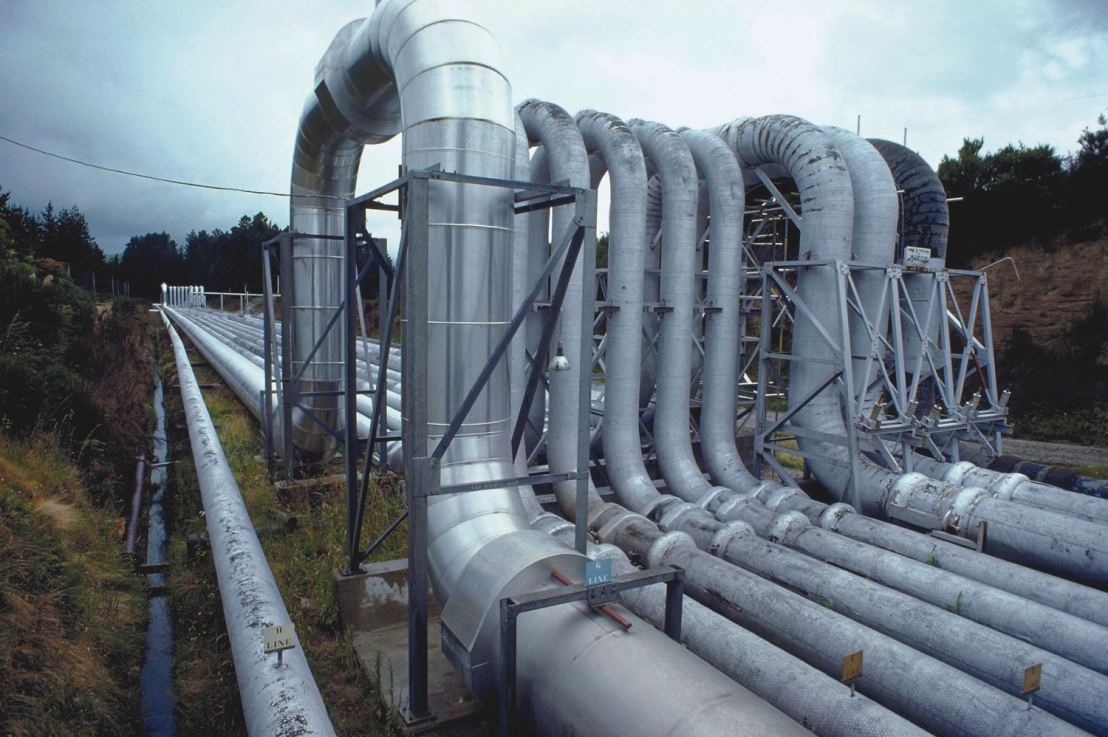
Human infrastructure has a logistics problem. The resources needed for the operation of our civilization (such as water and petroleum) are produced in locations far, far away from where they are consumed. So how can we devise a mechanism to transport these materials over long distances? Well, let’s use our engineering mindset to solve this problem. We know that these resources are often extracted in fluid form. And we know that one way to transport fluids is to use piping systems. So what if we were to use giant pipelines strewn throughout the landscape for the transportation of this material? Well, it turns out that pipeline transport of resources is more than a theoretical idea but a practical reality, and is used by almost every country in the world.

Hydrogen pipelines

Hydrogen pipelines

Hydrogen pipelines

04/13/17

“How is hydrogen transported?”


Hydrogen is one of the most fundamental resources for modern day infrastructure. However, since hydrogen is a raw resource produced far away from the areas that it is used in, it must be transported in some fashion. So how exactly is this accomplished? Well, let’s use our engineering mindset to find out. Well, we know that fluids can be easily moved through piping systems. And we also know that raw hydrogen often takes the form of a fluid. So wouldn’t it be logical to use specialized hydrogen pipelines to transport hydrogen to its specified location? Well, it turns out that engineers all over the world have implemented this technology, ranging from the Netherlands to Lousiana.