Month: June 2016

Internal combustion engine

Internal combustion engine

Internal combustion engine               06/12/16

“What powers most automotive technology?”

One of the most important inventions ever derived by humanity is that of the Internal Combustion engine. In abstract, the ICE is a method of using diesel fuel to create useable power by having an atomized version of the fuel come into contact with high temperature and high pressure air.

To start off, let us look at the basic parts of an ICE and how they make the machine. First, a piston is connected to a connecting rod,, while a crank will go through the bottom hole of the connecting rod. The top half of the fastening rod, and the piston will be encapsulated in a cylinder. The sub-machine made from these parts is called a slider-crank mechanism. The linear motion of the piston is transformed into a rotary motion at the crank. This mechanism will be housed in an engine block. A cylinder head, valves, and fuel injectors are fitted above the engine black. The cylinder is curved so that all of the gases will move around on it during the operation

Now that we have described the base parts of the machine, it would only be logical to describe how these parts work together. The first part of the process is called the intake stroke. When the Piston moves downwards, inlet valves will open and fresh air from outside will be sucked in (one can think of the engine as “breathing” at this point). During the exhaust stroke, the inlet and exhaust valves are closed, and the air inside the cylinder will be compressed by the upwards motion of the piston. During this phase, the piston will perform work on the air, so the temperature and pressure will consequently rise to a level higher than the self-ignition value of the diesel. An atomized form of diesel will be injected into this compressed air. The fuel will get evaporated, and an uncontrolled explosion will happen as a result. This starts the process of the power stroke. The temperature of the gas will rise to high level values as a consequence of this explosion. The high energy fluid will push the piston downwards, and the hot air will do work on the piston, and the energy in the fluid will be converted into the mechanical energy in the piston. The final part of the process is known as the exhaust stage. The exhaust valves will open and the exhaust from the explosion will be ejected, causing the piston to move back up. This cycle (which consists of 4 strokes) causes power production

Finally, let us discuss the design of diesel engines. Diesel engines require a sturdy structure due to the volatility of it’s operations. Since power is only generated during one of the strokes (the power stroke), ICEs are often linked in series of four machines, each one at a different stage so that at any time power is being generated. These are called four cylinder engines, due to the fact that there are four cylinders present. The four cylinder has a power order of 1-3-4-2 (corresponding to the different stages, in order of the four individual cylinders). Furthermore, a flywheel is usually attached to the shaft of the cylinders in order to regulate power creation. There are also counterweights to balance out any unnecessary weights. The valves are controlled by camshafts that rotate at half the speed of crankshafts.
Material recovery facility

Material recovery facility

Material recovery facility          06/11/16

“How are recyclable materials sorted?”

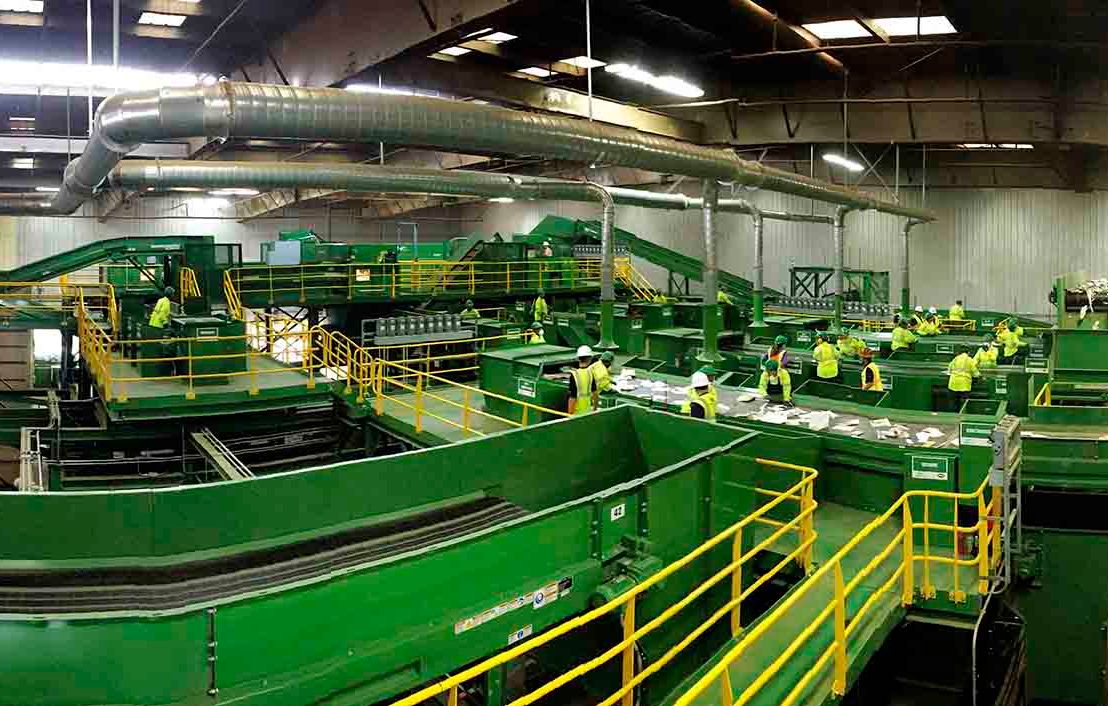
With the advent of mass recycling, there has to be some sort of way that recyclable material is properly sorted to ensure that everything goes in it’s place. The solution is called a Material recovery facility, or MRF. MRFs are specialized plants dedicated to taking in recyclable material and making them reusable. There are two types of MRFs, clean and dirty. Clean MRFs take in purely recyclable waste and turn it into usable material, while dirty MRFs accepts “mixed” waste (i.e partially reusable and partially corrosive) and separates the recyclable material from the non-recyclable.

How do Fans work?

How do Fans work?

How do Fans work?         06/10/16

“How do the fans in our everyday lives work?”

Have you ever wondered how does a fan work? You might be surprised to find out that the operation is surprisingly very simple. A fan is primarily powered by an electrical motor. Attached to this motor are rotors. When the motor spins, the rotors will create a pressure difference in the air which in turn creates wind. Fans often have casing around them to simultaneously protect the rotors from exterior damage and to direct the wind flow. You can think of a fan almost like the reverse wind turbine, with a motor using energy creating wind in the air instead of wind creating energy in a generator.

Avogadro’s law

Avogadro’s law

Avogadro’s law              06/09/16

“Do gases of the same volume, temperature, and pressure have the same amount of molecules?”

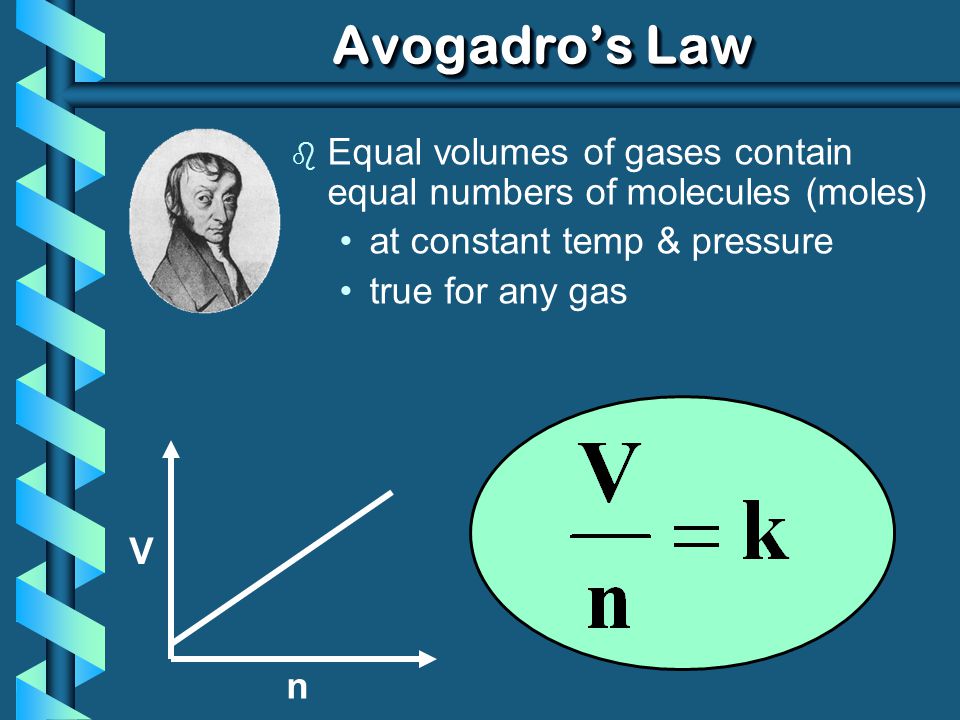
Through thorough experimental observation, it has been shown that Gasses of the same volume, temperature, and pressure have the same amount of molecules. This can be neatly summarized as Avogadro’s law, which symbolically states that Vn=k, with Vbeing the volume of the gas nbeing the number of molecules and kbeing some constant.

Charle’s law

Charle’s law

Charle’s law                  06/08/16

“ What is the relationship between a gas’ volume and temperature?”

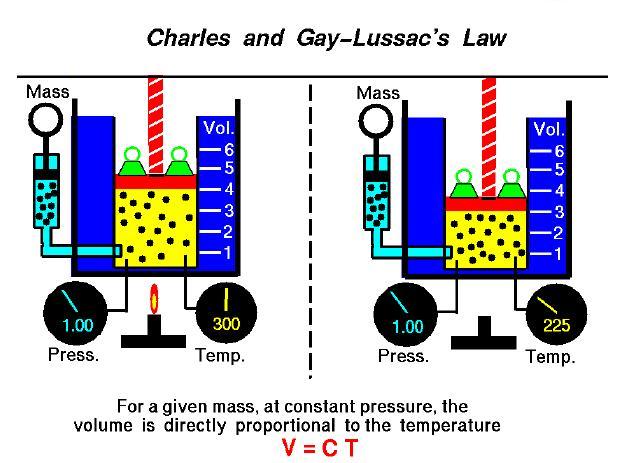
For a gas, the relationship between it’s volume and temperature is very simple. As a gas’s temperature increase, it’s volume will increase proportionally. This is because the molecules of a gas are relatively unbounded to one another, and when their temperature increases, their average speed will increase, and the volume encapsulating the gas will increase as a result. This can be symbolically summarized in Charle’s law, in which VT=k, with Vbeing the volume, T being the temperature, and k being a constant.

Boyle’s law

Boyle’s law

   Boyle’s law          06/07/16

“What is the relationship between Pressure and Volume in a gas?”

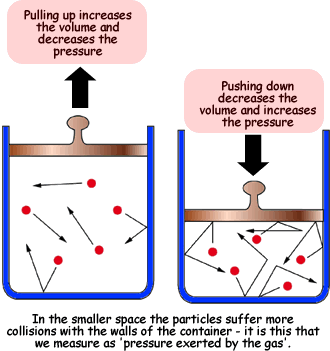
The relationship between Pressure and volume can be neatly summarized in a simple concept known as Boyle’s law. Boyle’s law states that for a gas the pressure multiplied by the gas is simply equal to some constant k. To put this numerically, P*V=k. We can expand upon this by the fact that if the pressure and volume change, their product will be equal to the same multiple, so P1*V1=P2*V2.

Ideal gas

Ideal gas

Ideal gas                06/06/16

“What model can we use to describe a gas?”

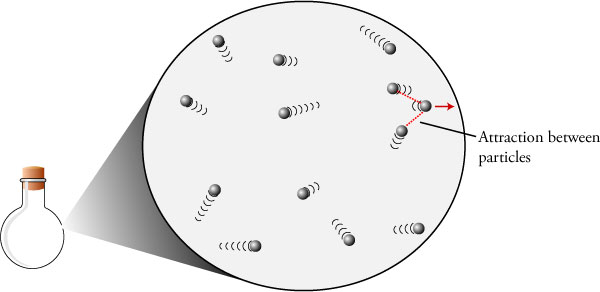
Let us visualize all of the particles in a gas in their pure intricateness. Think of all of those individuals particles bumping around in semi-random number. There are numerous factors that affect this gas, such as temperature T (how quickly each of these particles are moving around) pressure P(the density of each of the gas particles bouncing against the tank), Volume V (the amount of geometric space the gas takes up), The amount of gas . All of these facets are fundamentally related to each other with something known as the ideal gas law P*V=n*R*T, with R being a constant. This equation is insurmountably amazing because it means we can find out so many properties of a gas by just knowing a few factors!

Solar maximizer

Solar maximizer

Solar maximizer           06/05/16

“How can we maximize the effects of a solar panel?”

This a pertinent question for any renewable energy engineer. Let us illustrate one potential problems with solar panels. When a solar cells are in series, they are all linked together. Since they often cover a long distance, external effects such as temperature and dust will vary. Consequently, each solar panel will have a different temperature, and the higher the temperature, the less efficient it is. Since a series of solar cells are only as efficient as the hottest one, then we run into a major problem.

Luckily, humanity had the ingenuity to invent the solar maximizer. The Solar maximizer optimizes the solar cells to mitigate the impinging effects of solar cells in series.  

Power inverters

Power inverters

Power inverters            06/04/16

“Is it possible to change a DC current into an AC one?”

If you need to solve such a problem, then you can look to the help of a device known as a power inverter. Power inverters take DC current as an input current, and then transform it into an AC current using the magic of electronics. Furthermore, these currents can either be sinusoidal or in square form. Inverters can be used for a multitude of purposes such as taser technology and public transportation.