“How can we use force and rotation to deal with complex situations?”
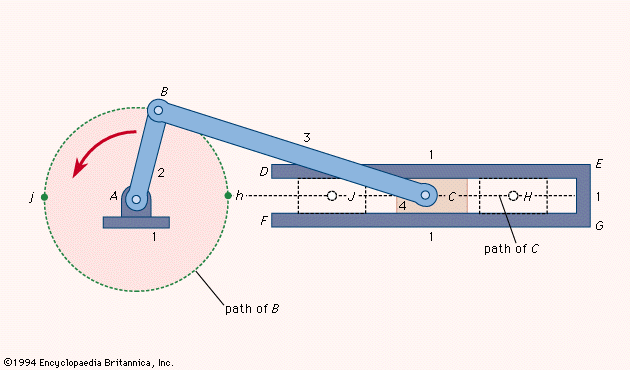
One of the principal ideas in engineering is transferring force and rotation to perform useful activities. However, simple machines are often not enough to deal with the complex and varied nature of high-level problems. So how can we use our engineering mindsets to solve this? Well, what if we were to make our machines to be assembled of a complex assemblage of parts such as gears, belts, linkages, and chain drives? This framework is known as a mechanism and is the basis for many modern day machines such as drivetrains, internal combustion engines, and aircraft landing gears.
“How can we optimize HVAC systems by completely reinventing them?”
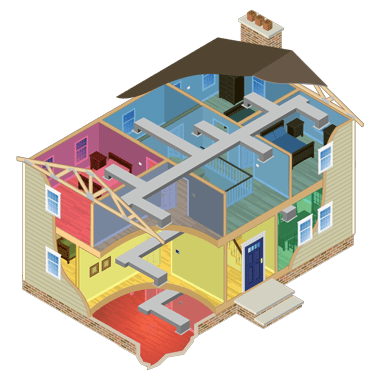
Most HVAC systems operate by using ceiling-based air vents. However, the air funneled can suffer from low quality, induce low comfort, and most importantly give a high energy bill! So how can we use our engineering mindset to fix these problems? Well, what if we were to completely reinvent the paradigm, and instead funnel air directly from the ground? It turns out that this is the exact idea behind a technology known as Underfloor Air Distribution Systems. These systems work by filtering air through the open space between the structural concrete slabs on the floor of a building using plenums for direct cooling. Underfloor Air Distribution Systems are commonly implemented in data centers for their high efficiency and low cost.
“How can we use a digital signal to control power appliances?”
Using sinusoidal analog signals for control applications has drawbacks. Specifically, the constantly changing signal can cause the resistors on a circuit to heat up and induce damage. However, how can we use our engineering mindset to fix this problem? Well, what if we were to replace this analog system with a discrete one operating at a duty cycle? That way we can imitate the perpetually switching signal while avoiding the issues that come along with it. This type of signaling is known as pulse-width modulation and is one of the fundamental ideas of modern control theory
“Can we solve the problem of temperature discrepancy in buildings?”
When we think of buildings, many of us assume that the temperature inside will be completely uniform in nature. However, more often there is significant temperature variation from room to room. Making this worse, most HVAC systems only base their setpoints on one of these rooms, causing improper heating and discomfort in the rest of the building. So how can we solve this problem using our engineering mindset? Well, what if we were to use multiple smart thermostatsto divide the building into multiple zones, each with their own setpoints? This is the fundamental idea behind smart zoning for HVAC systems, a nascent but intriguing technology which has the promise to vastly improve the ergonomic, economic, and ecological capacity of everyday heating and cooling.
“What is a more efficient process for air conditioning?”
Most HVAC systems only have one mode of operation or stage for control. However, some HVAC systems have 2-stage cooling, a high one for summer days and a lower one for cooler days. This allows for a greater degree of control and higher energy efficiency.
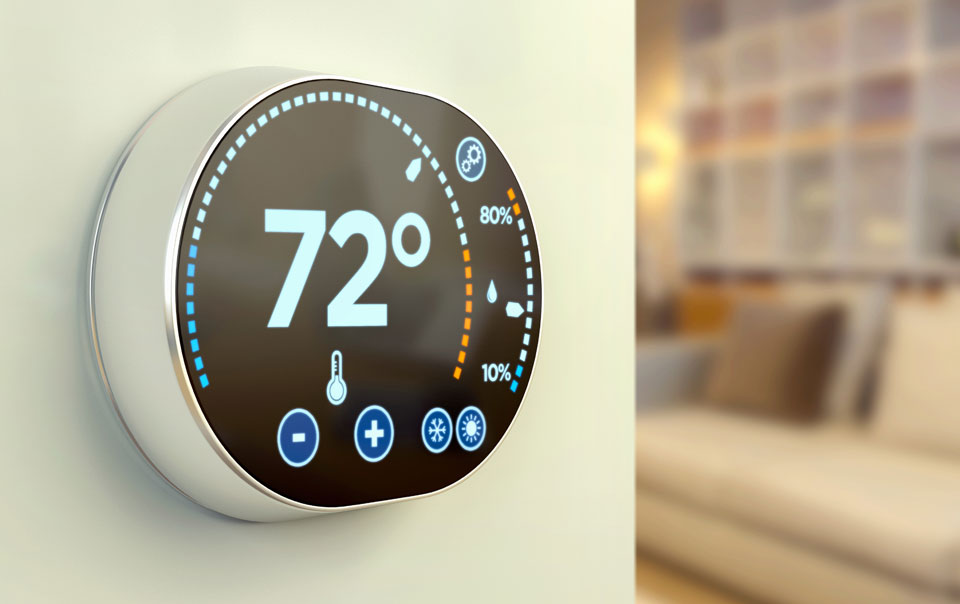
Thermostats are essential for keeping a home cozy and tidy. However, traditional thermostats are unable to respond directly to an environment, making them inappropriate for the increasingly dynamic nature of modern building energy management. So how can we use our engineering mindset to configure thermostats that can adapt readily to their environment? Well, what if we were to make smart thermostats with real-time sensors that can collect data about the surrounding environment and make snap decisions, such as adjusting the temperature and introducing local zones, as well as be controlled from an external device? Well, it turns out that this is being carried out in everyday life, with new smart thermostat companies popping up all over the world from the heart of Silicon Valley to the streets of London.
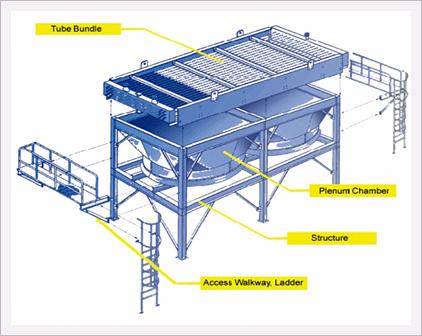
Oftentimes, we need to store gas to heat a space. So how can we do this using our engineering mindset? Well, what if we were to simply have a pressurized house that could trap a gas and release it on command? This is the basic idea behind a plenum chamber and is used in houses all over the world.
“How exactly can we model loads that are controlled by thermostats?”
Machines take energy from the grid under many parameters. And some of them are controlled by environmental temperatures, such as temperature. And a portion of these units (such as HVAC systems, water boilers, and refrigerators) try to match their setpoints to a value on a thermostat. These machines are known as thermostatically controlled loads and are used in grid-building system modeling to generate predictions about demand side energy usage.
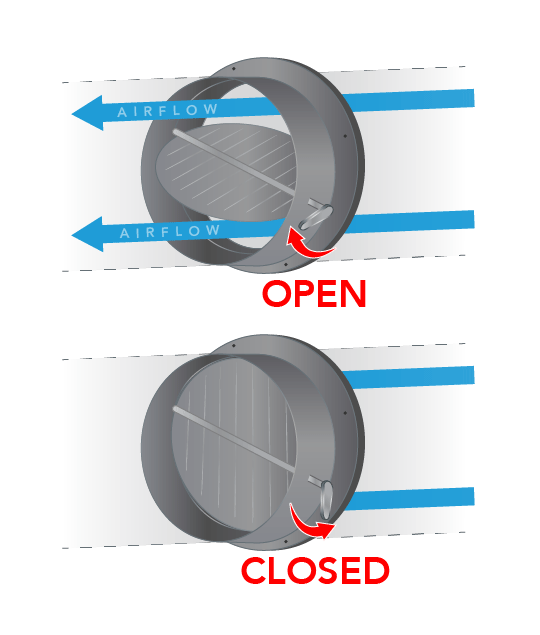
“How can we control the flow of air in an HVAC system?”
Many HVAC air systems operate by regulating the flow of air into a space. But how can we do so? Well, what if we were to use our engineering mindset to create a duct that would control the amount of air that would be transferred? This is known as an HVAC Damper and is commonly implemented in Variable Air Control Systems.




 Isaac's Science Blog