Tag: Mechanical Engineering

Non-Spinning Reserves

Non-Spinning Reserves

Non-Spinning Reserves

05/12/18

“How can we power the grid with immobile units?”


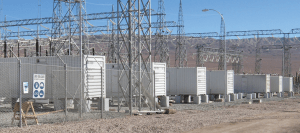
Spinning Reserves are great for providing a quick response to grid fluctuations. But sometimes they will be completely used up, and we will need more items to keep the grid running. These often include Non-Spinning Reserves that are static and disconnected from the grid. Since they have to start moving, they will have a longer response time as a result of inertia.


Spinning Reserves

Spinning Reserves

Spinning Reserves

05/11/18

“What is one simple way to provide power to the grid when more energy is needed?”


When the grid is not meeting power demand, there are multiple ways to use ancillary services to solve this. One such method is to find generators that are spinning under their maximum output, and then ramping them up to meet demand. This is known as spinning reserves and is a simple way to assist the grid.

Bolt Preload

Bolt Preload

Bolt Preload

05/08/18

“How can we make bolts resilient to stronger loads?”


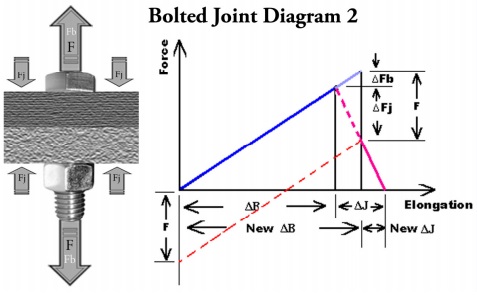
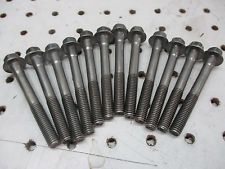
Bolts are used to keep to keep objects together using compressive forces. However, in order to work, they need to have some initial force applied to them. This Preload is usually a compressive force that allows the bolt to withstand a tensile force equal to the same magnitude. The higher the compressive load, the higher the tensile resilience. However, if the bolt preload is too much, then it can weaken the Proof Strength. Therefore, when making a Bolt Preload, we must take into account both factors.

Net Load

Net Load

Net Load

05/07/18

“How do we quantify the difference between renewable energy generated and energy demand?”


Renewable energy is now able to generate vasts sums of power in many parts of the world. However, it currently is not able to provide all of the power consumed by many parties. Because of this, renewable energy experts have called this difference to be the Net Load on the system. The Net Load tends to be lower at noon due to the availability of the sun (resulting in the infamous duck curve). California’s net load can be seen on this website.

How Microgrids are Already Helping Puerto Rico

How Microgrids are Already Helping Puerto Rico

How Microgrids are Already Helping Puerto Rico

05/03/18

“How are Microgrids already helping Puerto Rico?”


Microgrids have been theorized as something that could help Puerto Rico recover from the damage done by Hurricane Maria. But this idea has just been tested in practice. In Southeastern Puerto Rico, the centralized grid went out of power, but citizens with distributed energy infrastructure installed had their power working just fine. In fact, some even said that they did not even notice anything change! It just goes to show the power of the Puerto Rican people and renewable energy.

Solar Energy in the Southeastern United States

Solar Energy in the Southeastern United States

Solar Energy in the Southeastern United States

05/01/18

“What is the state of Solar Energy in the traditional Southern United States?”


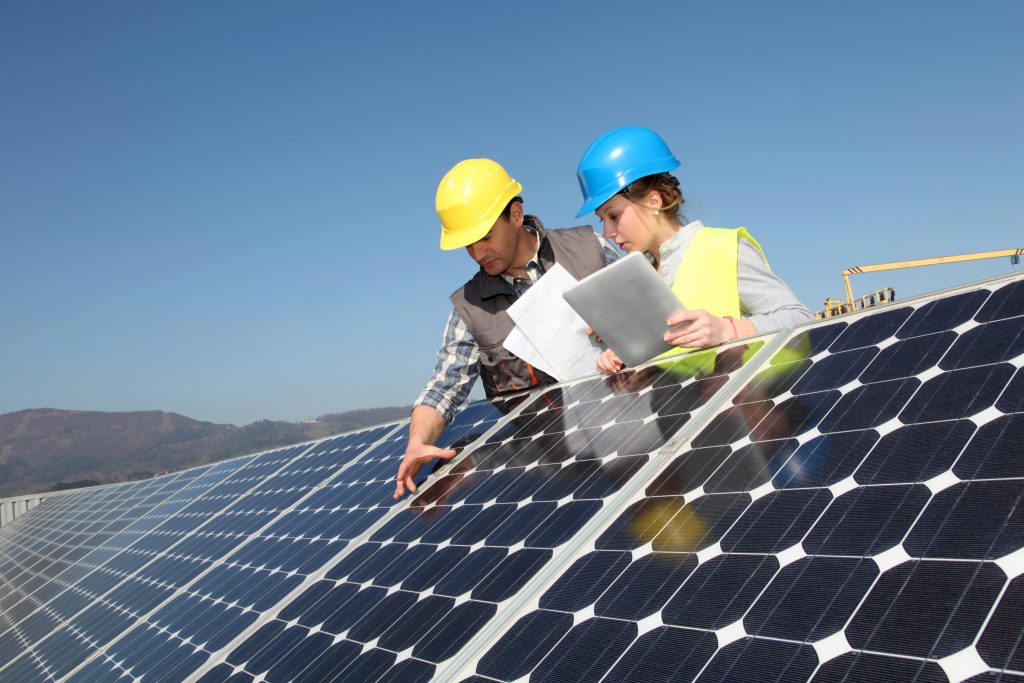
When people think of solar energy in the United States, they typically think of traditional powerhouse states like California and Massachusetts. However, the Southeastern states, commonly referred to as “The South”has some of the most abundant solar resources in the entire nation. So while it would be logical for these states to be in the lead of the future energy paradigm, many of them are actually lagging far behind the national average, save for North Carolina. The reason? Outdated grid technology and regulatory policies keep solar from being incentivized. However, once the South can solve these problems, it will become a distributed energy behemoth to be reckoned with.

Renewables Provided 98 percent of all New U.S Generating Capacity

Renewables Provided 98 percent of all New U.S Generating Capacity

Renewables Provided 98 percent of all New U.S Generating Capacity

04/30/18

“Is it true that 98 percent of all newly generated energy in the U.S now comes from renewables?”


Some astonishing news has just come out. In a recent report by the U.S. Federal Energy Regulatory Commissions (FERC), 98 percent of all new energy generating infrastructure built in the U.S during the first two months of the year came from renewable sources! This is a massive step forward for sustainability and shows current administrations the power of renewable energy.

The Rosenfeld Effect

The Rosenfeld Effect

The Rosenfeld Effect

04/29/18

“Why do some U.S states like California have a much lower energy consumption rate than others?”


Hello everyone, in honor of my recent acceptance to work in the buildings energy department at Berkeley Lab, I’ve decided to write about one of its most important humanistic accomplishments.


In the midst of the 1970s, there was an energy crisis happening all around the world. In response to the outcome of the 1973 war, OPEC states had begun an oil embargo to the U.S and its allies. This caused energy prices to skyrocket and supply to dwindle, having tantalizing effects on the world economy. In the U.S, these wounds were worsened by the continuous increase in energy that had been running for decades. Governments had looked to all sorts of solutions. In California, then (and now present) Governor Jerry Brown was considering building a series of new power plants to revive energy production. But he was soon approached by a prominent scientist from Lawrence Berkeley National Laboratory named Arthur Rosenfeld, who had a completely different but more logical solution. Instead of creating more energy production, why not simply consume less of it? Once adopting this idea, the state of California experienced something very peculiar. As the energy consumption of the rest of the nation rose with time, its own energy levels have stayed relatively flat since the 1970s! This empirical fact is known as The Rosenfeld Effect and is a prominent example of the success of energy efficiency.