Everyone who’s had a bicycle has probably had to deal with gear ratios. But what exactly are they and how exactly do they work? Well, put simply, the gear ratio is the ratio between one pedal turn and one wheel turn. So if you have a gear ratio of 2-1, then your bicycle’s wheel will make two complete revolutions with one full revolution of the pedal. As a result, when you are going uphill, you should shift into low gear, since you will then not have to use as much force when pedaling.
Industrial processes are at the heart of the industrial internet of things. However, in order to ensure that the process is going in accordance with the procedure, there must be some form of guidance. For that reason, engineers have developed something known as Process Control, which allows a systems process to stay within all setpoints.
“How can we have solar conduits that can easily bend?”
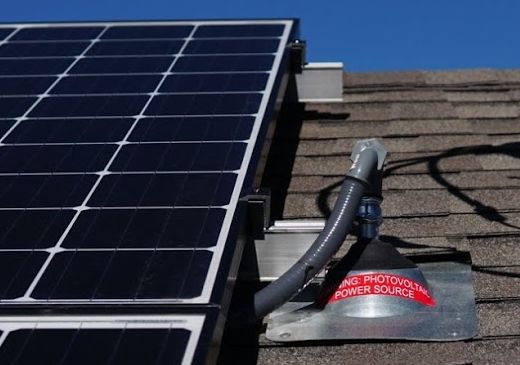
Conduits are vital for protecting solar wiring. However, sometimes we may need them to make tight and sudden bends. That’s why engineers have created Flexible Solar Conduits, which can allow for great maneuverability.
“What type of solar conduits do we use when we need extra strong support?”
Solar Conduits are vital for keeping solar infrastructure alive. However, sometimes we need to have extra support. That’s where Rigid Solar Conduits come in. Although they are better for longer or runs, their extra strength makes it more difficult to integrate with bends and turns.
Wires are like the blood vessels for solar energy. And as such, any damage to them can be catastrophic to the system. As a result, they need to have some form of protection. This often comes in the form of solar conduits, or a material layer that shields the wires from all external elements.
“How can we control the quality of manufactured products?”
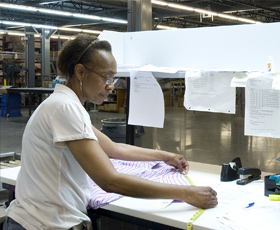
When items are manufactured, they won’t be able to completely meet specifications. As a result, there might be some dysfunctional output. To ensure that all of those parts are filtered out, quality control can be used to monitor and modify the process as necessary.
How Additive Manufacturing Can Help With Sustainability
06/13/18
“Can Additive Manufacturing help fight Climate Change?”
Additive manufacturing is any maker’s dream. But did you know that it could also help fight global warming? Well, because additive manufacturing makes items by adding layer upon layer of material, it is not limited by traditional manufacturing processes. Therefore, less material can be used, and slimmer, more efficient designs can be achieved. As a result, manufacturing will become less resource intensive, and carbon emissions can be reduced.
Advances in manufacturing have corresponded with paradigm shifts in human capability, whether it be the introduction of metals early in human society or industrialization later. But we may be on the cusp of another. Additive Manufacturing, also known as 3D printing,promises to bring more change by taking a 3D software object file and realize it in reality by adding layers upon layers of material.
How Locally Owned Distributed Energy Resources Can Help Disadvantaged Communities
06/10/18
“How would disadvantaged communities be helped if they owned their own solar?”
Although Solar is often thought to be a plaything for the wealthy, disadvantaged communities would benefit the most from locally owned renewable and distributed energy. Since these communities often have to live near the greatest amount of air pollution and pay the highest electrical bills as a result of inefficient appliances. But by owning their own solar energy, they could cut their reliance on dirty energy technology and make some money through feed-in tariffs, resulting in much more healthy and prosperous communities.






 Isaac's Science Blog